

Loading
Key Features of Austin Education's VCE English Language Unit 1-4:
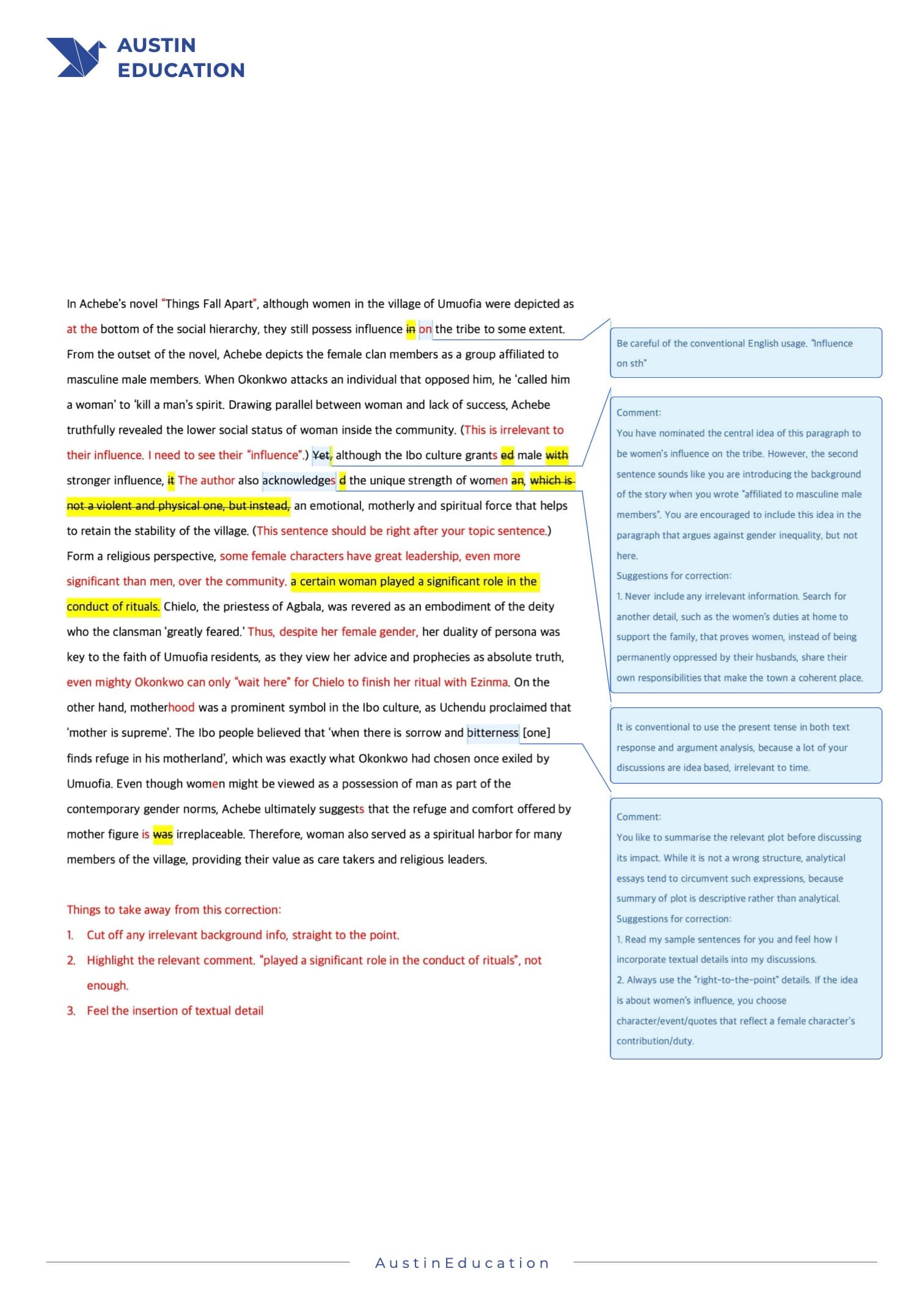
One of the key factors for achieving high scores in the VCE English exam is receiving precise, personalised refinement and guidance for each essay. At Austin, our English team refines nearly a thousand student essays each year, ensuring that every essay is meticulously polished word by word. Our teachers not only focus on improving language expression and optimising structure but also guide students to think critically, expand their viewpoints, and enhance their writing logic.
In the 2023 VCE EAL VCAA Official Report, a sample essay was submitted by an Austin student.
Austin teachers accurately predicted the essay topic, led students through practice, and meticu- lously refined this particular piece.
At most day schools, essay corrections often only provide simple feedback. However, at Austin, we insist on in-depth revisions and one-on-one communication, helping students truly understand and improve their writing skills. We do not encourage rote memorisation, but instead, through a systematic revision process, we cultivate students’ independent thinking and high-quality writing abilities.
Our high-standard essay refinement process includes five core steps, ensuring that every student can achieve their best performance in SACs and exams.

One of the key factors for achieving high scores in the VCE English exam is receiving precise, personalised refinement and guidance for each essay. At Austin, our English team refines nearly a thousand student essays each year, ensuring that every essay is meticulously polished word by word. Our teachers not only focus on improving language expression and optimising structure but also guide students to think critically, expand their viewpoints, and enhance their writing logic.
In the 2023 VCE EAL VCAA Official Report, a sample essay was submitted by an Austin student.
Austin teachers accurately predicted the essay topic, led students through practice, and meticu- lously refined this particular piece.
At most day schools, essay corrections often only provide simple feedback. However, at Austin, we insist on in-depth revisions and one-on-one communication, helping students truly understand and improve their writing skills. We do not encourage rote memorisation, but instead, through a systematic revision process, we cultivate students’ independent thinking and high-quality writing abilities.
Our high-standard essay refinement process includes five core steps, ensuring that every student can achieve their best performance in SACs and exams.
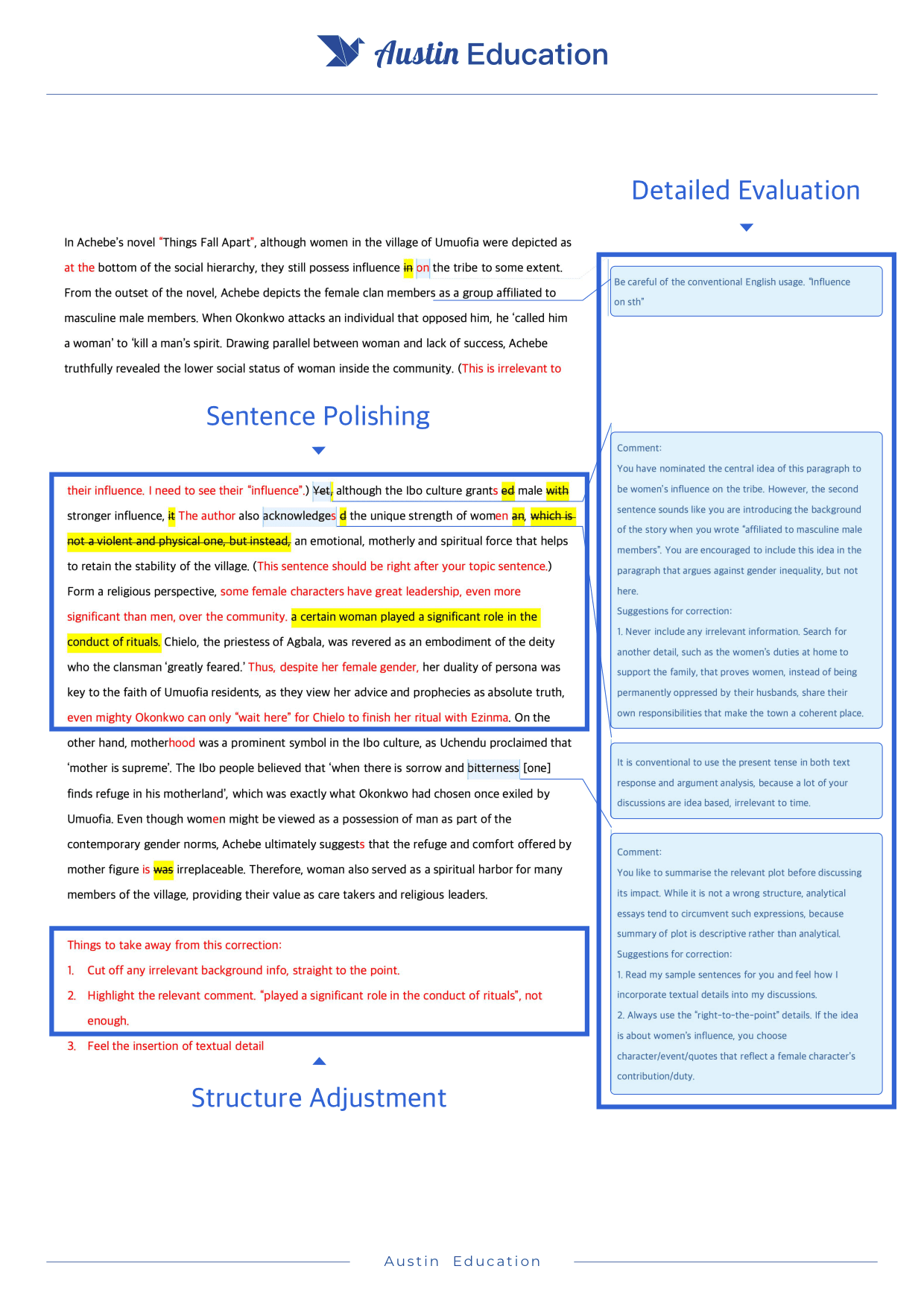
When our teachers receive a student’s essay, the first step is to analyse its overall quality.Are the arguments convincing? Is the writing clear and concise? Does it address the topic effectively? These are the key aspects we carefully evaluate. This thorough initial assessment lays the foundation for more detailed revision feedback.
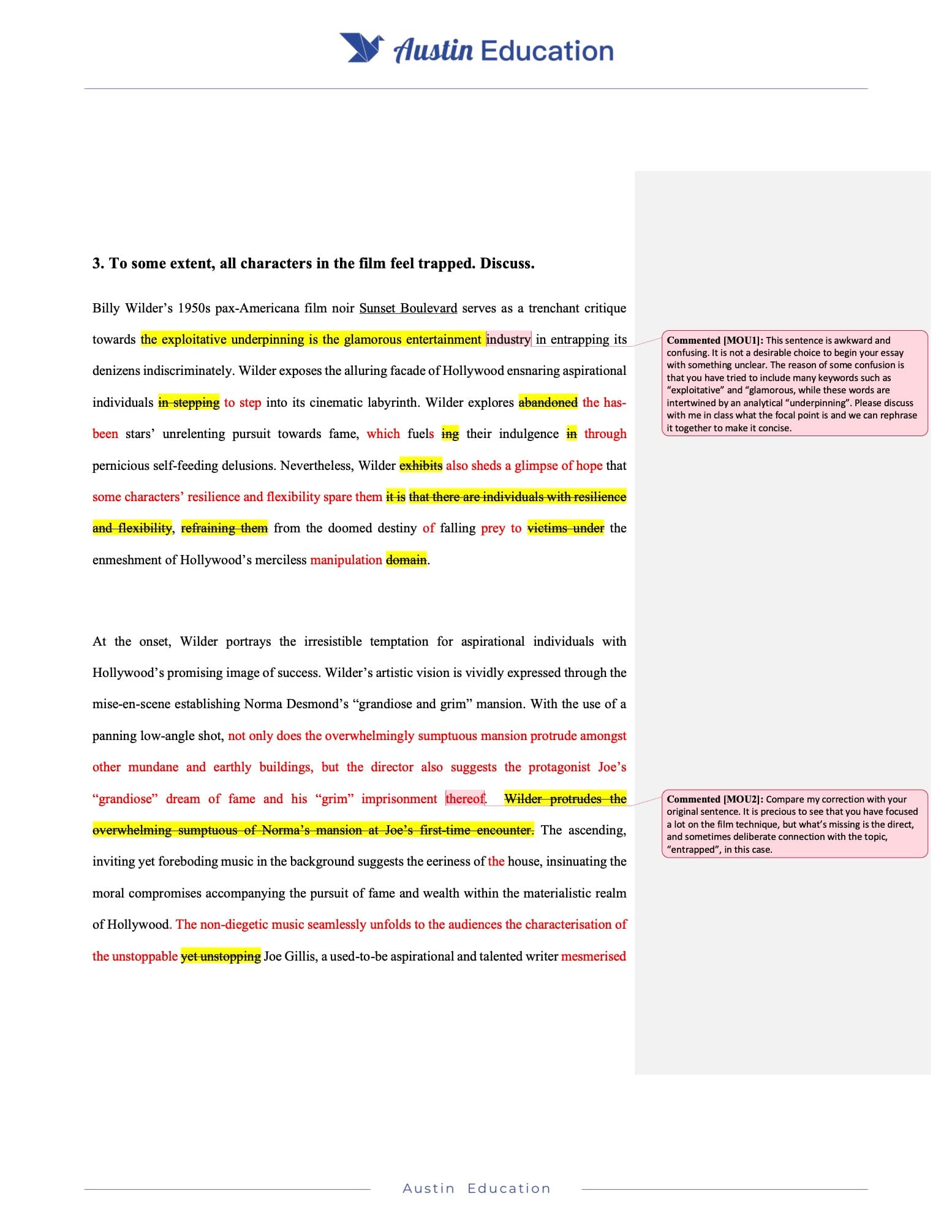
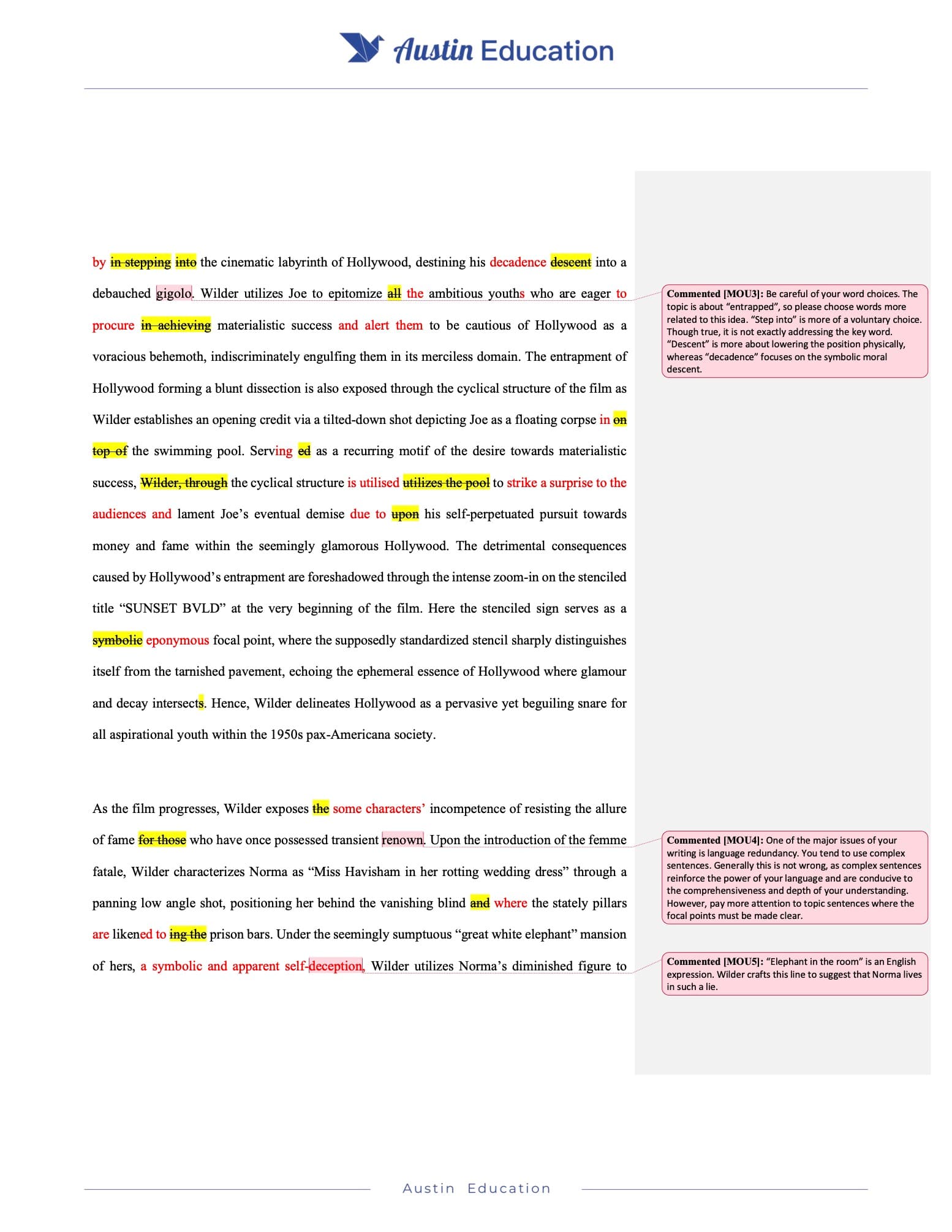
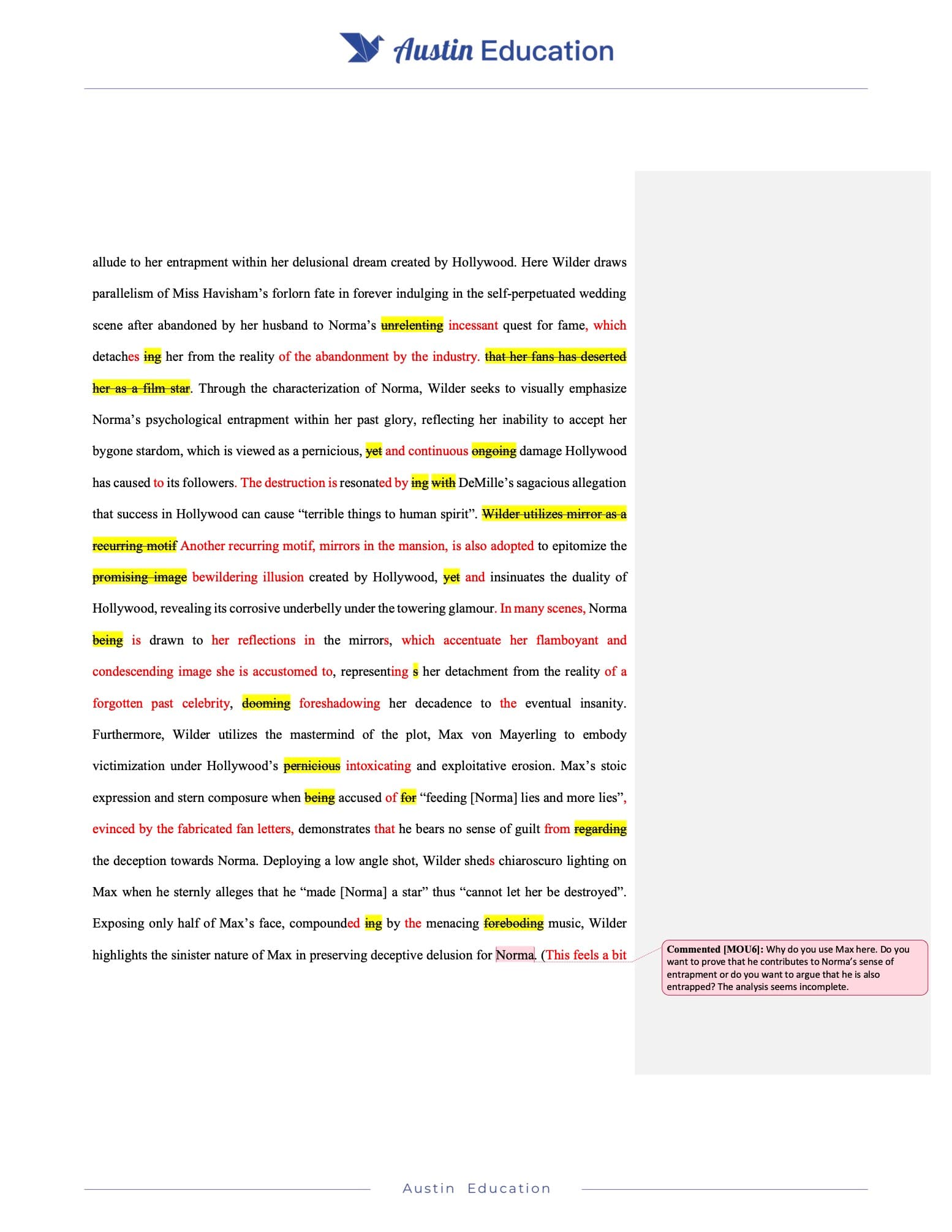
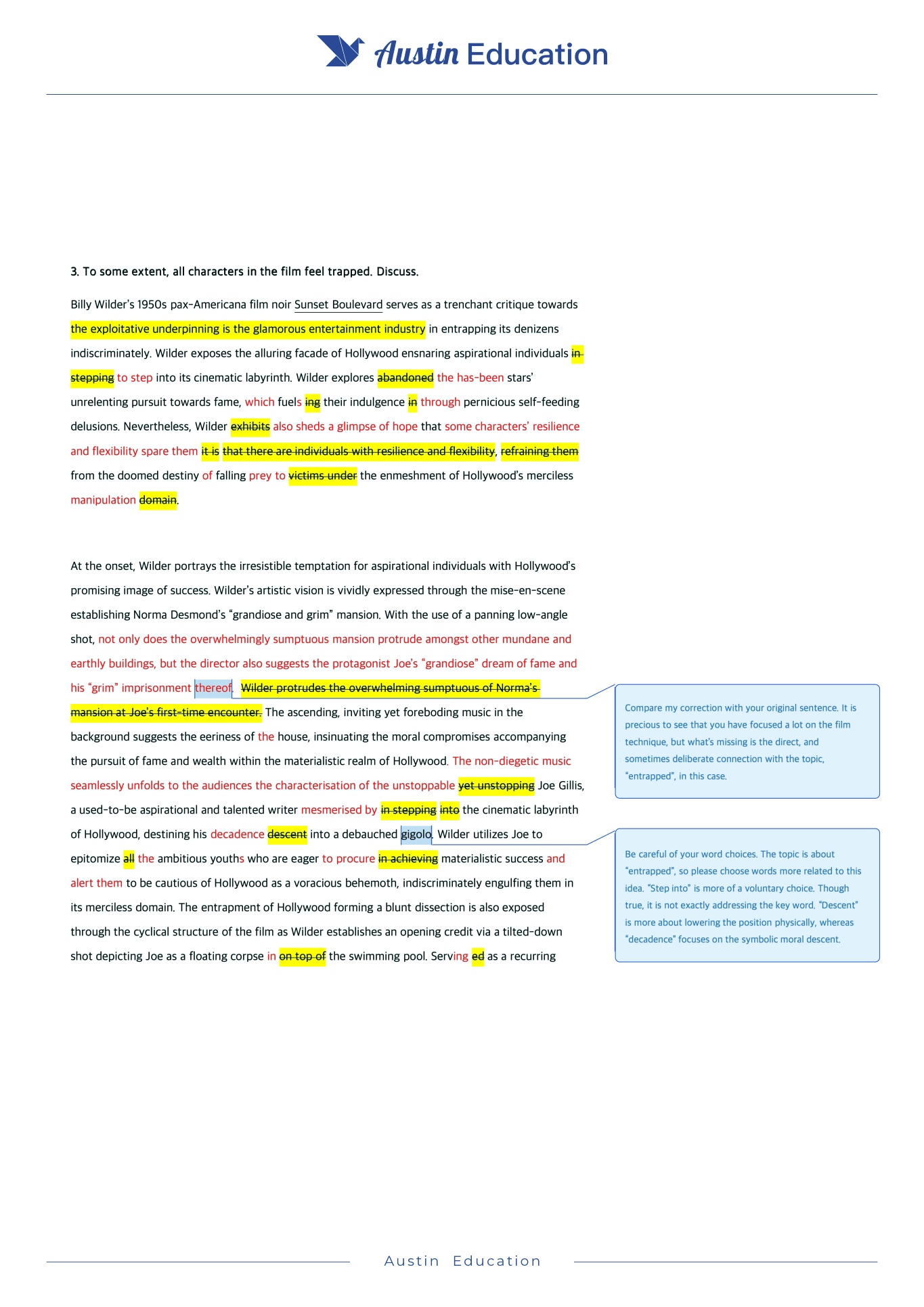
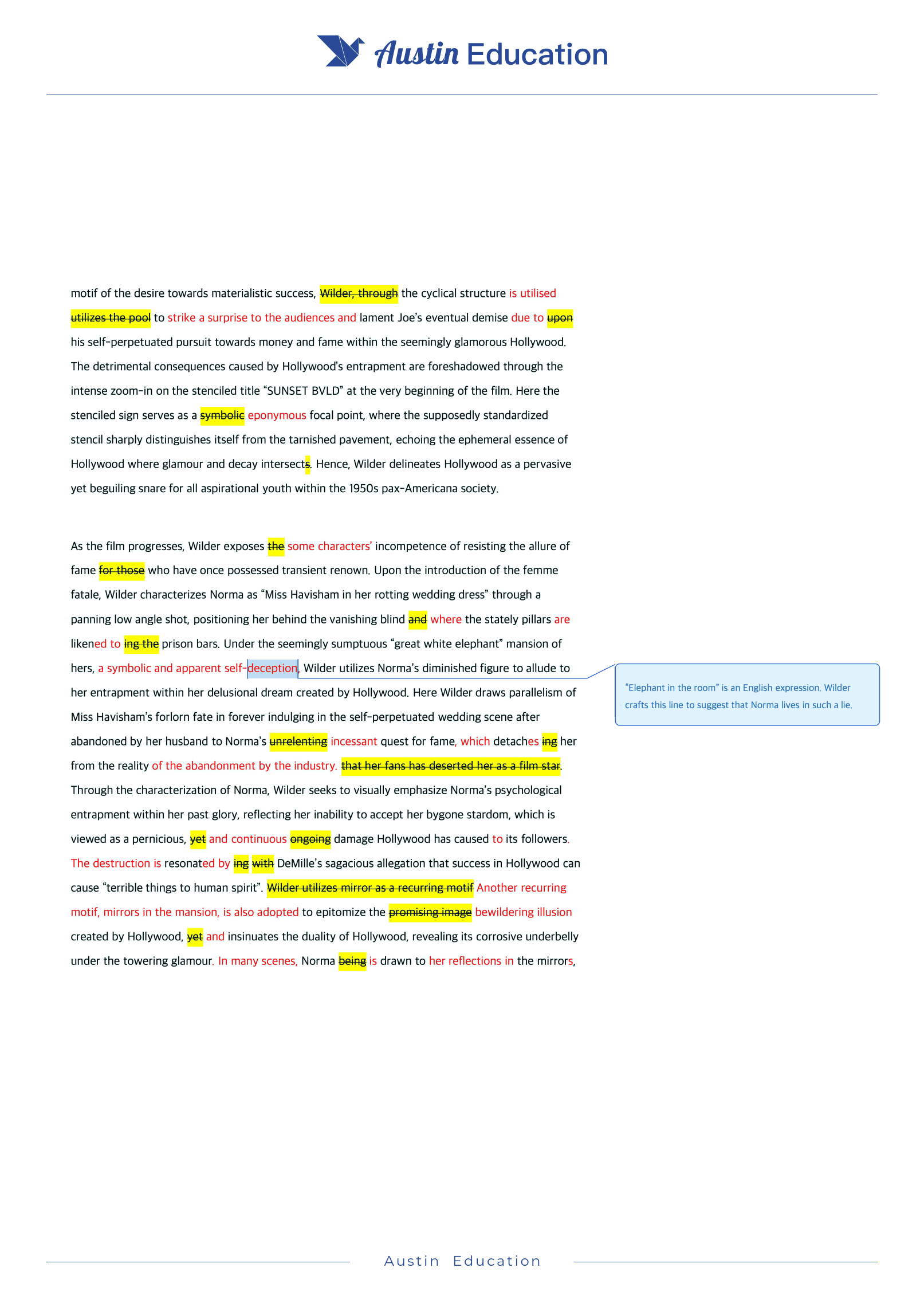
After evaluating the overall quality of the essay, Austin teachers proceed with a second round of adjustments focused on refining language expression. We elevate simple phrases to more sophisticated and appropriate alternatives, correct grammar mistakes, streamline lengthy expressions, and add content where necessary to strengthen key points. These changes ensure that any obvious issues in the article are addressed, making the writing more impactful and logical.
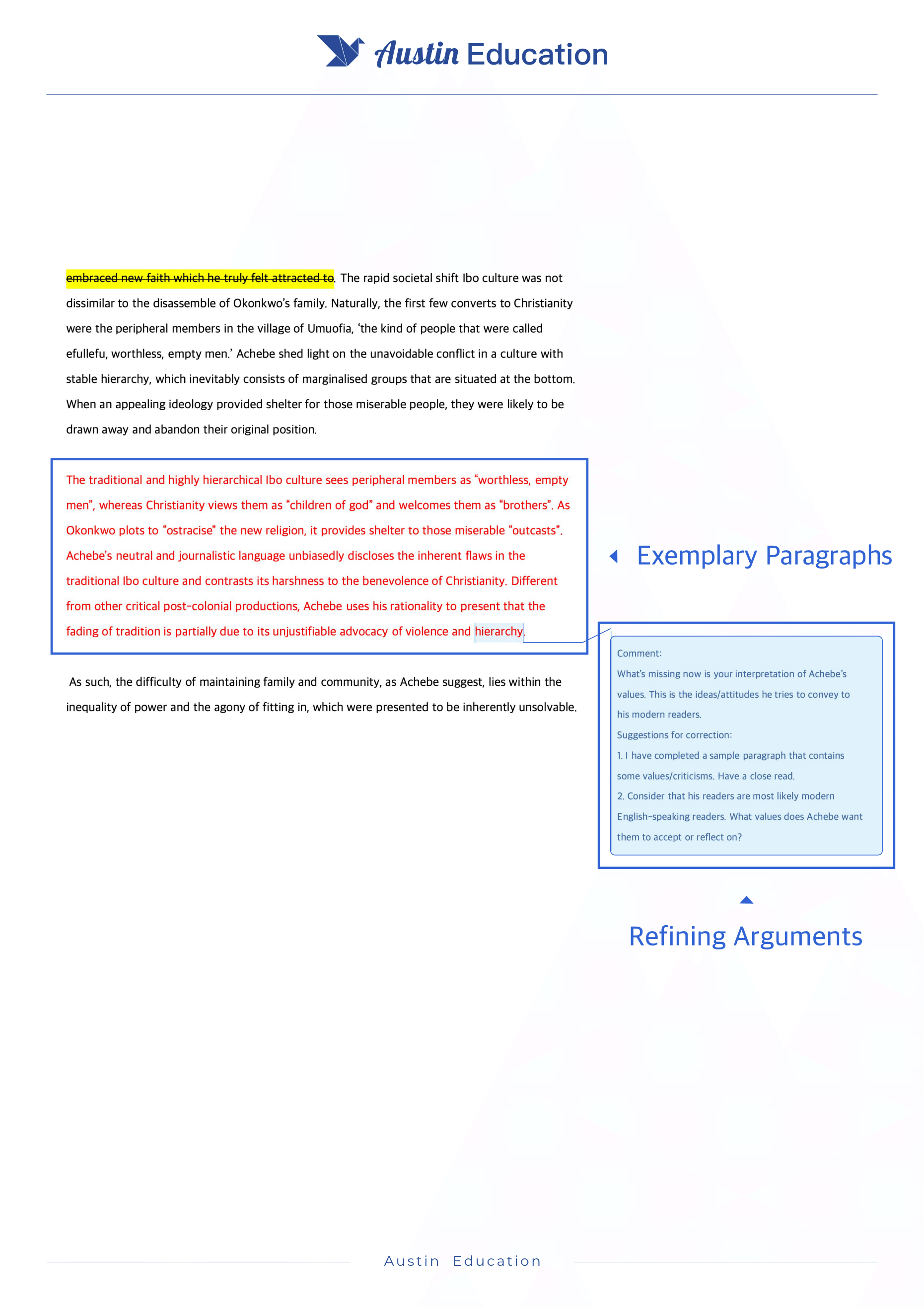
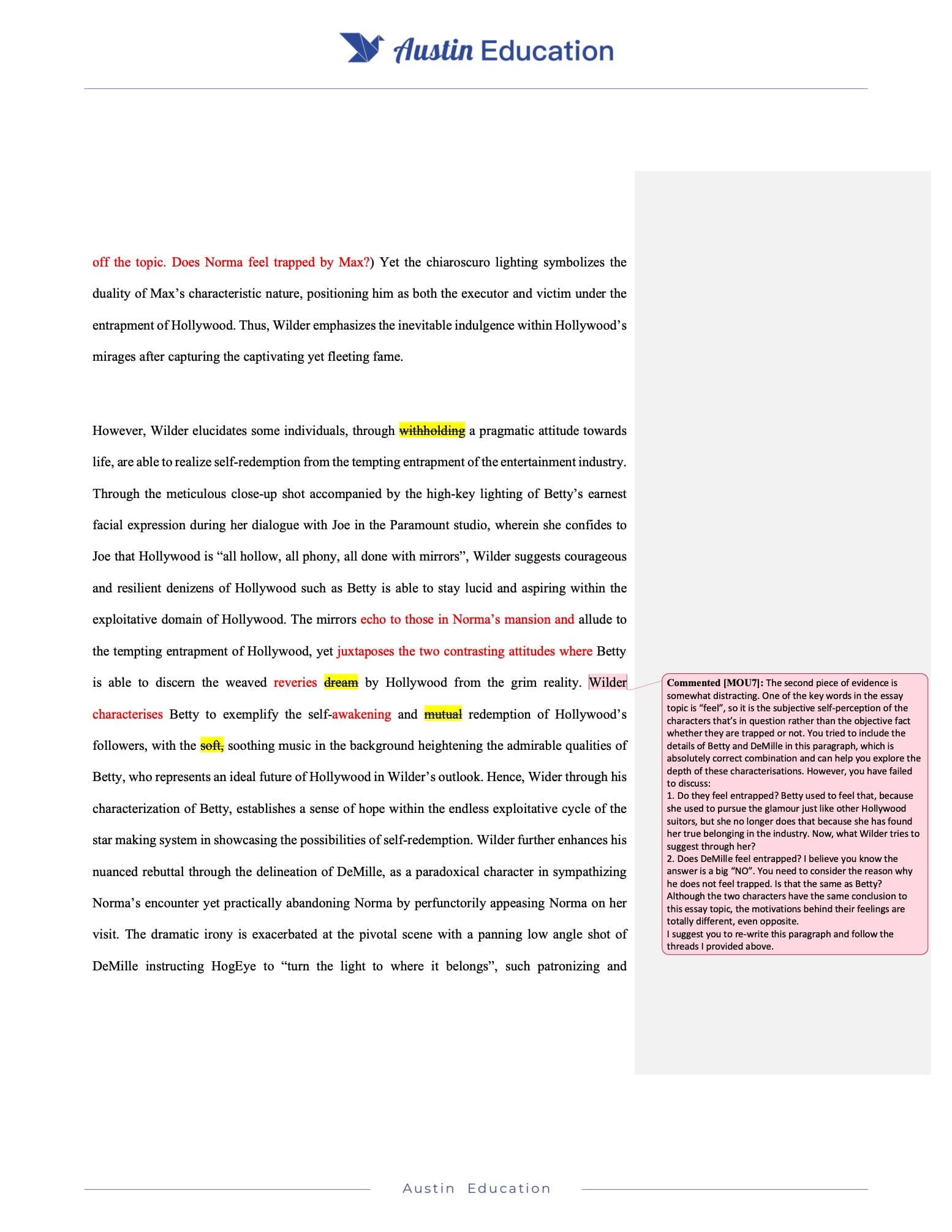
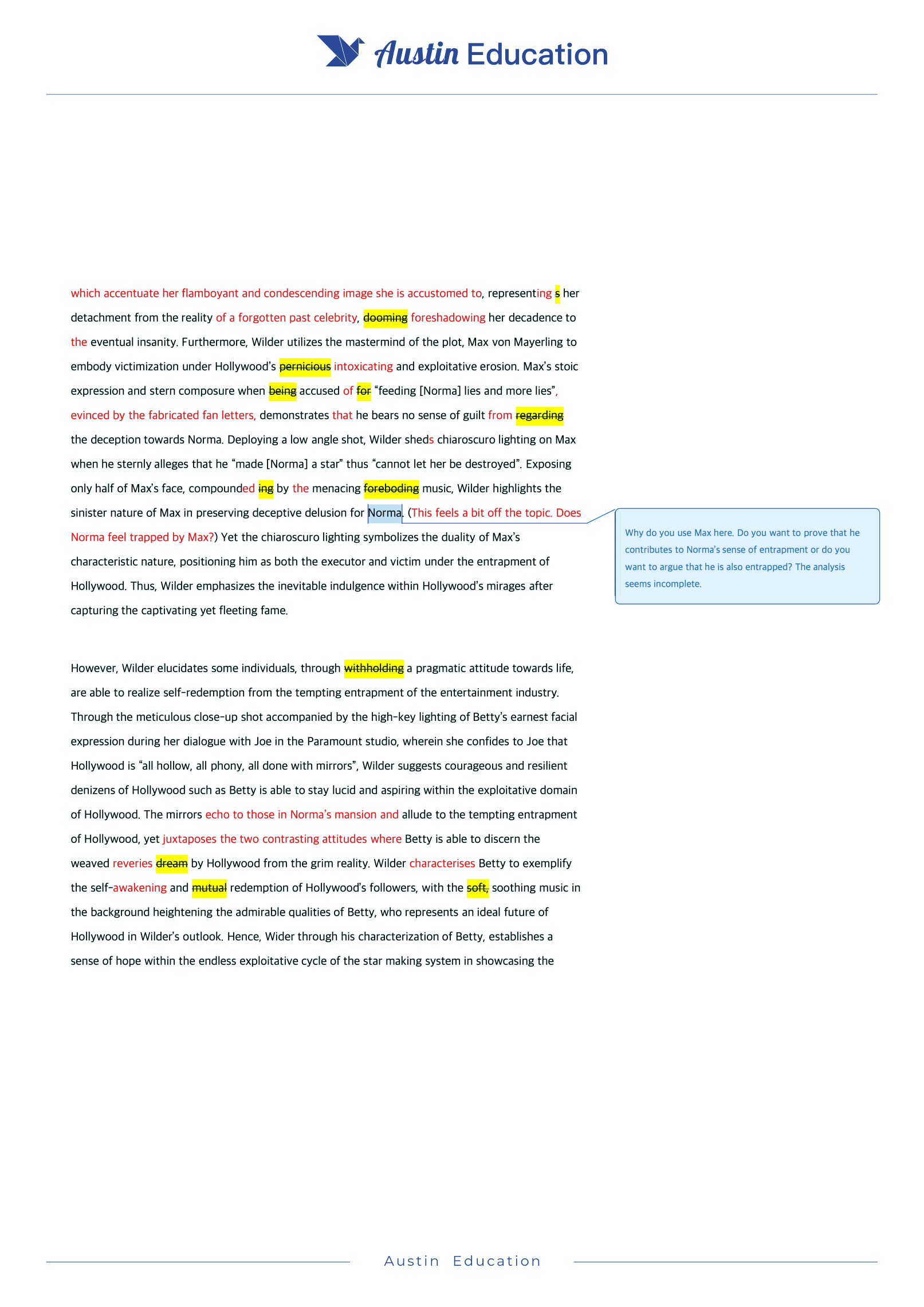
Once the surface-level issues are addressed, Austin teachers dive deeper into the core of the essay. In this step, teachers engage in in-depth discussions with students, guiding them to critically examine their arguments. This process helps students refine their viewpoints, making them more distinct and profound, while also strengthening the persuasiveness of their points. Through this first exchange of ideas between teacher and student, the essay’s evidence becomes more compelling, and the overall structure becomes more logical.
After refining the arguments and enhancing the depth of viewpoints, Austin teachers help students adjust the structure of their essays. A well-written essay requires a clear and logical structure that highlights its depth and persuasiveness. Austin teachers work with students to reorganise paragraph order, ensuring that each section is well-connected and flows smoothly.
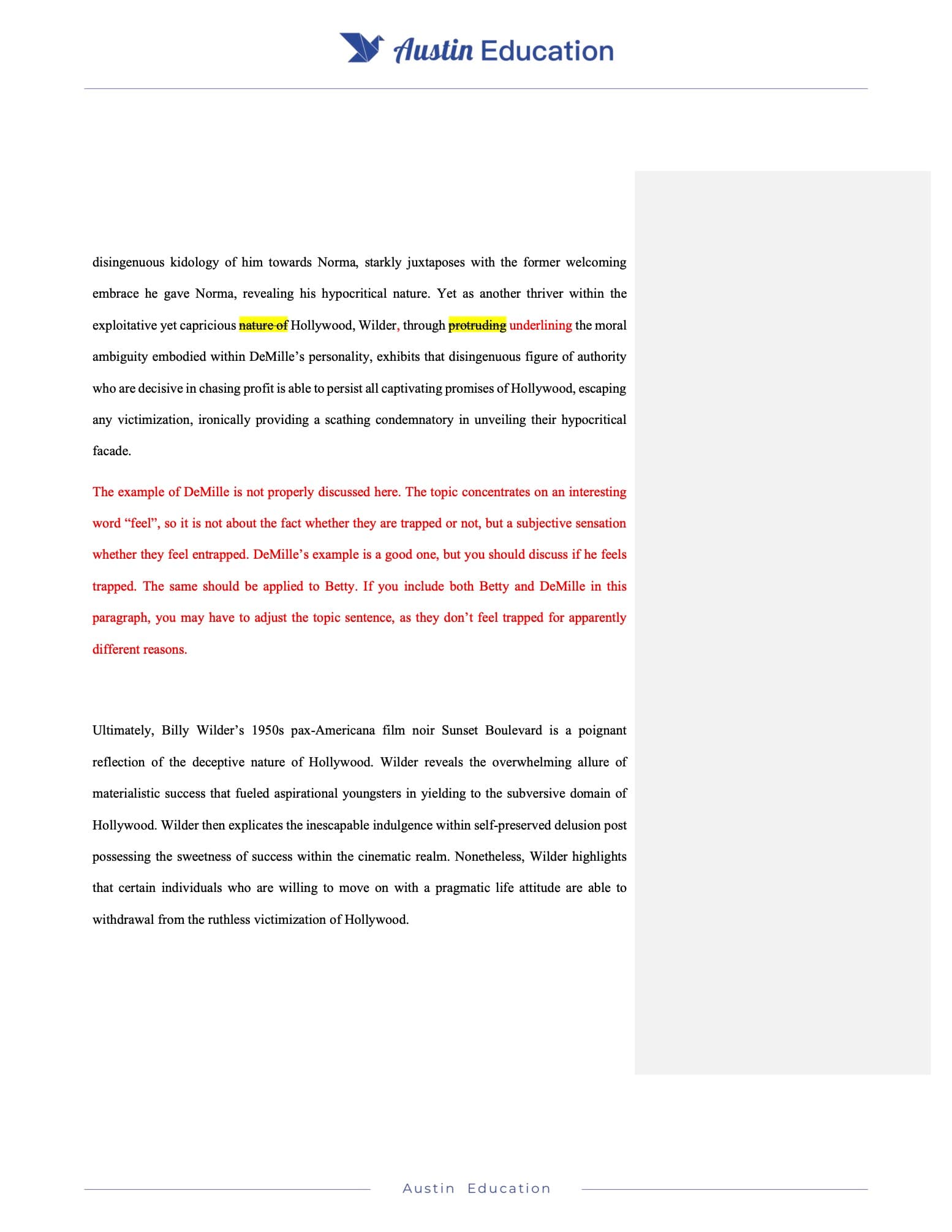
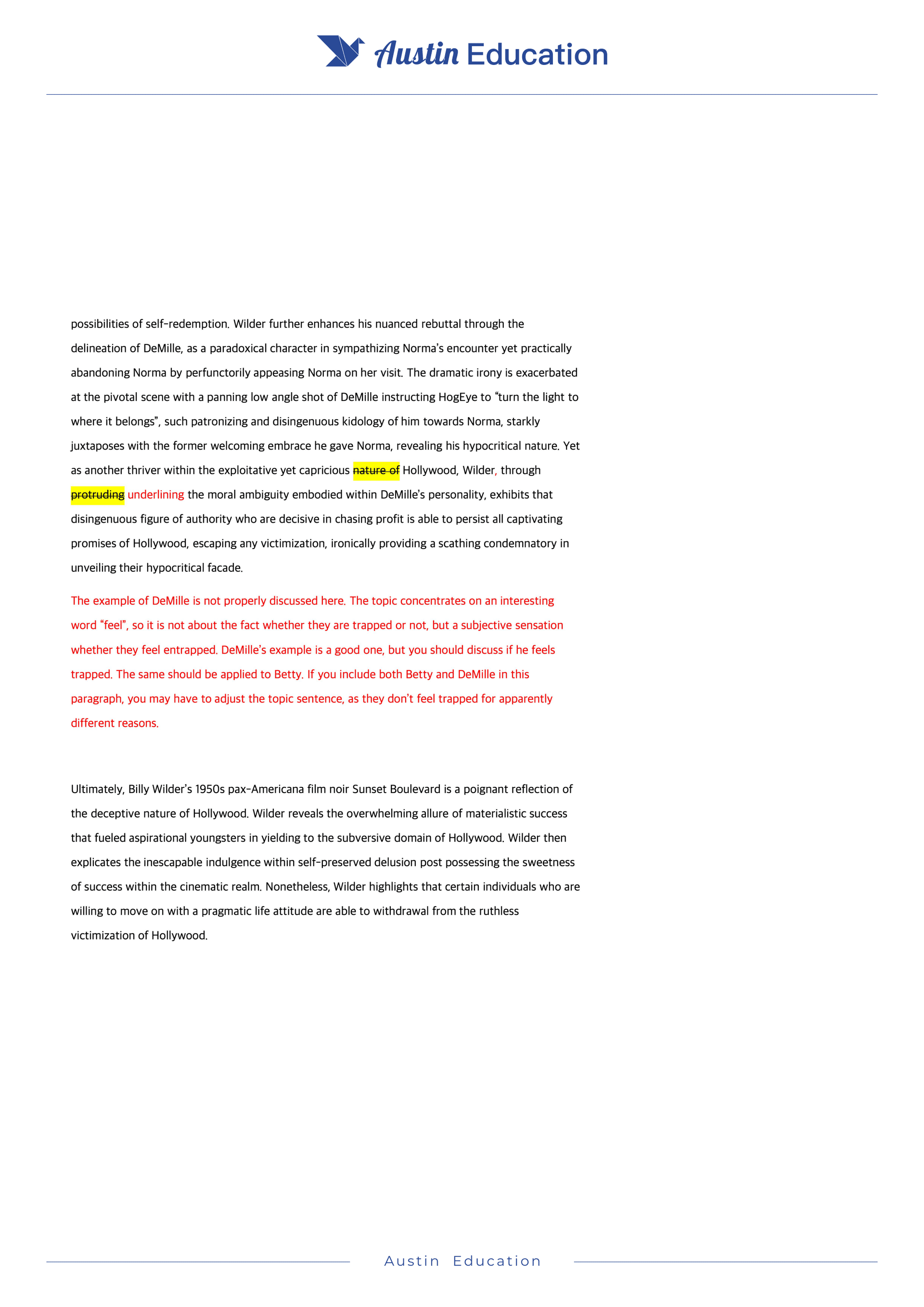
To help students better understand the improvements, Austin teachers write a few optimised sample paragraphs. By comparing them, students can clearly see the differences between their work and high-scoring essays, while also identifying areas for improvement in their original paragraphs. As always, Austin focuses not just on making quick fixes, but on enhancing students’ critical thinking and writing techniques at the root level.
When our teachers receive a student’s essay, the first step is to analyse its overall quality.Are the arguments convincing? Is the writing clear and concise? Does it address the topic effectively? These are the key aspects we carefully evaluate. This thorough initial assessment lays the foundation for more detailed revision feedback.
After evaluating the overall quality of the essay, Austin teachers proceed with a second round of adjustments focused on refining language expression. We elevate simple phrases to more sophisticated and appropriate alternatives, correct grammar mistakes, streamline lengthy expressions, and add content where necessary to strengthen key points. These changes ensure that any obvious issues in the article are addressed, making the writing more impactful and logical.
Once the surface-level issues are addressed, Austin teachers dive deeper into the core of the essay. In this step, teachers engage in in-depth discussions with students, guiding them to critically examine their arguments. This process helps students refine their viewpoints, making them more distinct and profound, while also strengthening the persuasiveness of their points. Through this first exchange of ideas between teacher and student, the essay’s evidence becomes more compelling, and the overall structure becomes more logical.
After refining the arguments and enhancing the depth of viewpoints, Austin teachers help students adjust the structure of their essays. A well-written essay requires a clear and logical structure that highlights its depth and persuasiveness. Austin teachers work with students to reorganise paragraph order, ensuring that each section is well-connected and flows smoothly.
To help students better understand the improvements, Austin teachers write a few optimised sample paragraphs. By comparing them, students can clearly see the differences between their work and high-scoring essays, while also identifying areas for improvement in their original paragraphs. As always, Austin focuses not just on making quick fixes, but on enhancing students’ critical thinking and writing techniques at the root level.
Term 1
This content is locked. Please contact us to unlock.