Skip to content
Austin EducationAustin Education
  • Home
  • Achievements
Contact UsMy Austin
ContactMy Austin
Home
Achievements
Courses
Resources
Why Austin
Loading
Austin Education

Dedicated to providing the best educational resources for all students across Australia.

Contact Us
+61466822995enquiries@austinedu.com.au
  • Facebook
  • Instagram
  • LinkedIn
  • Xiaohongshu

Courses

  • VCE Maths Methods
  • VCE Specialist Maths
  • VCE English / EAL
  • VCE Latin
  • VCE Chemistry
  • UCAT Preparation
  • Scholarship Victoria
  • Selective School Program
View all courses→

About

  • About Us
  • VCE Tutoring
  • Campuses
  • Achievements
  • Join Us
  • Contact Us

Resources

  • Book a Trial
  • Blog
  • FAQ
  • ATAR Calculator
  • Webinars
  • Homework System

Campuses

  • Box Hill Campus
  • Mount Waverley VCE Campus
  • Mount Waverley AusYouth Campus
  • Melbourne CBD Campus
  • Ormond Campus
  • Point Cook Campus
  • Adelaide Campus
© 2025 Austin EducationTermsSitemap
HomeCoursesUCATUCAT Program

Nationwide Online Program

Australia-Wide Online
UCAT Tutoring Program

Live online classes, personalised mentoring, and comprehensive UCAT preparation for students across Australia. Reaching elite scores through systematic, skills-based training.

Book a Trial LessonView Programs & Pricing
  • 2570

    Top 1% Score

    Highest program record

  • 2420+

    Top 4% Score

    Achieved by multiple students

  • 100%

    Interview Qualification

    All full-program students

  • 85%

    Achieved 800+

    In at least one UCAT section

Why Austin?

UCAT Is Not a Knowledge Test.
It Is a Skills Test.

Unlike school exams, UCAT does not reward memorisation. Success depends on your ability to think critically, make decisions quickly, analyse information accurately, and perform under intense time pressure.

These are skills — and skills can be systematically trained. Learning UCAT is like learning the piano: improvement comes not from reading about music, but from building technique, pattern recognition, speed, and confidence through deliberate, structured practice.

At Austin Education, we focus on developing the underlying cognitive abilities that drive UCAT performance — helping students improve far beyond test-taking tricks and shortcuts. Our program teaches every skill from the ground up, then refines it across multiple preparation phases until it becomes instinctive.

Explore Our Methodology
VR

Verbal Reasoning

Speed reading, logical inference, and critical analysis of written passages under 30-second time pressure.

DM

Decision Making

Identifying logical fallacies, mastering syllogisms, and applying evidence-based reasoning under ambiguity.

QR

Quantitative Reasoning

Rapid mental math, selective data extraction, and strategic estimation under extreme time pressure.

SJT

Situational Judgement

Internalising GMC ethics and professional medical standards to navigate complex clinical scenarios.

The Exam

What Does the UCAT Test?

The UCAT (University Clinical Aptitude Test) is a 2-hour exam with 184 questions across four cognitive subtests. Developed by UK medical and dental schools, it measures the core abilities seen in successful medical professionals — not academic knowledge, but the thinking skills that define great clinicians.

VRVerbal Reasoning22 min · 44 questions

Assesses critical analysis of written texts and logical inference from passages. The challenge is the 30-second pace per question and avoiding subjective assumptions.

Rapid information extraction, comprehension, and authorial-intent interpretation.

DMDecision Making37 min · 35 questions

Apply logical reasoning to evaluate information, identify patterns, and make evidence-based decisions from complex or incomplete data.

Logical analysis, inference generation, argument evaluation, and effective decision-making.

QRQuantitative Reasoning26 min · 36 questions

Use numerical and statistical reasoning to interpret data and solve practical problems. The challenge is data literacy, estimation, and rapid quantitative analysis.

Navigating complex data while choosing efficient calculation strategies under time pressure.

SJTSituational Judgement26 min · 69 questions

Evaluate professional scenarios and determine the most appropriate responses using ethical and professional principles under real clinical conditions.

Professional judgement, ethical reasoning, communication, and patient-centred decision-making.

VR

Verbal Reasoning

22 min44 questions

Assesses critical analysis of written texts and logical inference from passages. The challenge is the 30-second pace per question and avoiding subjective assumptions.

Rapid information extraction, comprehension, and authorial-intent interpretation.

DM

Decision Making

37 min35 questions

Apply logical reasoning to evaluate information, identify patterns, and make evidence-based decisions from complex or incomplete data.

Logical analysis, inference generation, argument evaluation, and effective decision-making.

QR

Quantitative Reasoning

26 min36 questions

Use numerical and statistical reasoning to interpret data and solve practical problems. The challenge is data literacy, estimation, and rapid quantitative analysis.

Navigating complex data while choosing efficient calculation strategies under time pressure.

SJT

Situational Judgement

26 min69 questions

Evaluate professional scenarios and determine the most appropriate responses using ethical and professional principles under real clinical conditions.

Professional judgement, ethical reasoning, communication, and patient-centred decision-making.

2025/2026 Scoring Update: The UCAT cognitive total is now scored out of 2700 (300–900 per section across VR, DM, and QR). The Situational Judgement Test is reported as a separate scaled score. Austin's curriculum has been fully updated for the new format.

Medicine Entry

Medicine Entry Pathway:
The Three Pillars of Medical School Entry

Gaining entry to an undergraduate medicine program in Australia requires excellence across three interconnected pillars. A strong performance in any one area cannot compensate for a weakness in another.

ATAR

99.65+ competitive

The core academic threshold. Competitive medicine courses generally require an ATAR of 99.65 or above, making consistent academic performance throughout Years 11 and 12 essential.

UCAT

94th percentile+ competitive

A measure of cognitive skills and professional attributes under time pressure. A score above the 94th percentile is typically required for a competitive interview invitation at top Australian universities.

Interview

MMI & Panel formats

The final and most heavily weighted stage. The MMI assesses communication, empathy, ethical judgement, and clinical reasoning. Securing an interview is only the second step — performing well is decisive.

Curriculum

What's Included in
Austin's UCAT Tutoring Program

Every element of the Austin UCAT program is designed to build a specific capability. No filler sessions, no generic content — just purposeful, structured development from day one.

Weekly · Live

2-Hour Live Lecture

Led by Head Tutor Tiffany. Core skills delivery, worked examples, and high-yield strategy sessions focused on immediate application and deep understanding.

2 Lecture Hours

Weekly · Small Group

1-Hour Tutorial

Targeted practice and personalised feedback in a small group setting. Build real connections, receive individual attention, and consolidate the week's skills.

1 Tutorial Hour

1-on-1 · Head Tutor

Session with Tiffany

A direct strategic session to answer complex questions, identify personal blind spots, and tailor your preparation path to individual needs and goals.

Personalised Strategy

2× Consultations

Tutor Deep-Dives

Two additional sessions with specialist tutors to focus on specific subtests or consolidate weak areas with targeted, expert-level guidance.

Subtest Specialists

Anytime · Online

Unlimited Online Support

Learning doesn’t stop when class ends. Our tutors are available online to answer questions, explain difficult concepts, review problem-solving approaches, and provide timely support whenever students need it, ensuring continuous progress and confidence throughout their UCAT preparation.

Continuous Support

  • 36 Weeks — The Spiral Learning System — Austin's proprietary skill-building system

  • 5 Full Mock Exams — Complete offline and online simulations

  • Lesson Recordings — Available after each class for indefinite review

The Spiral Revision System

UCAT Mentoring and Skills Framework:
36 Weeks of Continuous Consolidation

All four UCAT sections — VR, DM, QR, and SJT — are taught simultaneously every week. Knowledge points repeat, deepen, and expand cyclically throughout the program. This dynamic approach ensures all cognitive pathways remain active throughout the preparation cycle, continuously reinforcing skills while gradually introducing advanced shortcuts and high-frequency error analysis.

1

Weeks 1–9: Understanding

Core theory and fundamental logical frameworks for each subtest. Baseline mock diagnostics to identify strengths and weaknesses from day one.

VRDMQRSJT
2

Weeks 10–27: Application

Intensive practice with varying difficulty levels and time pressure drills. Pattern recognition, specific question tactics, and high-frequency error analysis.

VRDMQRSJT
3

Weeks 28–36: Mastery

Full-length simulation, error analysis, and strategic fine-tuning. Interview coaching and final exam readiness under real testing conditions.

VRDMQRSJT
UnderstandingApplicationMastery
36 Weeks

Progress Spiral

Skill Development

From Foundation to
Exam Mastery

  1. 01

    Foundation Skills

    Building core thinking processes and question-specific techniques from the ground up.

    →
  2. 02

    Skill Integration

    Combining multiple sub-skills through targeted exercises and guided small-group practice.

    →
  3. 03

    Performance Training

    Applying skills under strict timed conditions through intense drills and simulation.

    →
  4. 04

    Exam Mastery

    Refining strategy, improving consistency, and maximising peak performance for test day.

Every skill we teach lives inside a complete, mapped system. The UCAT Syllabus lays out all 36 weeks of lessons and mocks, while the UCAT Skill Tree breaks every subtest into trainable skills, subtypes, and mastery targets.

Book Free Trial

The Austin Difference

A Complete UCAT Skill System,
Not Just More Questions

Many UCAT courses focus primarily on question volume. Some teach section-specific strategies in isolation. Austin is built differently — a complete, integrated skill system where every piece has a place and every ability is trained systematically.

Teaching Method

Basic Preparation
Practice questions and worked solutions only
Better Preparation
Useful tips and strategies for selected question types
The Austin System
Complete map of every skill, subtype, and exam pathway

Skill Development

Basic Preparation
Students build their own approach through trial and error
Better Preparation
Isolated shortcuts without a complete system
The Austin System
Structured, multi-stage learning pathway from Year 10 to Year 12

Preparation Horizon

Basic Preparation
Short-term exam preparation
Better Preparation
Short-term with some strategy
The Austin System
Long-term cognitive performance improvement and medical interview readiness

Resources

Basic Preparation
Generic question banks
Better Preparation
Some proprietary materials
The Austin System
4 exclusive workbooks, Medify question bank, 5 full-length mocks
ApproachBasic PreparationBetter PreparationThe Austin System
Teaching MethodPractice questions and worked solutions onlyUseful tips and strategies for selected question typesComplete map of every skill, subtype, and exam pathway
Skill DevelopmentStudents build their own approach through trial and errorIsolated shortcuts without a complete systemStructured, multi-stage learning pathway from Year 10 to Year 12
Preparation HorizonShort-term exam preparationShort-term with some strategyLong-term cognitive performance improvement and medical interview readiness
ResourcesGeneric question banksSome proprietary materials4 exclusive workbooks, Medify question bank, 5 full-length mocks

Preparation Pathway

When Should You Start?
The Earlier, The Better

Austin Education strongly recommends starting UCAT preparation in Years 10 and 11, so students can fully focus on ATAR studies in Years 11 and 12. Starting UCAT training one year earlier allows students to devote more energy to their academic studies during the critical Year 12 period, without being preoccupied with UCAT revision.

Research on skill acquisition shows that complex cognitive skills develop most effectively through spaced practice over extended periods, allowing students to build automaticity, strengthen reasoning ability and achieve long-term performance gains without the pressure of intensive short-term preparation.

Year 10

  • Build Strong Foundations
  • Full Skillset Learning

Get familiar with all UCAT question types, build core strategic frameworks and finish the first round of full mock tests. This stage focuses on laying a solid foundation and mastering the overall exam structure, enabling students to fully grasp question patterns and solving methods with less academic pressure.

Year 11

  • Systematic Learning
  • Develop Advanced Skills

Develop higher-order reasoning skills through targeted practice, progressive challenge and structured feedback. This stage focuses on refining techniques, improving efficiency and transforming learned strategies into automatic habits through deliberate, spaced practice.

Year 12

  • Mastery of Skills
  • Mock Exam Drills
  • Interview Coaching

Consolidate key strategies through high-frequency mock exams and targeted revision. This stage centres on performance optimisation, exam readiness and interview preparation, ensuring students can consistently perform at their highest level in both the UCAT and medical school selection process.

Starting in Year 12? Don't be discouraged. Focused, well-structured preparation at any stage will move your score. The goal is to make every week count.

The Elite Team

Australia's Leading
UCAT Mentoring Team

Our UCAT teaching team brings together exceptional academic achievement, outstanding UCAT performance and real medical school experience. Led by experienced course directors and supported by high-achieving mentors studying at Australia's leading universities, Austin delivers a structured learning system designed to build the skills required for UCAT success. Every lesson is informed by real exam experience, ensuring students receive practical strategies, personalised guidance and expert support throughout their medical admissions journey.

A Teaching Team Built on Proven Results and Real Experience

Tiffany Xu

Course Director & Medical Mentor

Tiffany Xu

ATAR 99.90UCAT 3200+Current MD CandidateAlfred Hospital Student Site Representative

Tiffany leads Austin's UCAT Program, combining first-hand medical school experience with a structured, skills-based teaching approach to help students achieve their highest potential.

  • 100% of students reached the UCAT interview threshold
  • Highest student UCAT score: 2570 (99th Percentile)
  • Creator of Austin's UCAT Skill Development Framework
  • Expert in long-term UCAT preparation and medical interview coaching
Jason Song

Jason Song

UCAT Specialist Tutor

UCAT 3260ATAR 99.90

Monash University Bachelor of Medical Science and Doctor of Medicine (MD). One of Austin's highest-scoring tutors in the program.

Mark Xu

Mark Xu

UCAT Specialist Tutor

UCAT 2520ATAR 99.95

Received offers from Monash University Unbonded Medicine and Oxford University Medicine. Exceptional track record in competitive medical entry.

Zimo Xie

Zimo Xie

UCAT Specialist Tutor

UCAT 2430ATAR 99.70

Monash University Bachelor of Medical Science and Doctor of Medicine (MD). Expert in Decision Making and Situational Judgement training.

Matthew Wu

Matthew Wu

UCAT Specialist Tutor

UCAT 2560

Monash University Bachelor of Medical Science and Doctor of Medicine (MD). Achieved Austin's highest UCAT score — 99th percentile nationally.

Vinay Doddi

Vinay Doddi

UCAT Specialist Tutor

UCAT 2450University of Melbourne

University of Melbourne Bachelor of Commerce. Brings a rigorous analytical approach to Quantitative Reasoning and Decision Making.

Clark Xue

Clark Xue

UCAT Specialist Tutor

UCAT 2400University of Melbourne

University of Melbourne Bachelor of Science / Master of Engineering. Specialises in Quantitative Reasoning and data interpretation.

Medical Pathway Expertise

Built on Expertise
Across the Medical Pathway

A successful medical journey requires more than UCAT preparation. It begins with strong academic foundations, informed subject choices, and a deep understanding of the medical admissions pathway.

To ensure our program reflects the highest standards of medical education, the Austin UCAT Program is supported by a team of experienced educators and medical professionals who contribute their expertise to our curriculum development and program design.

Their insights help us create a comprehensive learning experience that connects VCE academic preparation, UCAT skill development, and the broader requirements of medical entry.

Academic & Medical Education Contributors

Jason Wallace

Jason Wallace

VCE Chemistry Specialist | Curriculum Contributor

With over 25 years of frontline VCE Chemistry teaching experience, Jason is one of Victoria's most respected Chemistry educators.

His expertise includes:

  • Principal Author of the VCAA VCE Chemistry Study Design
  • Over 10 years of official VCAA collaboration as an examiner and former Assistant Chief Examiner
  • Author and contributor to leading Chemistry resources, including Edrolo VCE Chemistry textbooks, Jacaranda, NEAP, and other major educational publications
  • Proven record of student success, including average study scores above 40 and multiple Raw 50 achievements

Jason's expertise supports Austin's understanding of the academic foundations required for a competitive medical pathway.

Joshua Ren

Joshua Ren

Doctor of Medicine | Medical Education Contributor

Joshua brings extensive medical experience and student development expertise to the design of Austin's medical pathway programs.

His background includes:

  • Doctor of Medicine | GP Registrar
  • Formerly worked at Box Hill Hospital and St Vincent's Hospital
  • Two-time Dean's List Award recipient
  • Led Austin's Medical Project, supporting the development of nearly 100 medical students
  • Eight consecutive years teaching VCE high achievers, including ATAR 99.95 students

Joshua's medical journey and educational experience contribute valuable insights into the skills, preparation, and mindset required for successful medical entry.

Explore VCE Chemistry Program

Learning Resources

UCAT Question Bank and Mock Exams
Precisely Designed for Efficient Learning

A high UCAT score is built through more than classroom teaching. Our comprehensive learning ecosystem combines structured textbooks, industry-leading question banks, full-length mock exams, and personalised learning resources to help students develop the knowledge, skills and exam techniques required for success.

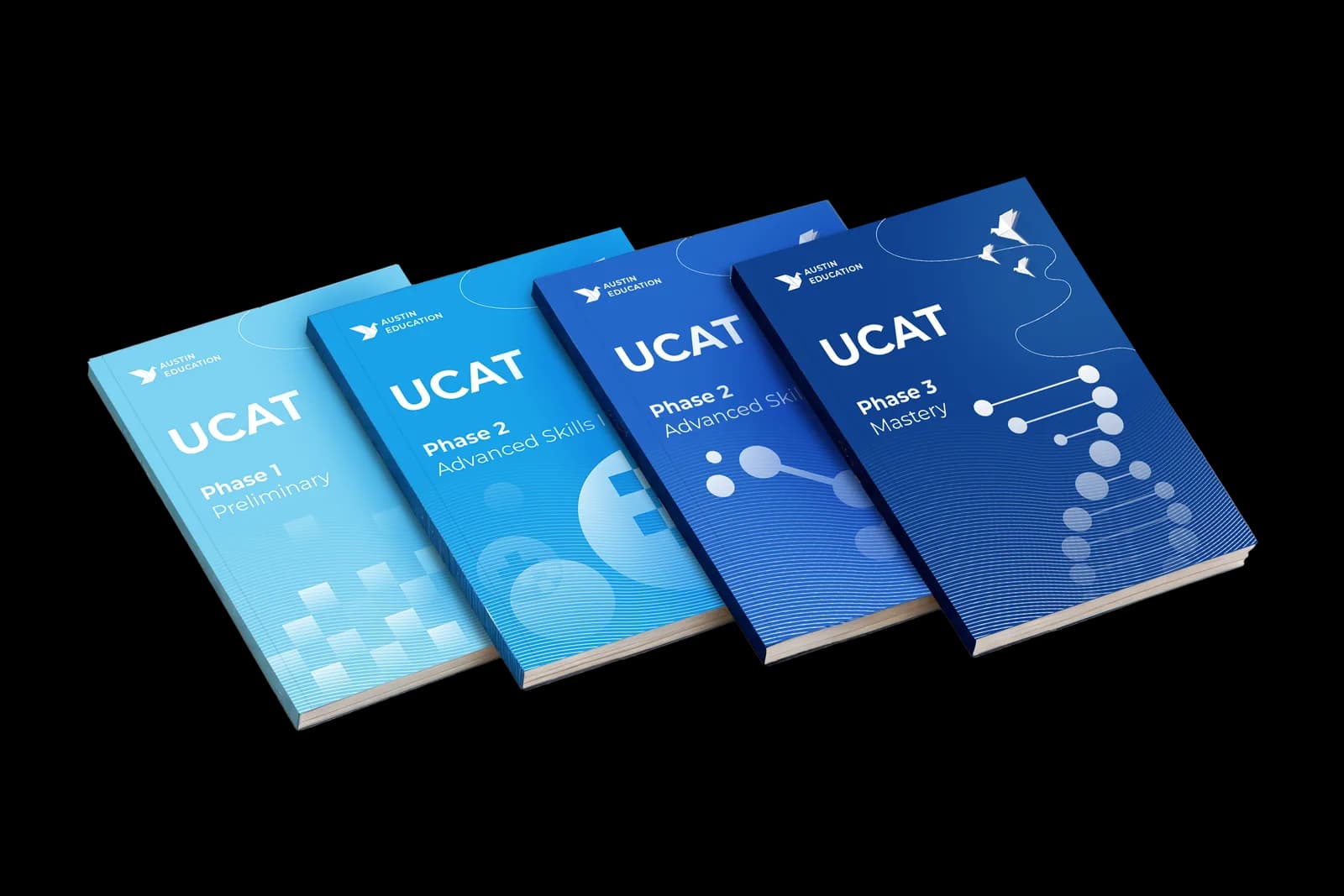
4 Exclusive Workbooks

Proprietary materials systematically breaking down every question type, subtype, and skill across all four UCAT subtests. Covering the full Austin Skill Framework.

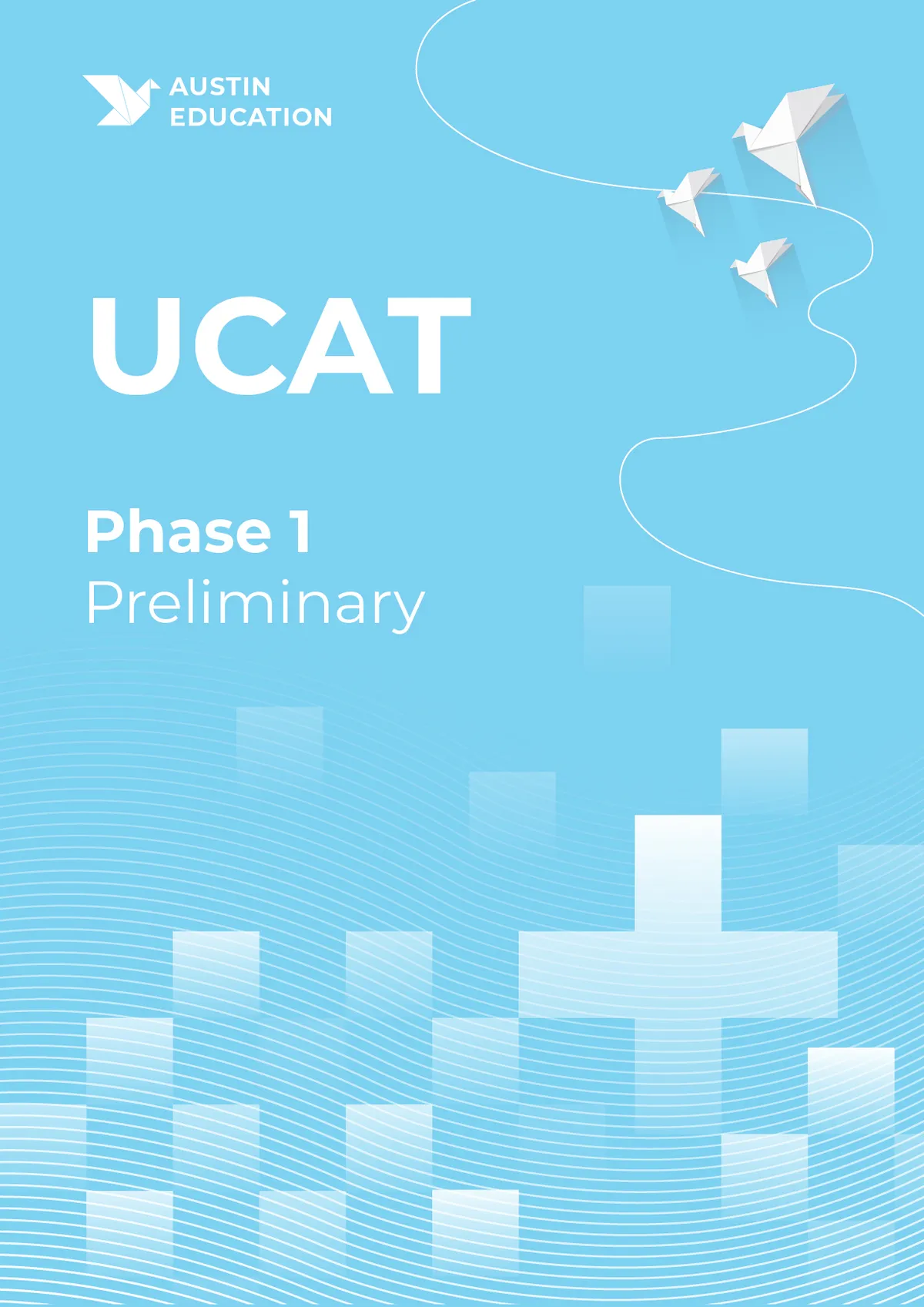
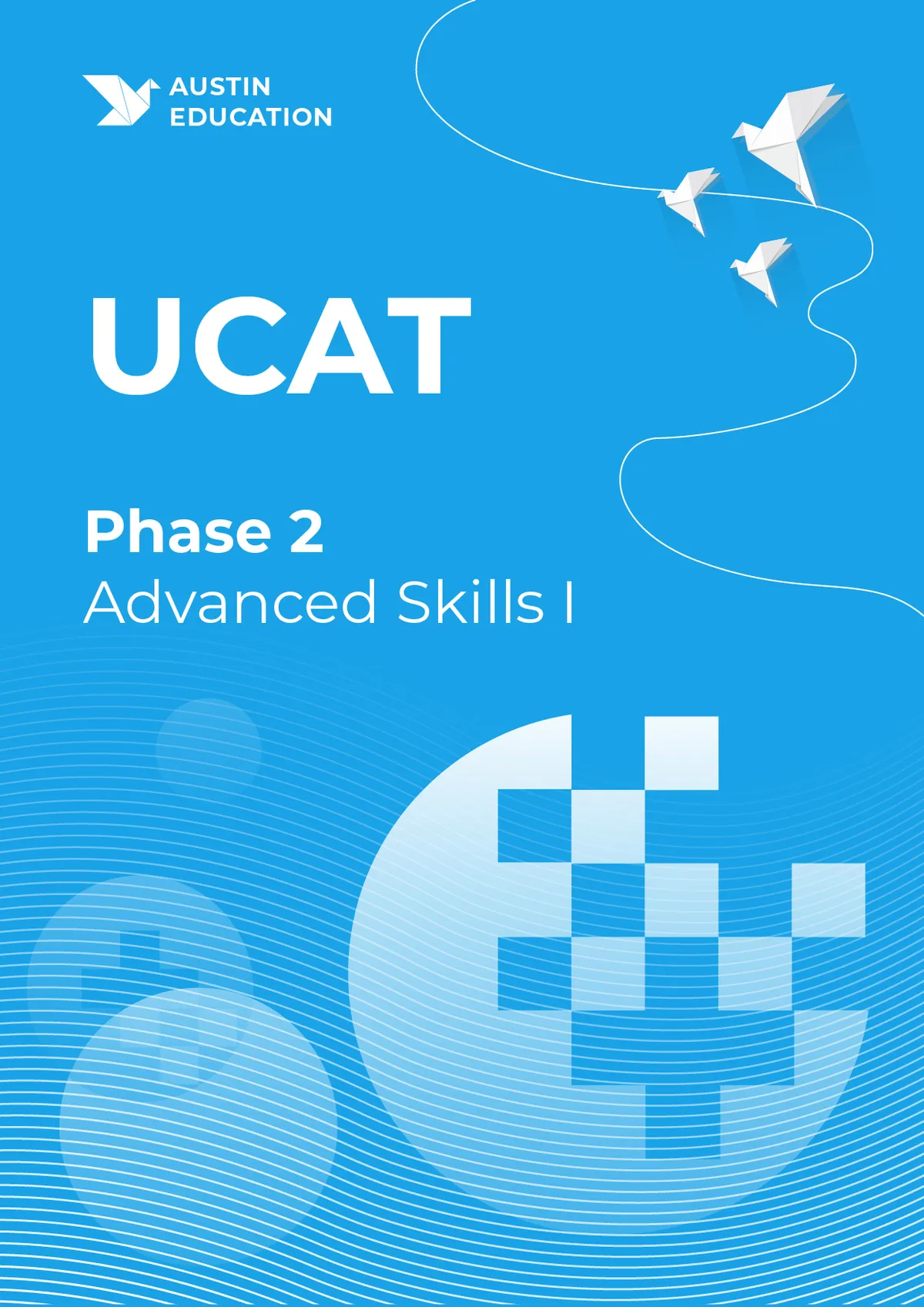
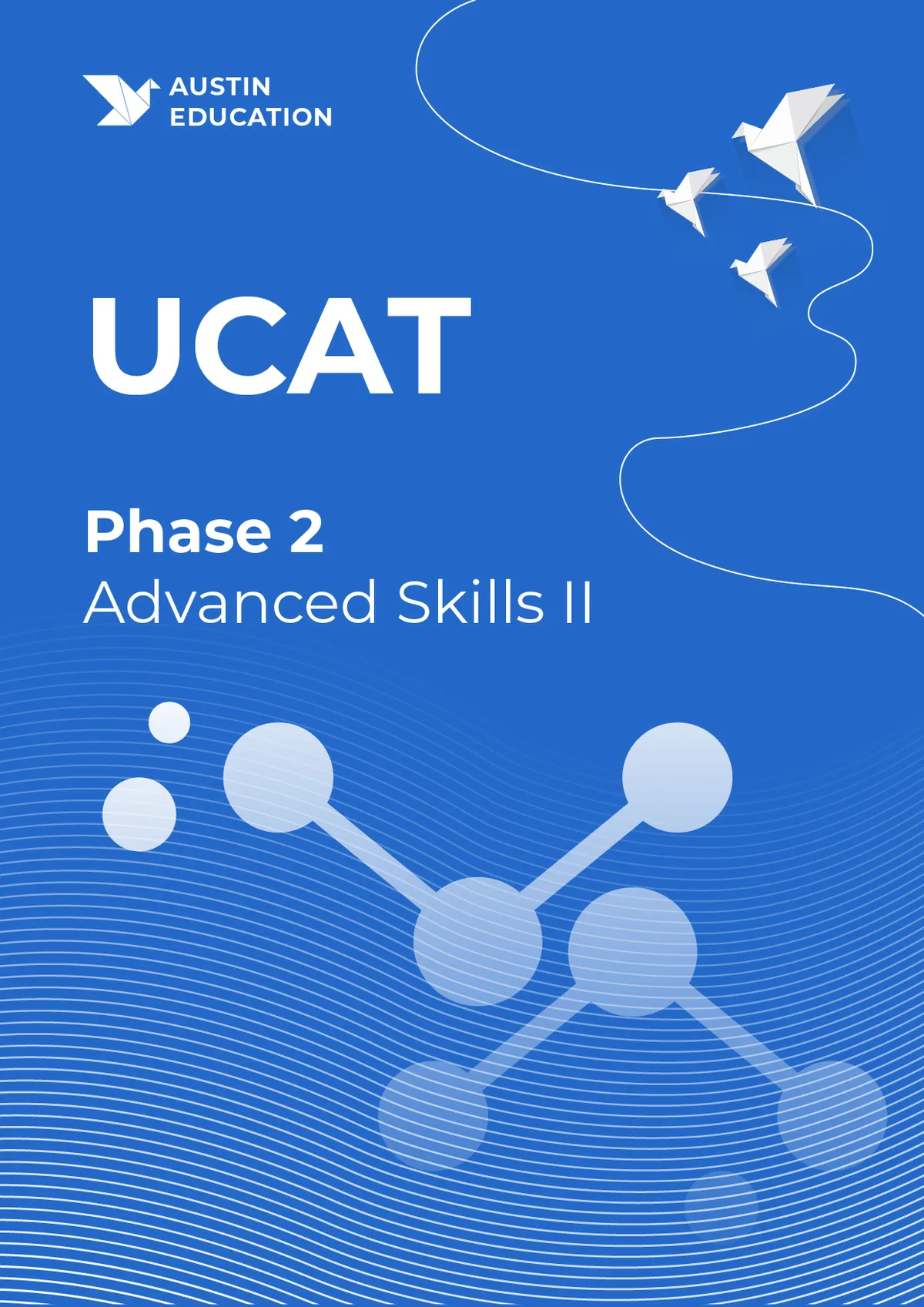
Phase 1: PreliminaryPhase 2A: Advanced IPhase 2B: Advanced IIPhase 3: Mastery
UCAT Phase 1 Preliminary workbook cover
UCAT Phase 2A Advanced I workbook cover
UCAT Phase 2B Advanced II workbook cover
UCAT Phase 3 Mastery workbook cover
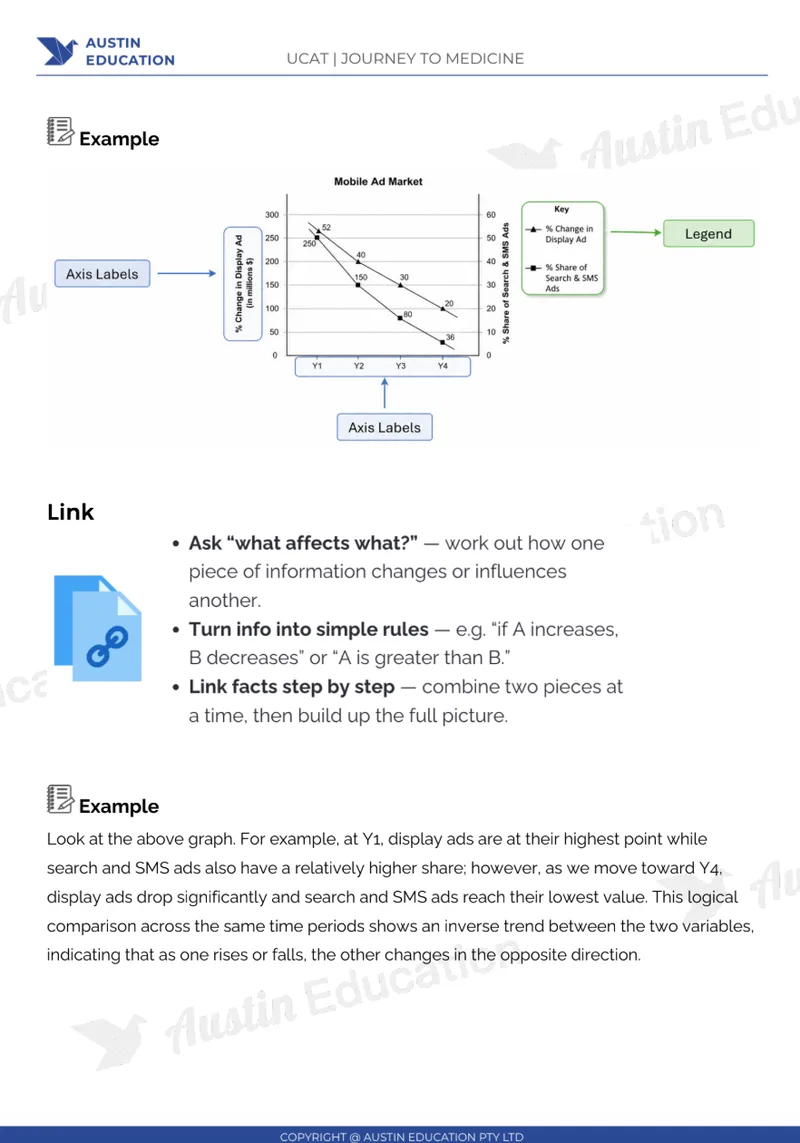
Workbook sample page — chart interpretation strategy for Decision Making
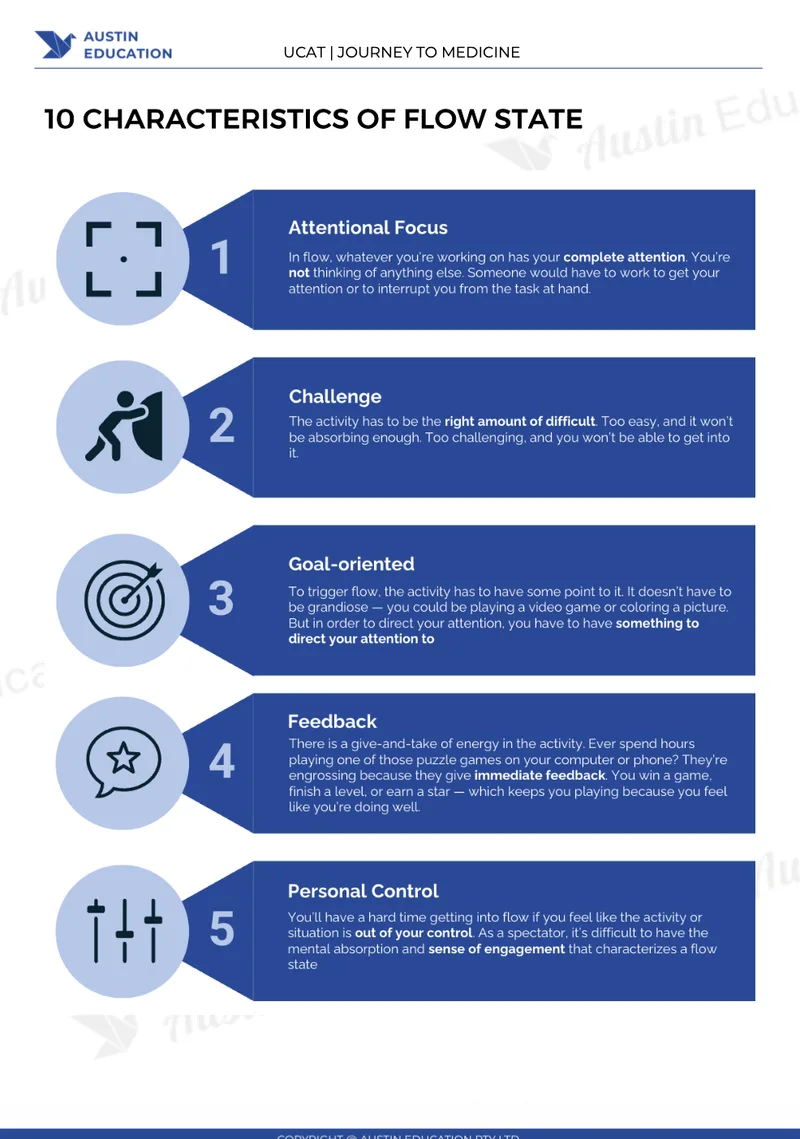
Workbook sample page — the 10 characteristics of flow state
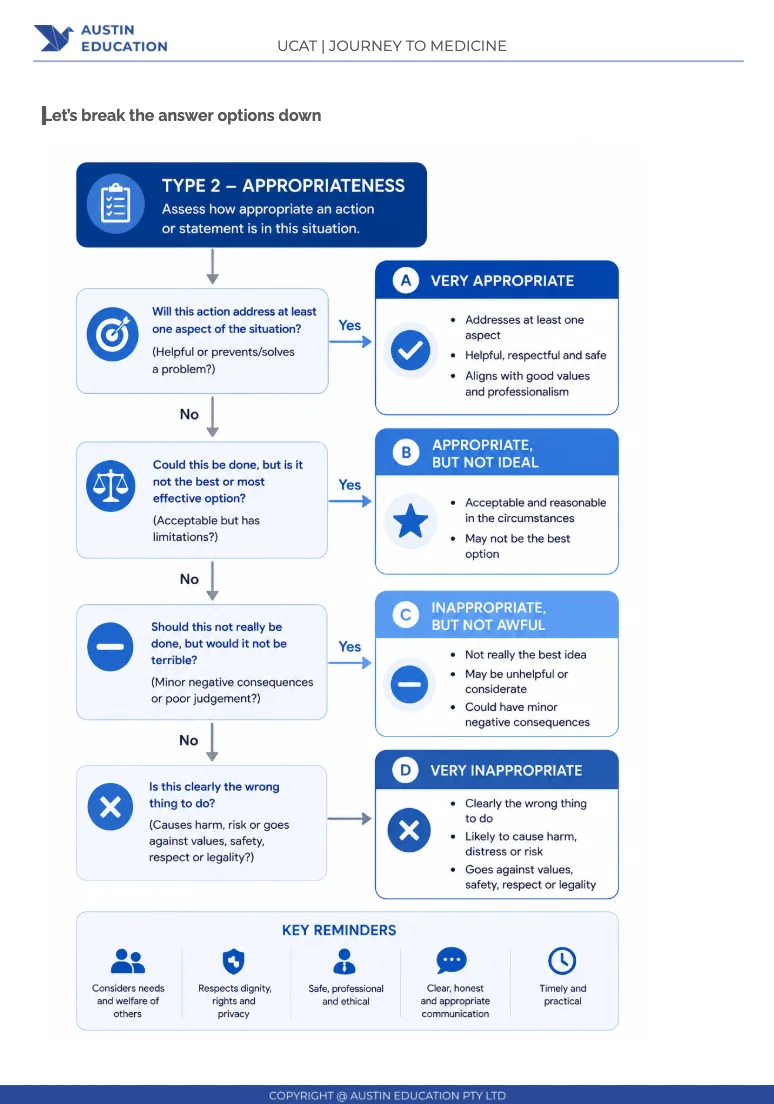
Workbook sample page — Situational Judgement appropriateness decision flowchart
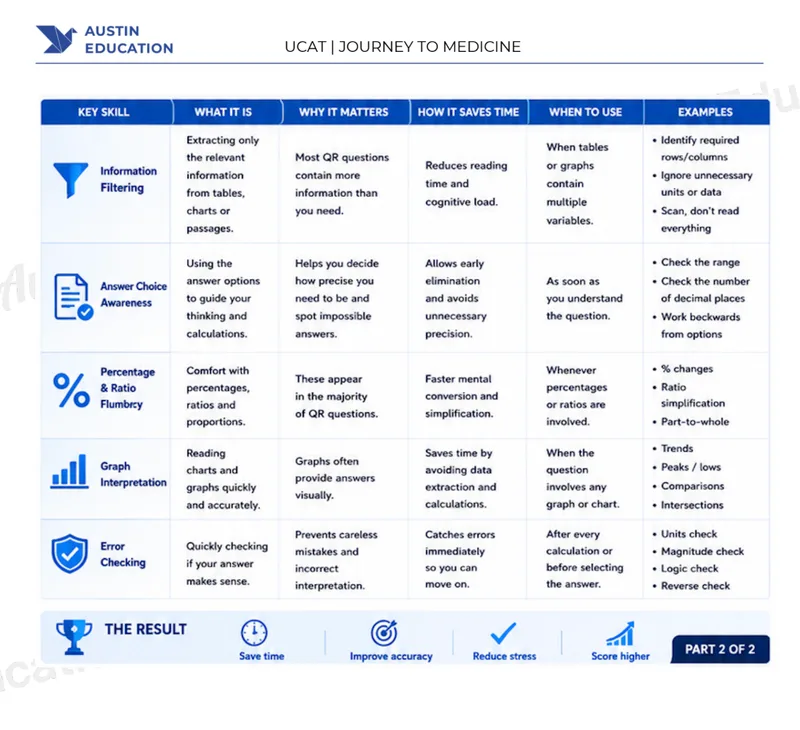
Workbook sample page — Quantitative Reasoning key skills summary table
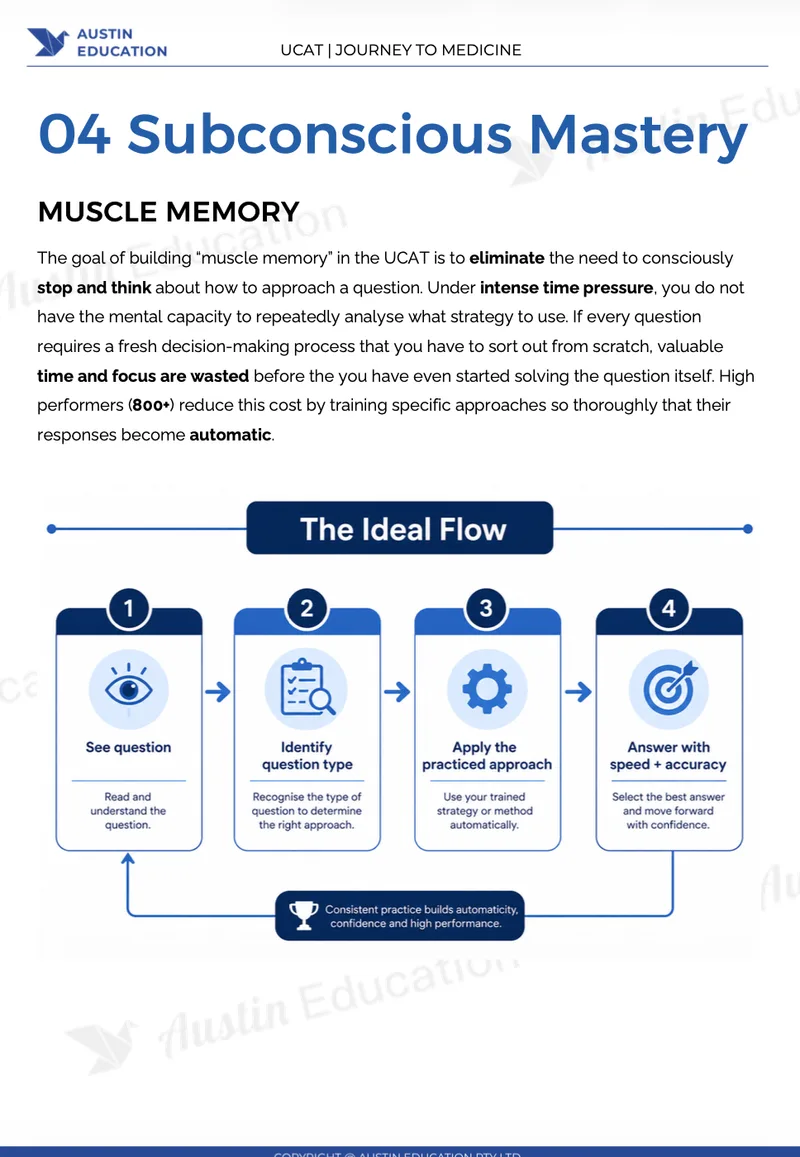
Workbook sample page — building muscle memory for automatic question approaches
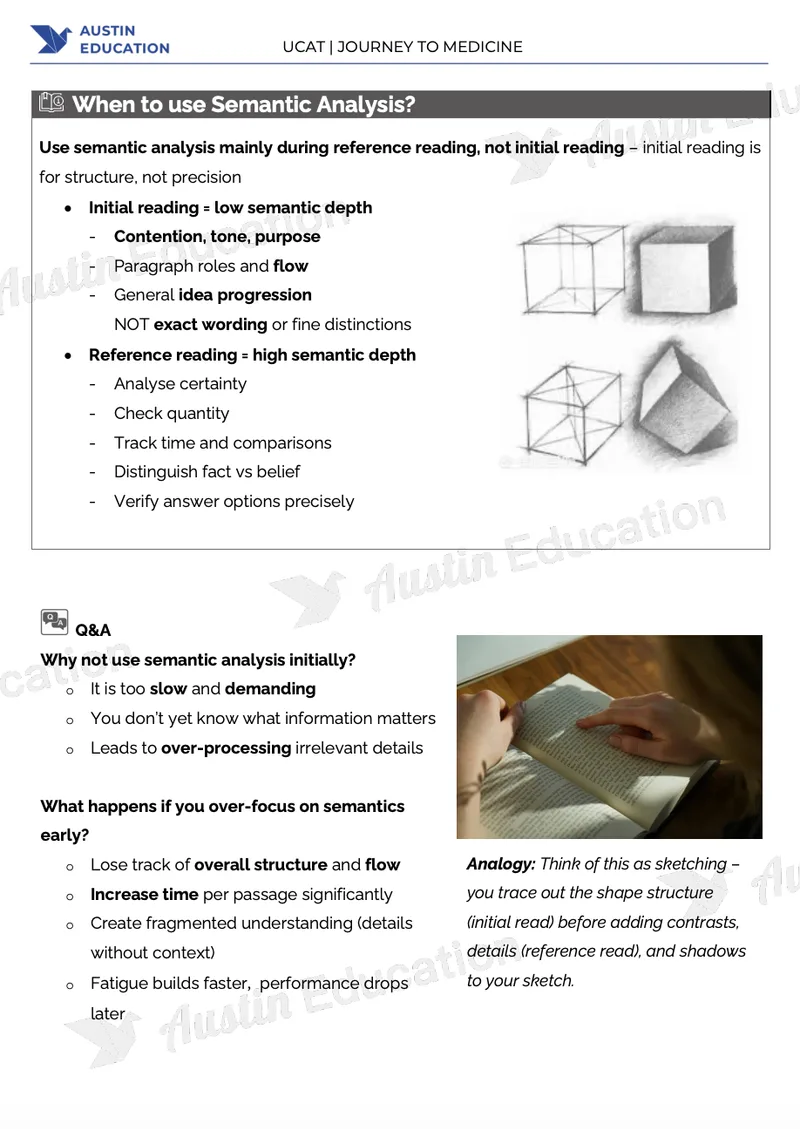
Workbook sample page — when to use semantic analysis in Verbal Reasoning
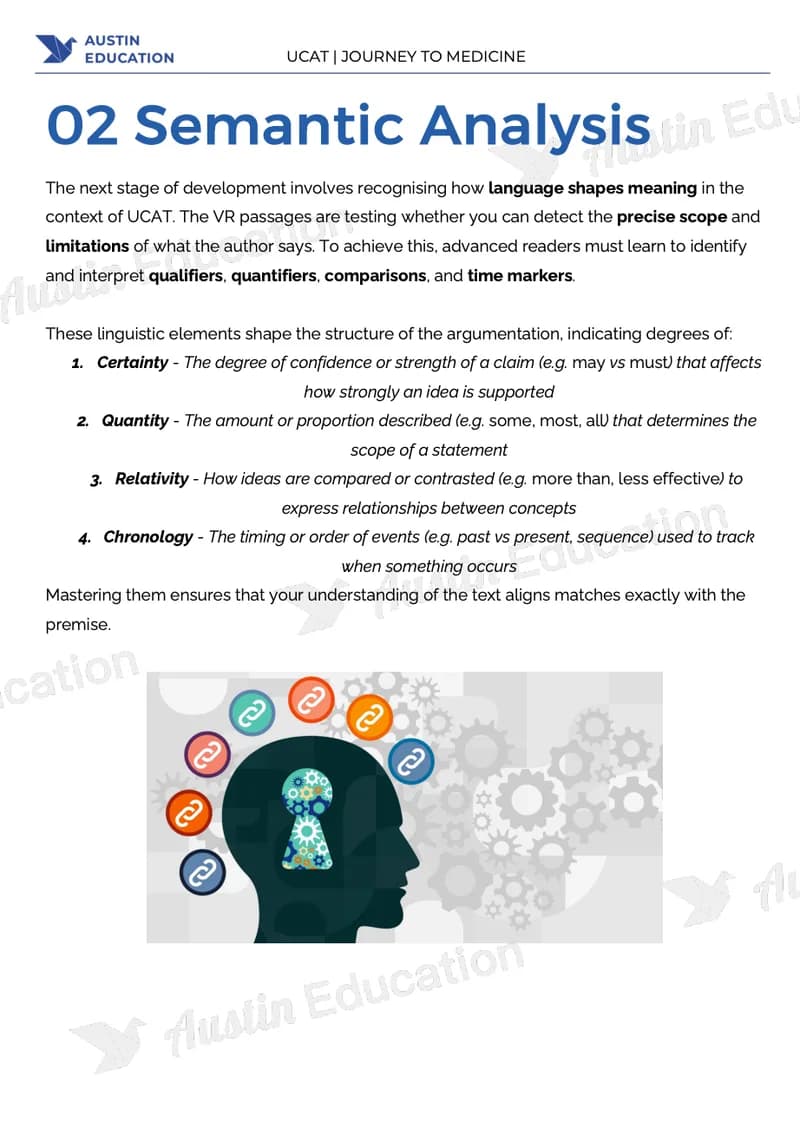
Workbook sample page — semantic analysis of qualifiers and quantifiers
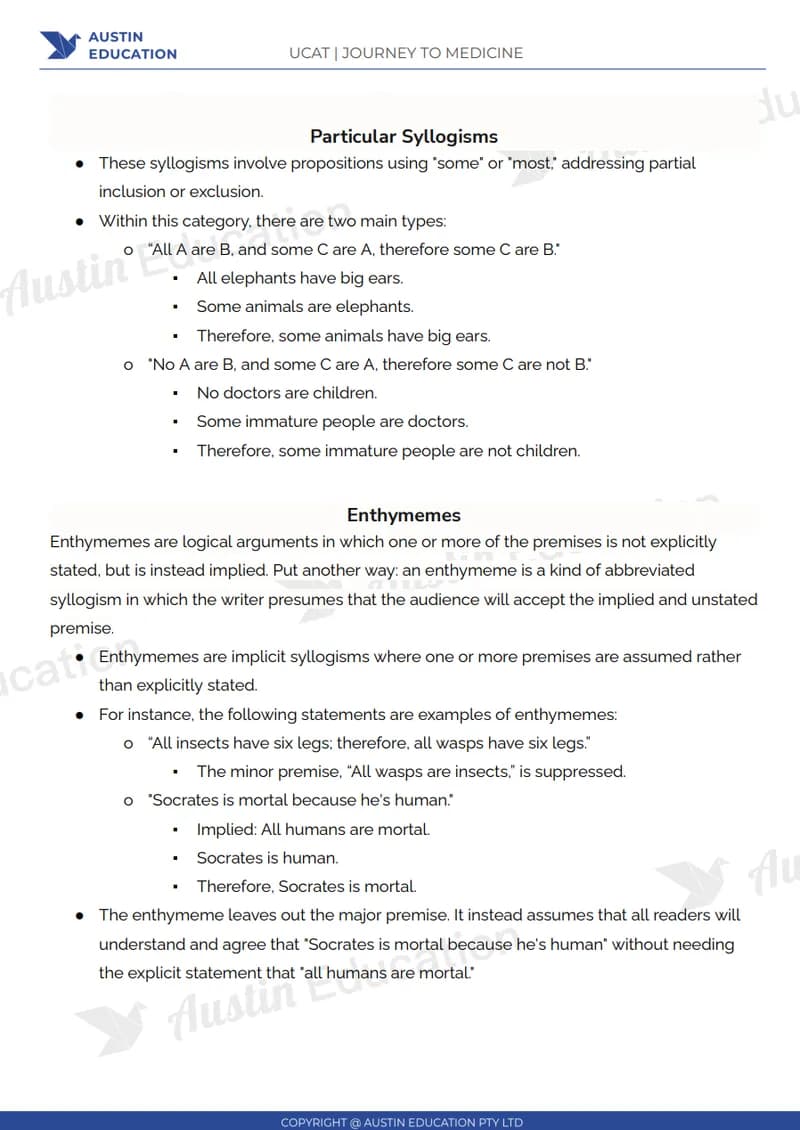
Workbook sample page — syllogisms and enthymemes in logical reasoning

Medify Question Bank

Students receive access to Medify, one of the world's leading UCAT preparation platforms, providing thousands of high-quality practice questions and realistic exam simulations.

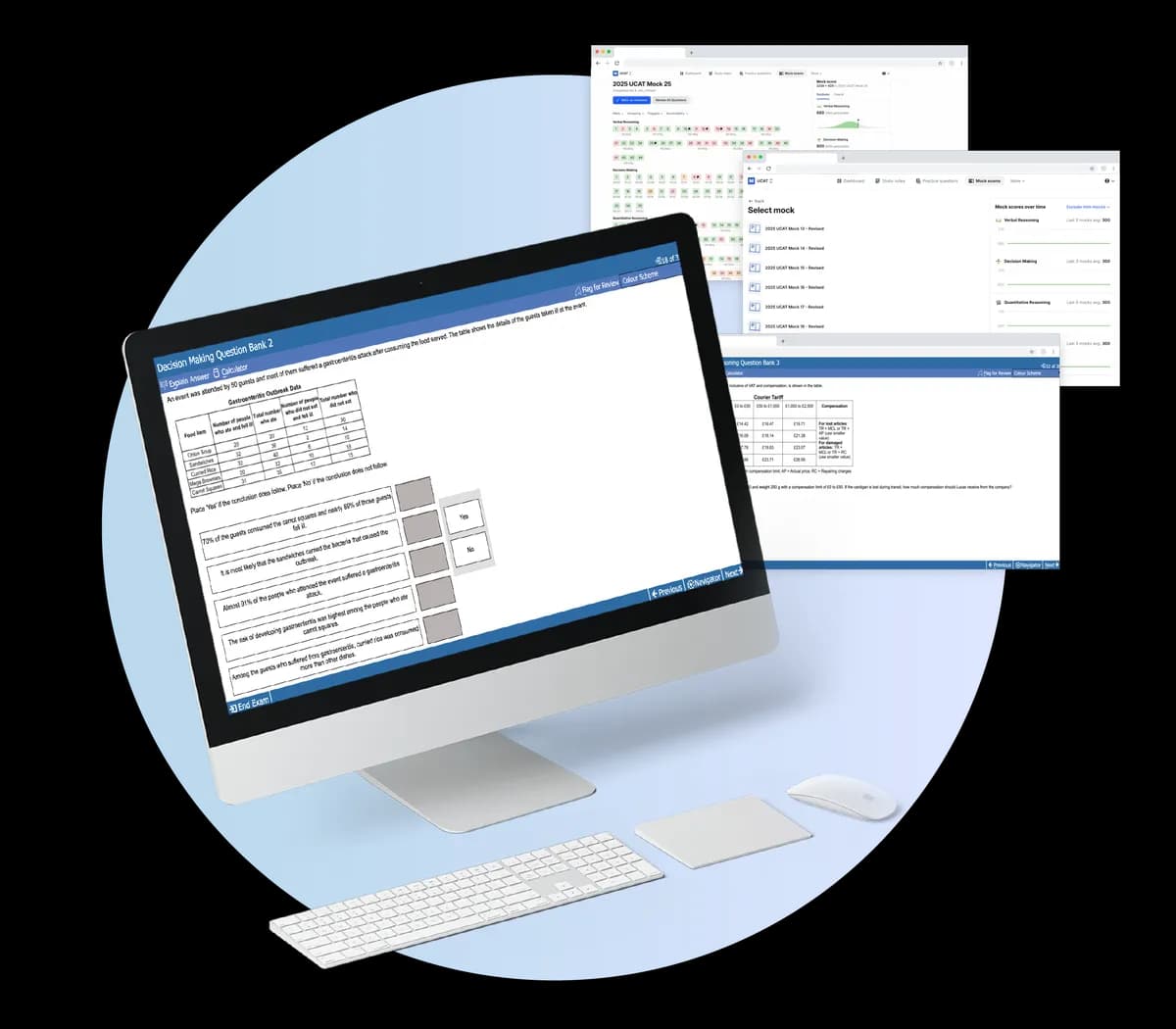
Medify UCAT practice platform interface

5 Full Mock Exams

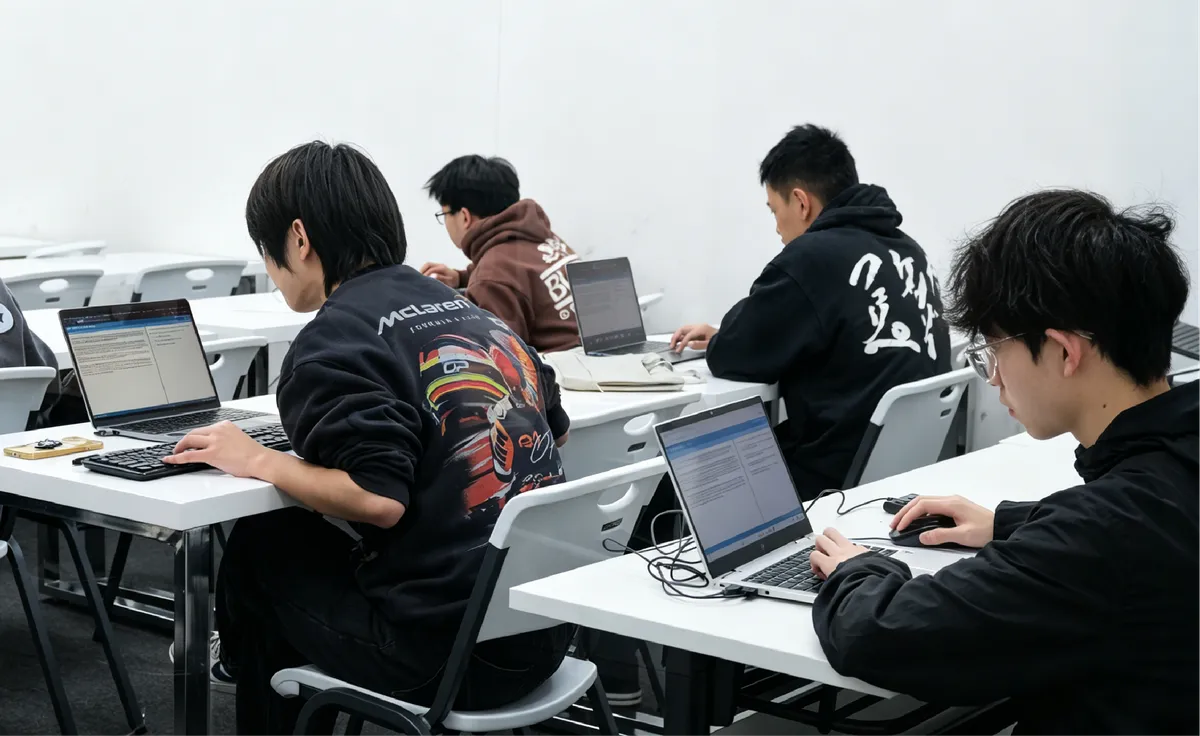
Success in UCAT depends not only on knowledge, but also on performing under strict time pressure. Our full-length mock examinations recreate the real testing environment to help students build confidence and maximise performance.

Austin UCAT full-length mock exam interface

Student Results

Proven Outcomes.
Year After Year.

Austin Education maintains a consistently strong performance record. Our results reflect both the quality of our program and the effectiveness of our structured support system.

2570

Highest Score

99th Percentile · Top 1% Nationally

100%

Interview Qualification

All full-program students met their target university's interview threshold

85%

Achieved 800+

Scored 800+ in at least one UCAT section

2420+

Common Score

96th Percentile · Top 4% Nationally · Achieved by multiple students

Voices of Austin Students

What Our Students Say

“

Definitely a game changer. I don't think I'd have gained the same level of fluency and exposure if I'd only started this year. Subtests like VR and DM take a long time to develop, so starting in Year 11 helped build those foundations even with only two hours of class per week. Starting early also reduced both the workload and stress leading up to UCAT, while giving me time to experiment with study habits and consistency.
LLibbyYear 12 Student★★★★★

“

Doing the course in Year 11 helped quite a lot as I retained a lot more of the skills and content and was able to apply them more easily when doing practice this year in Year 12. I feel like they came a bit more naturally to me.
JJoleneYear 12 Student★★★★★

“

The main advantage is training the logical thinking behind all the questions early, which can take a long time to adjust to and is really helpful starting early. The basic skills like drawing diagrams and logical frameworks stayed with me even when I wasn't actively practising.
EEricYear 12 Student★★★★★

“

Having the additional time to familiarise with the question types, especially from DM, made a huge difference. Having more time to practice skills learned in class also helps — I retained most of the content from last year and only needed to brush up on a few areas this year.
OOwenYear 12 Student★★★★★

“

I liked the Austin UCAT course because Tiffany went into depth about each individual skill involved in each subtest, and that really contributed to my holistic understanding of the subtests and the UCAT as a whole. Lots of valuable skills were taught, such as Venn diagrams for minimal overlap, absolute vs defensible language, efficient reading, etc. Also, the insights and pre-exam information provided to us were very useful in making us more prepared for what to expect from the actual exam.
AAustin Student★★★★★

“

I found the course pretty good. I did join a bit late, so I think I could have gotten more out of it had I started earlier. I liked that we had booklets to fill in, and I liked that Tiffany sent constant reminders to do mocks, and she was very encouraging, even when my mocks sucked.
YYear 12 UCAT Student★★★★★

“

It was very comprehensive and easy to follow. I liked how there was a breakdown of all the skills needed to do well. It was engaging as well, and I really liked the in-class mocks that were organised for us.
UUCAT Student★★★★★

“

I think it had a good structure. It was helpful learning about each sub-test at the start and then going into more detail later in the year. It was good that we learned about specific skill sets rather than just doing questions in class. I also liked how we had the homework in the booklets, because I could just go through the booklets to find homework, rather than go back through group chats to find the things I missed.
AAustin Student★★★★★

“

The Austin course was quite helpful with the question type breakdowns and skills. I enjoyed how most classes were split between practice and learning since it helped me maintain focus.
YYear 12 UCAT Student★★★★★

“

It was a rigorous but reasonable course, and it taught us everything we needed alongside extremely useful techniques to achieve the highest score possible.
UUCAT Student★★★★★

“

It was very very helpful, and I definitely think I would have done a lot worse without it. I really liked the approaches for different skills, such as Venn diagrams with syllogisms, strategic flagging, multi-rounds, etc. These were very valuable tips that I think significantly improved my scores. I am especially thankful to Tiffany for her amazing feedback and encouragement. She was a very integral part of my UCAT process, and at times I think I would have given up if it wasn't for her encouragement.
AAustin Student★★★★★

“

It was okay, I think I definitely should have done some more practice earlier on. But I am pretty happy with the overall experience.
YYear 12 UCAT Student★★★★★

“

It was a very intense, nerve-wracking yet rewarding experience. I was so worried about my score and the question types for each subtest, but through targeted and focused practice, I slowly saw myself improving bit by bit. The testing site I went to was Box Hill, and it was just like how Tiffany described it.
UUCAT Student★★★★★

“

It went smoothly. I think it was similar to Medify in that VR and DM were slightly harder, but QR was easier.
AAustin Student★★★★★

“

I was extremely stressed the day before the exam, but the real test felt like a breeze compared to the Medify mocks and practice questions.
YYear 12 UCAT Student★★★★★

“

It's a long and tough journey, but it's definitely rewarding to get a good score after lots of practice finally.
UUCAT Student★★★★★

“

It was a very long and at times frustrating process, but it was worth the effort and very rewarding.
AAustin Student★★★★★

How You Learn With Us

UCAT Tutoring Melbourne
and Nationwide Online

Austin Education's UCAT Program provides students across Australia with access to a comprehensive online UCAT preparation experience. Whether you are located in Melbourne, Sydney, Brisbane, Adelaide, Perth, or regional areas, students can access the same structured curriculum, experienced UCAT mentors, comprehensive learning resources, mock exams, and personalised support.

Our online program is designed to deliver an engaging and effective learning experience through live interactive lectures, small-stream tutorials, practice sessions, and ongoing tutor guidance. Students receive the same high-quality teaching, course content, and academic support regardless of their location.

Beyond regular classes, students can access personalised consultations, ask questions, receive feedback, and receive guidance throughout their UCAT preparation journey. Our structured learning system helps students develop critical UCAT skills, improve speed and accuracy, build exam confidence, and prepare effectively for medical school admission.

With flexible online access and expert support available Australia-wide, Austin Education helps aspiring medical students prepare for the UCAT with confidence, no matter where they are located.

Austin Education UCAT workbook set — Phase 1 Preliminary through Phase 3 Mastery

Melbourne Students and Campus Support

Melbourne families get the same online classroom plus direct access to the Austin team on the ground. Most of our UCAT cohort comes from Victorian selective and independent schools, so lesson pacing is mapped against the Year 10–12 VCE calendar and the SAC periods Melbourne students actually sit.

Planning consultations run one-on-one with an Austin specialist, online or in person at our Box Hill, Mount Waverley, Melbourne CBD, Ormond and Point Cook campuses, covering subject selection, ATAR targets and the interview stage that follows the UCAT. Because medicine entry is decided across ATAR, UCAT and interview together, Melbourne students can also draw on Austin's VCE Chemistry, Biology and Mathematics faculty alongside their UCAT preparation.

Try Before You Enrol

Experience the Austin
UCAT Trial Lesson

Not sure where to start? Austin's UCAT Trial Lesson gives students and families a structured, first-hand experience of our teaching approach — before making any commitment.

  1. 01

    15-Minute Online Consultation

    Book a personalised one-on-one consultation to discuss your UCAT study plan, medical pathway, and course options. We'll help you build a preparation strategy that's tailored to your goals and current stage.

  2. 02

    2-Hour UCAT Trial Lecture

    A full trial lecture delivered by Tiffany Xu. Students experience Austin's lecture structure, teaching logic, and explanation style first-hand — and receive the lesson materials to keep. Ideal for students comparing UCAT course options or deciding whether a structured program is the right fit.

  3. 03

    1-Hour Small-Stream Tutorial

    A small-group tutorial focused on question review, skill development, and targeted practice. Students attend one tutorial stream each week, with the flexibility to join an additional session at no extra cost if they would benefit from further reinforcement.

Who Is This Trial Lesson For?

Students Preparing for UCAT

Understand UCAT question types, preparation strategy, and how to start structured practice.

Families Planning Medical Pathways

Parents and students with questions about medicine, dentistry, pathway planning, and preparation timelines.

Students Comparing UCAT Programs

Experience Austin's lecture and tutorial format before committing — so you can make an informed decision with confidence.

Students Needing Guided Improvement

Students who need more than self-study and want systematic explanation, practice, and review support from day one.

Ready to Experience Austin?

Register for the UCAT Trial Lesson. Our team will confirm your consultation, lecture, and tutorial times once registration details are received.

Register for a Trial Lesson

Pricing

UCAT Preparation Programs

Choose the program that matches your current year level. Both programs include the full Austin resource suite and expert teaching team.

$110per week

Year 10–11

UCAT Program

$3,850$3,960

36 weeks

  • Weekly 3-hour classes (2 hours Lecture + 1 hour Tutorial)

    Structured content lessons and practical training designed to build a strong, comprehensive understanding of the UCAT.

  • 5 live mock exams

    5 full-length, live UCAT simulations under realistic exam conditions to strengthen performance and test readiness.

  • 1:1 consultations & personalised feedback (3 sessions · 30 mins)

    Targeted one-on-one feedback sessions to identify weaknesses, refine strategies, and focus your preparation where it matters most.

  • Unlimited online support & Q&A

    Ongoing academic support between classes, with tutors available to answer questions and provide clarification whenever needed.

Additional Fees

  • Materials fee: $350 ($100 + $100 + $150)
  • Medify full-year subscription: $450 → $360 (special price)
Book a Trial Lesson
$125per week

Year 12

UCAT Program

$4,375$4,500

36 weeks

  • Weekly 3-hour classes (2 hours Lecture + 1 hour Tutorial)

    Structured content lessons and practical training designed to build a strong, comprehensive understanding of the UCAT.

  • 5 live mock exams

    5 full-length, live UCAT simulations under realistic exam conditions to strengthen performance and test readiness.

  • 1:1 consultations & personalised feedback (3 sessions · 30 mins)

    Targeted one-on-one feedback sessions to identify weaknesses, refine strategies, and focus your preparation where it matters most.

  • Unlimited online support & Q&A

    Ongoing academic support between classes, with tutors available to answer questions and provide clarification whenever needed.

  • Advanced Support & Medical Entry Preparation

    As students progress closer to their UCAT exam and medical applications, additional support is provided during key stages of the journey, including:

    • Intensive final preparation and exam strategy refinement
    • Additional revision resources and targeted practice materials
    • Guidance on university applications and the medical admissions process
    • Introduction to medical interviews and preparation strategies

Additional Fees

  • Materials fee: $350 ($100 + $100 + $150)
  • Medify full-year subscription: $450 → $360 (special price)
Book a Trial Lesson
◆

UCAT FAQs

◆

What is UCAT?

The UCAT (University Clinical Aptitude Test) is a computer-based admissions test taken between July and early August each year by students applying for medicine, dentistry, and some clinical science degrees in Australia and New Zealand.

From 2025 onwards, the UCAT consists of 184 multiple-choice questions across four separately timed subtests, designed to assess the cognitive abilities and professional attributes required for a career in healthcare:

  • Verbal Reasoning (44 questions, 22 minutes) – Assesses your ability to critically evaluate written information.
  • Decision Making (35 questions, 37 minutes) – Measures your ability to analyse complex information, apply logic, and make sound judgements.
  • Quantitative Reasoning (36 questions, 26 minutes) – Tests your ability to interpret and solve problems using numerical data.
  • Situational Judgement (69 questions, 26 minutes) – Evaluates how you respond to realistic professional scenarios, assessing integrity, empathy, and ethical decision-making.

The three cognitive subtests (Verbal Reasoning, Decision Making and Quantitative Reasoning) are each scored on a scale of 300–900, giving a total cognitive score of 900–2700. Situational Judgement is reported separately and may also be considered by some universities during the admissions process.

For most Australian and New Zealand medical and dental schools, admission is based on a combination of your UCAT performance, academic results (such as ATAR), and interview performance. The weighting of these components varies between universities, but the UCAT remains one of the most important factors in securing an interview and ultimately a place in medicine or dentistry.

Do I need to train for the UCAT?

Yes — and the reason comes down to what kind of test the UCAT actually is. Unlike school exams, where effort and knowledge recall can carry you through, the UCAT tests skills: how fast and accurately you reason, how well you manage time, and how precisely you interpret information under pressure. These are not things you can cram the night before.

Competition for medicine and dentistry places in Australia is increasing every year, and UCAT cutoff scores for interview invitations are rising with it. Even students with exceptional academic records have missed out on medicine — not because of their ATAR, but because their UCAT score fell short. In some selection models, your UCAT score can outweigh your academic performance entirely.

At Austin Education, we train students to overlearn the strategies for each UCAT subtest — not just to understand them, but to execute them automatically under exam conditions. The difference between a student who has practised and one who hasn't is not just a matter of score; it is a matter of confidence, composure, and the ability to perform when it counts.

Which universities require UCAT?

UCAT is required for entry into medicine and/or dentistry at the following Australian universities: University of Western Australia, Curtin University, University of Adelaide, Flinders University, Monash University, Charles Sturt University, University of New South Wales, University of Newcastle / University of New England (Joint Medical Program), Western Sydney University, University of Queensland, Griffith University, University of Tasmania, Central Queensland University, University of Southern Queensland, and University of Notre Dame Australia. In New Zealand, both the University of Auckland and the University of Otago require UCAT for medicine.

UCAT scores are also accepted by all UCAT Consortium universities across the United Kingdom, including King's College London, University of Edinburgh, University of Glasgow, University of Manchester, University of Birmingham, University of Newcastle, University of Nottingham, University of Sheffield, University of Southampton, University of Exeter, University of Bristol, Cardiff University, and Queen's University Belfast, among others.

One UCAT score — one exam — opens the door to medicine and dentistry programs across Australia, New Zealand, and the UK.


What are the benefits of UCAT preparation?

The most immediate benefit is a higher score — and in a competition where every percentile point matters, that directly improves your chances of receiving an interview invitation and securing a place in medicine or dentistry.

But the benefits run deeper than the exam itself. The skills built through serious UCAT preparation — critical thinking, logical reasoning, data interpretation, decision-making under pressure — are the same skills that strengthen your ATAR performance. Students who invest in UCAT training consistently report improvements across their school results, not just their exam scores.

At the highest end of the scoring range, a top UCAT result doesn't just open one door — it opens several. Students with elite scores often receive offers from multiple medical schools, giving them the ability to choose the program and location that suits them best. In some cases, top scores also attract scholarship consideration.

Beyond medicine, these are the capabilities employers value most in any career: the ability to think clearly, reason carefully, and make good decisions under pressure. UCAT preparation builds skills for life, not just for one morning in July.

When is the UCAT held?

The UCAT ANZ is held between July and early August each year. When booking your test, you can select a test date, time, and location that best suits your schedule. However, popular test dates and locations can fill quickly, so registering early gives you the greatest flexibility.

Registrations typically open in early March and close in mid-May each year. Late registrations may be accepted until early June, subject to availability and an additional late booking fee.

The standard test fee is approximately AUD $335 for candidates sitting the test in Australia or New Zealand, with a reduced concession fee available for eligible candidates. Candidates sitting the test outside Australia and New Zealand are required to pay a higher international test fee.

At Austin Education, we recommend booking your test date as early as possible—not only to secure your preferred testing slot, but also because having a confirmed exam date creates a clear preparation timeline and helps you approach your UCAT training with greater focus and purpose.

What's considered a 'good' UCAT score for Australian medical schools?

For most standard entry pathways into Australian medical schools, a UCAT score around the 92nd percentile nationally is generally competitive. Under the current three-section scoring system, that is approximately 2335 out of a maximum cognitive score of 2700.

The most selective programs sit higher again. Monash’s first-round interview cut-off has historically fallen near the 94th percentile — roughly 2365 — because Monash ranks applicants primarily by UCAT score when issuing interview invitations.

Since Abstract Reasoning was removed in 2025, the cognitive total is calculated from Verbal Reasoning, Decision Making and Quantitative Reasoning only. Thresholds also vary by pathway: rural and regional applicants are typically competitive at lower scores, as are applicants to universities that weigh the UCAT less heavily.

In our 2025 cohort, 100% of students who completed the full two-year program scored 2335 or above.

How is the new 2025/2026 UCAT scored?

In the current format, your raw scores in Verbal Reasoning, Decision Making, and Quantitative Reasoning are each converted into a scaled score between 300 and 900, resulting in a total cognitive score between 900 and 2700. There are no penalties for incorrect answers, meaning no negative marking. For Australian universities, the Situational Judgement Test (SJT) will be reported as a separate scaled score between 300 and 900, rather than using the Band system as in the UK.
Is the UCAT score more important than the ATAR for medical school applications?

Both are equally crucial. Most Australian undergraduate medical programs use a 'three-pillar' system, where your ATAR, UCAT score, and interview performance all carry significant weight in the final admission decision. Even with a perfect ATAR of 99.95, if your UCAT score falls below the university's interview threshold, entry into medical school is not guaranteed. Conversely, even a UCAT score in the 99th percentile cannot compensate for failing to meet the absolute minimum ATAR requirement (typically between 92.0 and 99.95, depending on the university). Students must approach academic studies and UCAT preparation with equal seriousness. As VCE and UCAT tutoring specialists in Melbourne since 2013, Austin Education integrates its UCAT courses closely with the VCE syllabus, ensuring your ATAR preparation and UCAT training complement each other, never hindering one another.

Is the Situational Judgement Test (SJT) important for Australian medical school applications?

While the SJT has historically carried less weight than the cognitive sections, an increasing number of Australian medical schools are now using it as a tie-breaker or as an interview eligibility threshold. Unlike the UK (where a low SJT score can lead to automatic rejection), most Australian universities primarily use the 2700 cognitive total to calculate interview rankings. However, institutions like the University of Queensland and many dental programs are increasingly emphasising the SJT to assess applicants' non-cognitive, professional, and ethical attributes before extending offers. At Austin Education, we never overlook the SJT. Our UCAT courses include specialised medical ethics framework training, delivered by practising doctors, teaching students how to analyse various clinical scenarios using the standards of professional medical boards.

When is the best time to start preparing for the UCAT?

The ideal time to start is in Year 10. This allows students to build a solid foundation early and free up valuable energy for the ATAR sprint in Years 11 and 12. The UCAT requires developing rapid cognitive habits, speed-reading abilities, and logical reasoning skills. Attempting to cultivate these skills from scratch in the high-pressure environment of Year 12, while also juggling SACs and final exams, is a major cause of student burnout. Starting early allows students to learn techniques untimed, build muscle memory, and gradually increase problem-solving speed. Austin Education advocates a structured multi-year preparation roadmap. By starting with our Year 10 foundational course, students can master UCAT basics early, reserving Years 11 and 12 for targeted practice, strategy consolidation, and maintaining top ATAR results.

How long does UCAT preparation usually take?

Effective preparation typically requires 100 to 150 hours of structured study, sustained over at least six to ten months. Cramming for the UCAT in a few weeks is highly inefficient because the exam doesn't test memorisable knowledge; it assesses processing speed and cognitive agility, which can only be improved through long-term spaced repetition, deliberate practice, and continuous error analysis. Austin Education's UCAT courses are designed around a structured, progressive timetable, offering two-hour group sessions weekly, comprehensive homework workbooks, and ongoing performance tracking to ensure students systematically build their capabilities throughout the year.

What is the Spiral Revision System method?

The Spiral Revision System is a dynamic teaching method where students quickly cover the basics of all subtests in the first round, then revisit them in subsequent rounds with increasing depth, complexity, and speed. Traditional linear teaching models (i.e., completing one section entirely before moving to the next) often lead to students forgetting earlier learned techniques as the exam approaches. The spiral method ensures all cognitive pathways remain active throughout the preparation cycle, continuously reinforcing skills while gradually introducing advanced shortcuts and high-frequency error analysis. Austin Education is a pioneer of this method in Australia. In the first round, students achieve rapid coverage of all question types, building the ability to complete a full practice paper. From the second round onwards, the course delves into advanced techniques, pattern recognition, and high-frequency errors, integrating full mock exam practice from the outset to build candidates' mental endurance.

Can self-studying with question banks alone guarantee a 90th percentile score or higher?

While question banks are an essential component of UCAT preparation, they are only one part of achieving a high score. Simply completing large volumes of practice questions does not necessarily lead to meaningful improvement.

Without expert guidance, students often develop inefficient approaches, overlook recurring reasoning patterns, or struggle to identify the habits that limit their performance. As a result, many spend countless hours practising yet find it difficult to improve their speed, accuracy, or overall score.

At Austin Education, we believe the most effective preparation combines high-quality practice with structured teaching and personalised feedback. Alongside premium UCAT question banks, our 99th percentile tutors teach proven problem-solving strategies, question-specific techniques, and efficient thinking processes that help students practise with purpose and maximise every study session.

How do I improve my speed in Verbal Reasoning (VR)?

VR speed comes from building two distinct reading skills: a fast, low-depth initial read and a precise, targeted reference read — not from reading faster in general. In the initial read, students apply the Three-Phrase Plan to capture contention, tone, and key concepts at a structural level only. For reference, they use Keyword (KW) Search and Concept (KC) Search to locate evidence precisely without re-reading the whole passage. Speed is also built through the 5 Efficient Reading Techniques — Centralised Focus, Eliminating Subvocalisation, Word Chunking, Avoiding Re-reading, and MVR — practised through Efficiency Conditioning until each technique operates automatically under timed pressure. At Austin Education, VR training builds these skills progressively: students first understand the technique, then apply it in structured practice, then integrate it under full exam conditions across the 4-round strategy.

What is the best strategy for DM Syllogism questions?

The most reliable approach is to convert language statements into a Minimum Venn Diagram (MVD) on the whiteboard, then apply the precise logical definitions of each UCAT Consortium key functional word: All, Some, None, Not All, Most, At Least, Only If, and Except For. Each word carries a specific logical scope — treating them loosely is the primary error source. Students also learn to classify answer options by statement type (Copy & Paste, Inference, Hypothetical, No Reference) and reject No Reference options immediately. At Austin Education, DM training covers all three syllogism subtypes — Classical, Flowchart, and Categorisation — with a standardised approach for each, so students identify the subtype on first read and execute the correct strategy without deliberation.

Do I need to be a maths whiz to get a high score in Quantitative Reasoning (QR)?

No, not at all. Quantitative Reasoning only tests basic Year 9 and Year 10 high school maths. The challenge lies entirely in problem-solving speed, the ability to extract relevant data from complex charts and tables, and efficient use of the on-screen calculator. Success in QR requires mastering mental arithmetic, estimation, and keyboard shortcuts, rather than complex algebraic formulas. At Austin Education, we teach students to use the UCAT calculator as a last resort. Our Quantitative Reasoning training focuses on rapid estimation, rounding techniques, and proficient use of the numeric keypad, allowing students to solve over half the questions mentally without touching the clunky on-screen calculator.

How do I handle extreme time pressure in the UCAT?

Time pressure in the UCAT is managed through subtest-specific multi-round strategies, not reactive decisions made under stress. Every question across every subtest carries equal marks — which means spending disproportionate time on a single difficult question is a strategic error, not a sign of thoroughness. The correct response to difficulty is immediate: make an educated guess, flag the question, and move on to secure marks on questions that cost less time.

Each subtest has its own structured approach. In VR, students execute a 4-round strategy — easy T/F/CT sets first, then RC sets, then difficult passages, then flagged questions. In QR, the Momentum & Skipping principle is explicit: skip individual questions within a set rather than only whole sets, and apply the No-Second-Attempt Mindset — every question is attempted once, methodically and correctly. In DM, complex logical puzzles are flagged immediately and returned only if time permits.

At Austin Education, students don't build exam strategy reactively — they develop it progressively across all phases of training, so that by the mastery stage, every subtest has a pre-built, well-practised game plan that executes automatically under full exam conditions. The goal is not to manage time pressure on the day — it is to arrive having already solved it.

How many mock exams should I take to build endurance for exam day?

In the final two months of preparation, students should complete 30 full mock exams under strict exam conditions. Two consecutive hours of high-intensity computer-based testing are physically and mentally exhausting. Without mock exam training, students typically experience a significant drop in concentration and accuracy during the final sections of the exam. Austin Education's courses include five full mock exams, each accompanied by a detailed diagnostic report. We analyse student performance in each subtest, providing personalised guidance to help manage exam anxiety, identify persistent weak areas, and build the peak mental endurance required to perform optimally on exam day.

How can I prepare for the UCAT while studying VCE in Melbourne?

The most effective approach is to treat UCAT preparation as an additional VCE subject, allocating a fixed, non-negotiable block of study time each week, rather than studying sporadically when free. VCE students face immense pressure from SACs, school assessments, and exam preparation. When schoolwork piles up, unplanned UCAT study is almost always the first thing to be neglected, leading to panic as the July exam window approaches. Scheduling UCAT study as a fixed commitment ensures steady progress without compromising ATAR results. Austin Education's unique strength lies in our deep understanding of the Victorian education system. We deliberately schedule our UCAT courses to avoid peak VCE SAC periods, providing students with a balanced roadmap that maximises UCAT potential while safeguarding school performance.

Which medical schools in Victoria require UCAT scores?

In Victoria, Monash University is the only institution that requires a UCAT score for direct entry into its undergraduate medical program. Monash University offers a highly prestigious five-year direct entry medical program, with extremely fierce competition for admission. Selection is based on a weighted combination of ATAR, UCAT scores, and Multiple Mini Interview (MMI) performance. Other universities in Victoria, such as the University of Melbourne, primarily offer graduate entry pathways that require GAMSAT scores.

What UCAT score do I need for Monash Medicine?

For standard metropolitan applicants, the historical UCAT cut-off for a first-round interview at Monash Medicine has sat around the 94th percentile nationally — approximately 2365 out of 2700. This sits above the roughly 92nd percentile that is generally competitive across standard entry pathways, because Monash ranks applicants primarily by UCAT score when determining interview invitations. The exact threshold shifts each year with cohort performance. Lower thresholds apply to applicants eligible under Monash’s rural or Indigenous entry pathways.

Can I use my UCAT score to apply to medical schools outside Victoria, including interstate and the UK?

Yes. Your UCAT ANZ results are widely accepted by all UCAT Consortium universities in Australia, New Zealand, and the United Kingdom. When you sit the UCAT exam in Melbourne, your score is automatically registered under the UCAT ANZ consortium. With this single result, you can apply through the relevant tertiary admissions centres to interstate universities such as the University of New South Wales, the University of Adelaide, the University of Queensland, and Curtin University.

The same UCAT score is also valid for applications to leading UK medical schools, including King’s College London, the University of Edinburgh, the University of Glasgow, the University of Manchester, the University of Birmingham, Newcastle University, the University of Nottingham, the University of Sheffield, the University of Southampton, the University of Exeter, the University of Bristol, Cardiff University, and Queen’s University Belfast, among others.

At Austin Education, we guide students in strategically planning both Australian and UK medical application pathways. We provide comprehensive, personalised advice for applications across domestic and international universities, helping students build highly competitive applicant profiles that align precisely with each institution’s admissions requirements.

Does Austin Education provide medical interview preparation?

Yes. Austin Education offers comprehensive medical interview preparation, specifically tailored to the Multiple Mini Interview (MMI) format used by Australian universities.

Securing an interview offer is only the second step in the medical admissions journey. The interview itself is often the final and most heavily weighted stage of selection. The MMI assesses candidates through a series of timed stations designed to evaluate communication skills, empathy, critical thinking, and ethical decision-making.

Our UCAT program naturally transitions into intensive MMI preparation, led by Tiffany, a current Monash MD student who has coached students to 99th percentile UCAT scores. Through realistic mock interviews and personalised feedback, we ensure students perform with confidence and precision on the day.

Who teaches the UCAT course at Austin Education?

The Austin Education UCAT Program is built by a team of medical professionals, high-achieving medical students, and UCAT experts who understand what it takes to succeed.

With first-hand experience navigating the medical admissions journey, our team goes beyond question practice—teaching students the critical thinking skills, time-management strategies, and exam techniques required to achieve outstanding UCAT results.

Our program is led by Tiffany Xu — 99.90 ATAR graduate, 99th percentile UCAT achiever, and current Monash University MD student — bringing students direct insights from someone who has successfully achieved the goal they are working towards.

Can I book a UCAT trial class with Austin Education?

Yes. We strongly encourage prospective students and parents to book a trial class or a free one-on-one UCAT strategy consultation.

Choosing a UCAT preparation pathway is an important decision. A trial class allows families to experience our teaching approach, interact with our expert tutors, and explore our resources before deciding on the most suitable preparation approach.

We believe in demonstrating our educational value from the beginning. Bookings can be made easily through our website, where we will provide personalised guidance and a clear roadmap for your medical school application journey.

Why is Austin Education’s UCAT program two years instead of one?

The two-year structure is based on the principle that high-level UCAT performance cannot be compressed into a single year without compromising either preparation quality or ATAR performance.

UCAT is not a knowledge-based exam—it tests cognitive speed and accuracy. These skills require sustained, low-pressure training over time to become automatic.

In Year 10 or early Year 11, students focus on foundational reasoning habits, exposure to question types, and building the mental stamina required for high performance. In Year 12, students shift into advanced strategy refinement, full-time mocks, and deep performance analysis.

By the time the UCAT testing window arrives in July, students are not learning under pressure—they are refining skills that have been developed over an extended period. The result is higher scores and significantly lower stress.

Why is professional UCAT training more effective than self-study?

Self-study is an important part of UCAT preparation, but achieving a top-percentile score requires more than simply completing practice questions.

Without expert guidance, students can often develop inefficient approaches—improving accuracy over time but struggling with the speed, strategy, and decision-making skills required under UCAT time pressure. Many students spend countless hours practising without knowing which areas to improve or how to maximise their progress.

A structured UCAT program provides a clear framework that turns practice into measurable improvement. Our 99th percentile tutors teach proven strategies, question-specific techniques, and efficient problem-solving approaches designed to help students perform at their highest level.

Combined with comprehensive workbooks, five full-length mock exams, and personalised diagnostic feedback, our program ensures every stage of preparation is focused, strategic, and results-driven.

What is the success rate of Austin Education UCAT students?

Austin Education maintains a consistently strong performance record.

In our most recent cohort, 100% of students who completed the full two-year program scored 2335 or above, meeting or exceeding the interview thresholds for most major Australian medical schools.

Our highest-performing student achieved 2570 out of 2700, placing in the top percentile nationally. Among students who completed the full program, 100% achieved the minimum UCAT score required for medical interview eligibility at their target universities.

These outcomes reflect both the quality of our program and the effectiveness of our structured support system.

Is the content the same in the two-year program?

No. The two-year program is designed with progressive depth rather than repetition.

Year 1 focuses on foundational development: systematic exposure to all UCAT subtests, core strategy building, and early development of timing intuition and reasoning habits.

Year 2 builds on this foundation with significantly higher intensity, focusing on advanced tactics, common error patterns, full-time exams, and detailed diagnostic review.

The two years are sequential and complementary—the second year is only effective because of the foundation established in the first.

Why does structured UCAT preparation lead to better results?

Students who receive structured, expert-led preparation consistently outperform self-directed learners due to both strategic and psychological factors.

Strategically, expert tutors provide proven techniques for each question type—methods that are not intuitive and are difficult to discover independently. Knowing how to eliminate options in seconds or apply logic rules efficiently can make the difference between a 70th and 90th percentile score.

Psychologically, structured programs reduce uncertainty and anxiety by providing clear direction, consistent feedback, and accountability.

At Austin Education, students benefit from guidance by practising doctors, medical students, and UCAT specialists who have personally navigated the same pathway and can provide both strategy and confidence on exam day.

When is the best time to start UCAT preparation? Is it too late? How long do I need?

There is no single right time to start — but one principle is clear: any preparation is better than none, and the earlier you begin, the more you can build the skills that matter. In Australia, students typically prepare for around six months on average. Around 18% of students begin before Year 12, 63% start at the beginning of Year 12, and around 19% begin in April or later.

What matters most is not when you start, but how consistently and deliberately you train. The UCAT tests cognitive skills — critical thinking, logical reasoning, decision-making under pressure — that develop through sustained, structured practice rather than last-minute revision. These same skills also carry directly into your ATAR performance. At Austin Education, students who begin early don't just improve their UCAT score — they arrive at their exam with genuine confidence and an integrated skill set built over time, not borrowed overnight.

If you're starting later than you'd like, don't be discouraged. Focused, well-structured preparation at any stage will move your score. The goal is to make every week count.

Get Started

Book Your UCAT Planning Consultation

A 15-minute, one-on-one session with an Austin Education specialist designed to give you a clear, personalised roadmap for medicine entry in Australia.

  • Assess your current level and set realistic score targets
  • Understand which program best suits your year level and goals
  • Receive a personalised preparation roadmap from day one
  • No obligation — experience our approach before committing
Book a ConsultationCall 0466 822 995

Explore More UCAT Insights

Guides, results and stories from the Austin UCAT team.

Matthew Wu

Melbourne High School

ATAR 99.40 | UCAT 2560

Mark Xu

Pulteney Grammar School (SA)

ATAR 99.95 | UCAT 2520
What is UCAT? A Complete Guide for Year 10–12 Students in MelbourneCareer
4/27/2026

What is UCAT? A Complete Guide for Year 10–12 Students in Melbourne

What the UCAT actually tests, how to prepare, and what score you really need for medicine in Australia. A beginner-friendly guide for students and parents.

UCATMedicineYear 10
Book Your UCAT Planning ConsultationCareer
4/27/2026

Book Your UCAT Planning Consultation

A one-on-one session with an Austin Education specialist — designed to give you a clear, personalised roadmap for medicine entry in Australia.

UCATConsultationMedicine
◆

Related Courses

◆

VCE

English & EAL Unit 1-4

VCE

Chemistry Unit 1-4

VCE

Specialist Maths Unit 1-4

Book Your Free TrialFree UCAT Consultation