

Why Do So Many Students Need Help with VCE Maths Methods?
The real reasons students struggle — and the targeted solutions that actually work.
- 8 min read
- Melbourne, VIC
- VCE Year 11–12 Students & Parents
Quick Summary
Why do so many students need help with VCE Maths Methods?
Students primarily struggle with VCE Maths Methods because the subject shifts from straightforward computation to complex, multi-step application problems. Success requires more than memorising formulas — it demands analytical reading for worded probability scenarios, flawless hand-calculation precision for Exam 1, and advanced CAS mastery for Exam 2. Many students fail to bridge the gap between understanding a concept in class and applying it under exam pressure. Targeted VCE Maths Methods tutoring bridges this gap through systematic error tracking, separator question exposure, and school-specific SAC preparation.
Key Takeaways
- 1Probability is the #1 struggle: worded scenarios and conditional probability are consistently cited as the hardest topics across Reddit discussions.
- 2Separator questions decide your score: the gap between a 35 and a 45 is almost entirely determined by performance on complex application questions.
- 3Exam 1 and Exam 2 demand different skills: hand-calculation precision and CAS mastery must be trained separately and systematically.
- 4SAC preparation is chronically underestimated: most students begin preparing only weeks before assessment, missing the benefit of school-specific practice.
- 5Error tracking is the fastest path to improvement: knowing exactly which question types you get wrong — and why — is more valuable than completing more practice papers.
The Core Problem
Why Do Students Struggle So Much in Maths Methods?
When students ask, "Is Maths Methods really that hard?", the honest answer is: it depends on how you approach it. The subject is not inherently impossible, but it is uniquely demanding in ways that catch even strong maths students off guard. The difficulty stems from three distinct and compounding challenges.
"What do you guys struggle with the most in Methods?"
"Knowing when to use what type of probability in a worded scenario :("
Top answer: Probability (by far)
"Raw 48 Methods AMA"
"High 30s to low 40s: it’s really just the exam separator questions that split them into A or A+."
From a student who scored raw 48
1. The Language Barrier in Probability
A frequent complaint across Reddit is: "I find algebra and calculus easy, but there's just something about probability that I can't grasp." The difficulty with probability in VCE Methods is rarely the mathematics itself — it is the language. Worded scenarios, conditional probability, and distinguishing between permutations and combinations require a specific type of analytical reading that many students have never been explicitly taught. Students often misinterpret the scenario entirely, leading them to apply the wrong formula from the outset.
"I find algebra and calculus easy, but there's just something about probability that I can't grasp. What should I do?" — r/vce, one of the most upvoted Methods threads
2. Application Question Paralysis
Students can confidently differentiate a standard function, but when that function represents a real-world scenario — such as the volume of water draining from a tank — they struggle to set up the initial equation. This "application paralysis" is the single biggest separator between a mid-range score and a 40+ study score. It is not a knowledge gap; it is a translation gap between mathematical concepts and real-world language.
3. The Dual Demands of Exam 1 and Exam 2
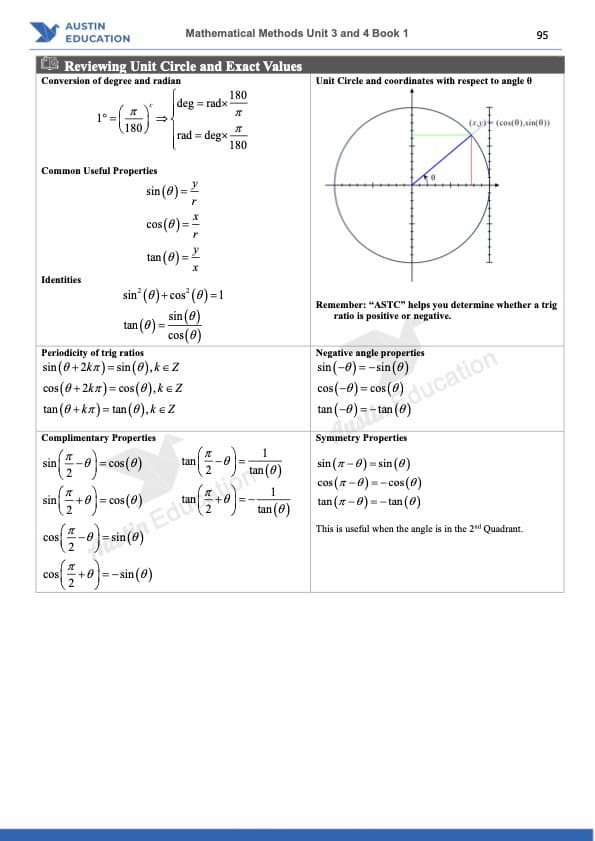
VCE Methods demands two completely different skill sets. Exam 1 strictly prohibits calculators, requiring high precision and speed in hand calculations — particularly with circular functions, exact values, and algebraic manipulation. Exam 2 requires absolute mastery of the CAS calculator. Many students fail to use their CAS efficiently, wasting precious minutes manually solving equations that could be computed in seconds. Training for one exam does not automatically prepare you for the other.
Common Pitfalls
The Biggest Mistakes Students Make in Methods
Through years of providing VCE Maths Methods tutoring in Melbourne, Austin Education has identified several critical mistakes that consistently prevent students from reaching their potential.
Relying solely on textbook questions.
Textbooks are essential for learning concepts, but they rarely simulate the complexity of actual VCE exam questions. Students who only do textbook exercises are often shocked by the difficulty of their first SAC.
Dismissing "silly mistakes."
Dropping a negative sign or making a basic arithmetic error is often brushed off. In Exam 1, however, these errors compound quickly. Failing to track and correct these patterns is a major barrier to improvement.
Underestimating SAC preparation.
Many students begin preparing for SACs only two to three weeks before the assessment, missing the benefit of systematic, school-specific practice.
Inefficient CAS usage.
Using the CAS calculator merely as a basic calculator — rather than a powerful algebraic tool — costs students valuable time in Exam 2.
Studying without tracking errors.
Completing practice papers without analysing which question types you consistently get wrong is one of the least efficient study strategies. Volume of practice without targeted review leads to plateaus.
The Tutoring Question
Do You Need Tutoring to Do Well in Maths Methods?
One of the most frequently asked questions on student forums is: "Do you need tutoring to do well in Maths Methods?" The honest answer is nuanced. Tutoring is not strictly mandatory, but it provides a significant and measurable advantage. The difference between a student who achieves a 40+ study score and one who plateaus in the mid-30s is rarely about intelligence — it is about preparation strategy.
"Is tutoring for Methods necessary to do good?"
"If you are falling behind or trying to get a high score, you should get a tutor — they have access to practice papers and can help with things you don’t understand."
Top upvoted comment
"Is getting a tutor worth it?"
"I was failing my SACs… ended up getting over 25. I would recommend getting a tutor for the whole year."
Student who started tutoring in Year 12
If you are falling behind, or if you are aiming for an elite score, a targeted VCE Methods tutoring program provides the structured environment and specialised resources that are difficult to replicate independently.
The Austin Education Difference
How Austin Education Approaches Methods Differently
These outcomes are built on two key structural advantages. Austin's Maths Methods faculty includes Mr John Kermond — an official question setter for the Heffernan exam series — and Mr Peideng Nie, an official VCAA Specialist Mathematics examiner. This gives students direct insight into how high-level exam questions are designed, assessed, and differentiated.
Every lesson follows Austin's deliberate 30/40/30 teaching framework: 30% core knowledge, 40% exam-level worked examples, and 30% extension and high-difficulty application. Combined with a highly refined streaming system tailored to each student's current level, the programme is designed to maximise both efficiency and top-end performance.
From 2017 to 2025
Over
Over
On average, our students achieve a raw score of 42, with a scaled score of 48 — far above the state average.
Dual-Version Textbooks
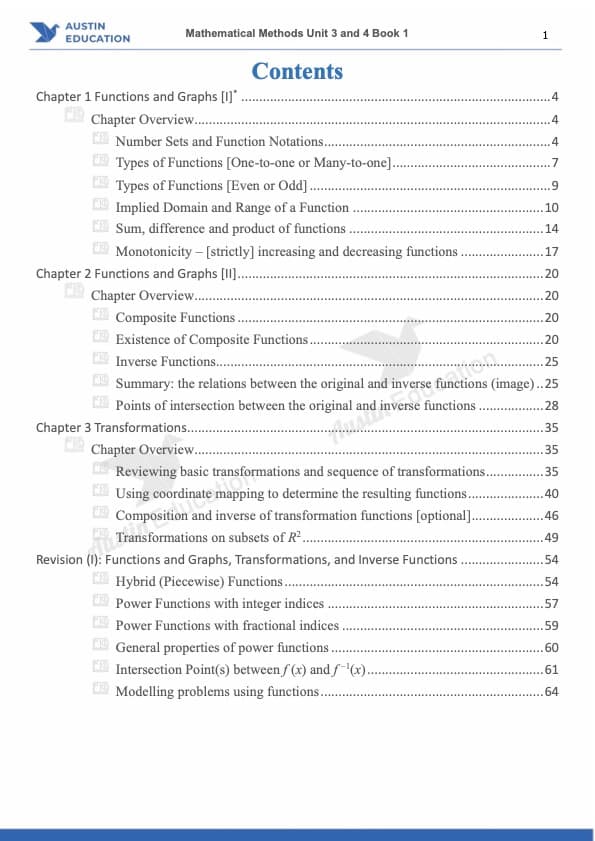
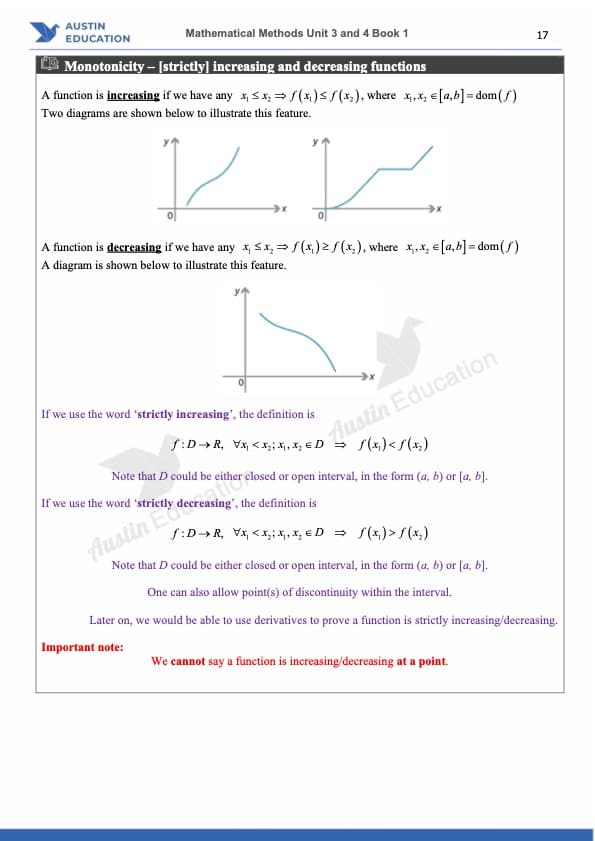
Two fully independent textbook sets for different proficiency levels. Every question refined over 10+ years, updated annually to match current VCE requirements.
Online Homework + Error Log
20 MC + 10 Bonus questions weekly, mirroring Exam 2 structure exactly. System auto-categorises errors to pinpoint each student's exact weak spots.
SAC Bundle (40 Sets)
Covers assessment styles of schools across Victoria. Students frequently encounter near-identical questions in their actual school SACs.
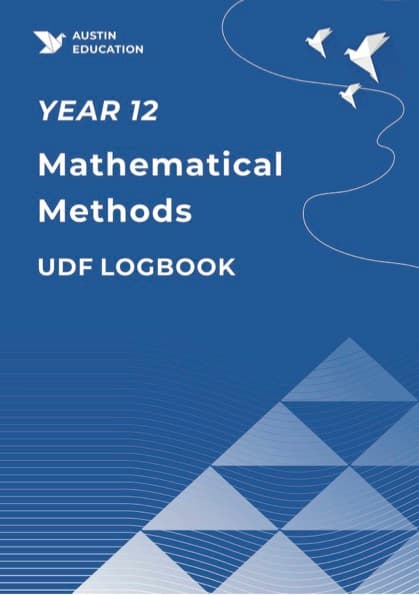
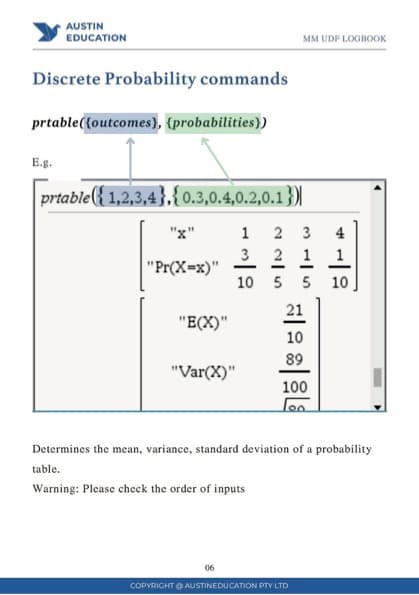
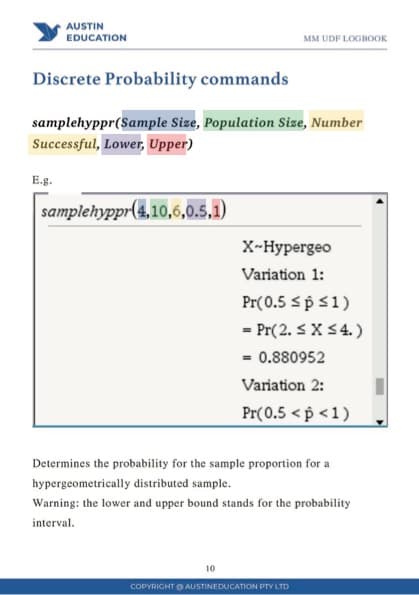
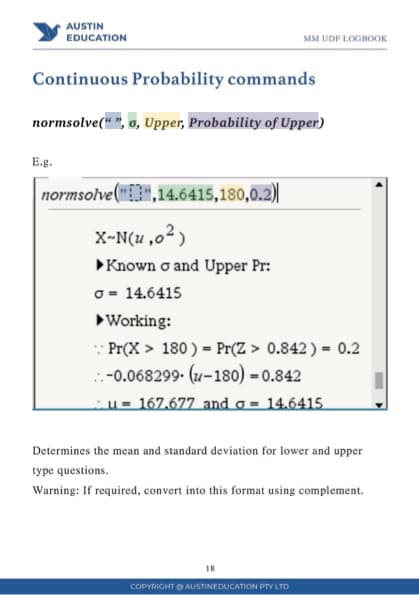
Year 12 UDF Logbook
Exclusive curated formula library covering all Exam 2 core testing points. Drastically improves CAS solving speed and accuracy.
Mock Exam Bank + Tracker
40–50 representative exams selected from ~2,000. All results logged in Exam Tracker for real-time progress visualisation.
Triple-Channel Q&A (24/7)
Teacher + AI instant response + human tutor professional support — three channels running in parallel. No learning blind spots.
Pain
Probability worded questions
Solution
Pain
Application question paralysis
Solution
Pain
Exam 1 hand-calculation errors
Solution
Pain
Inefficient CAS use in Exam 2
Solution
Pain
Recurring careless mistakes
Solution
Pain
SAC anxiety & unpreparedness
Solution
Pain
No support between classes
Solution
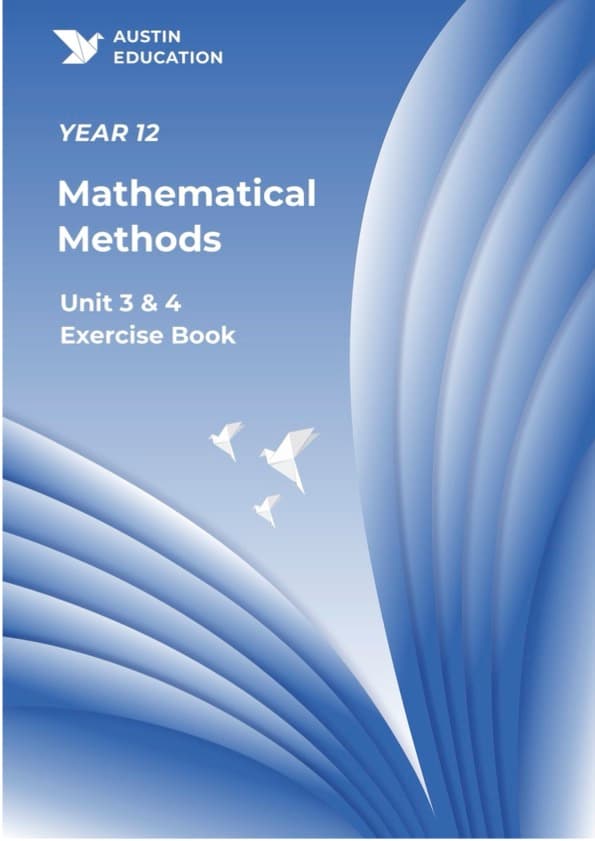
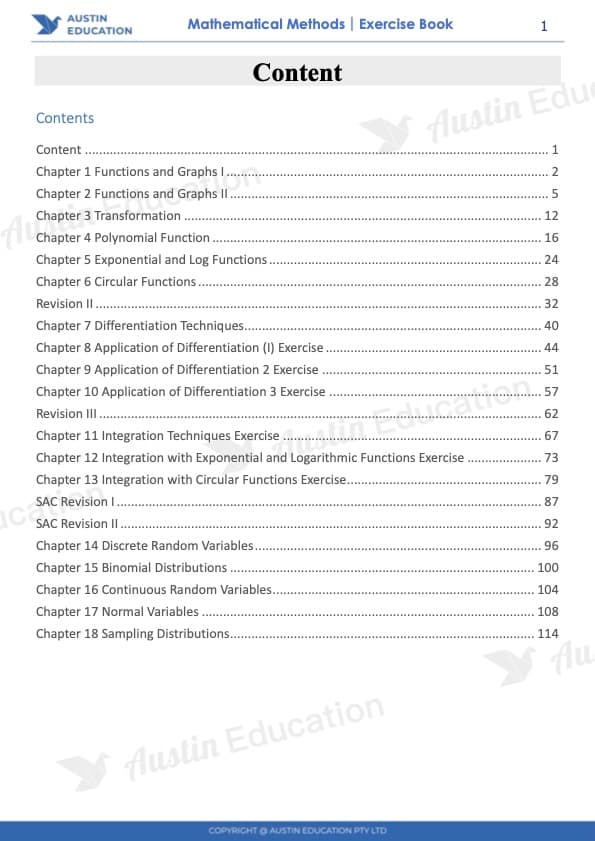
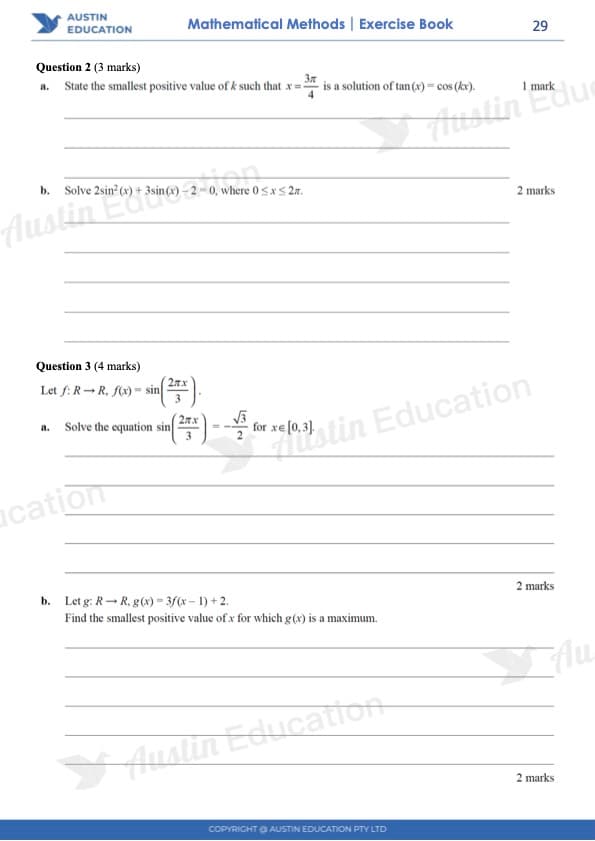
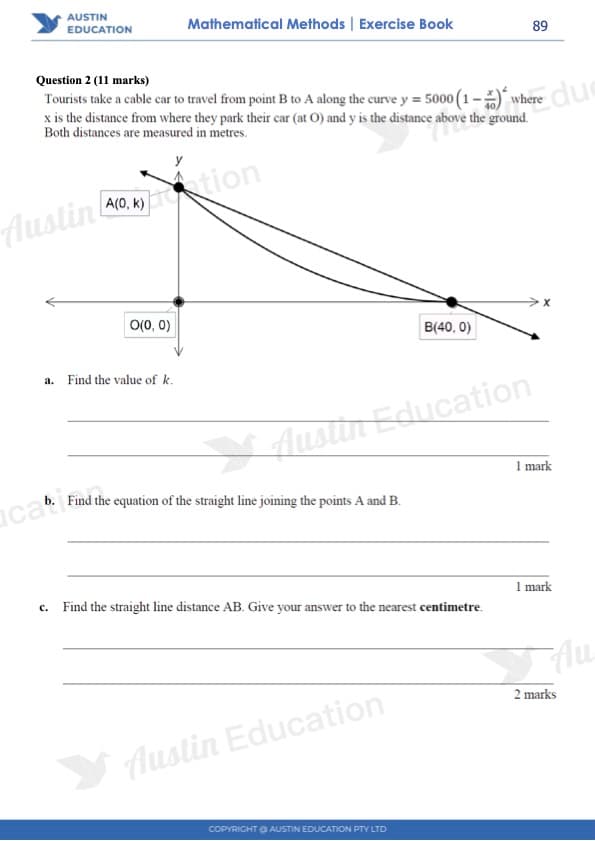
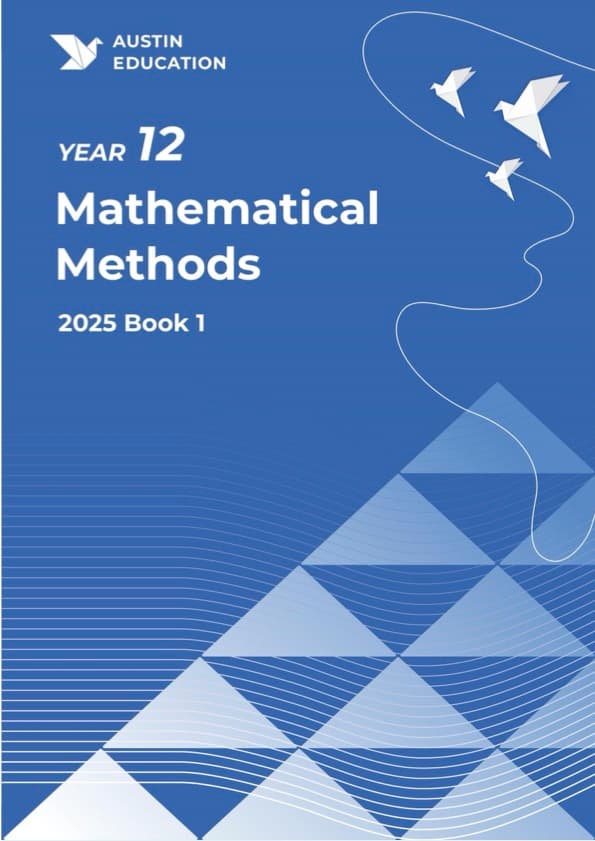
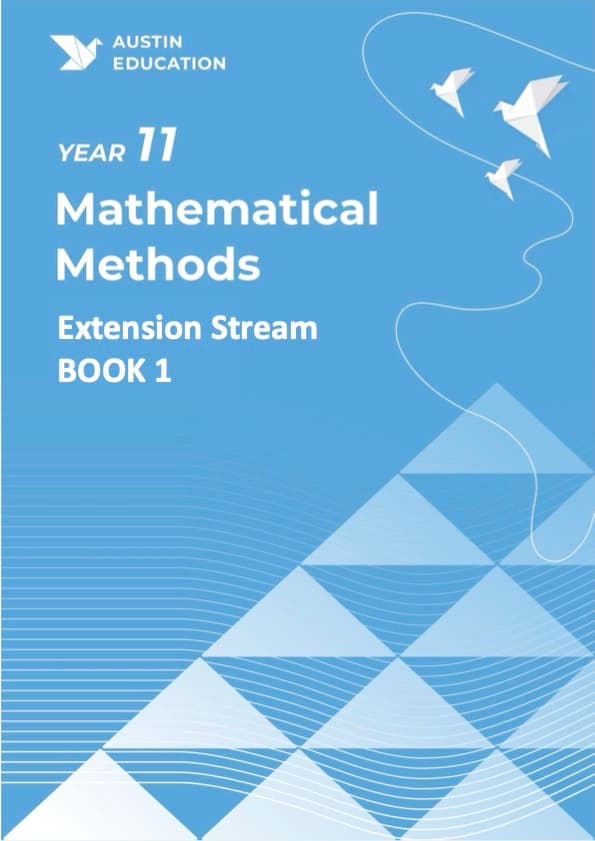
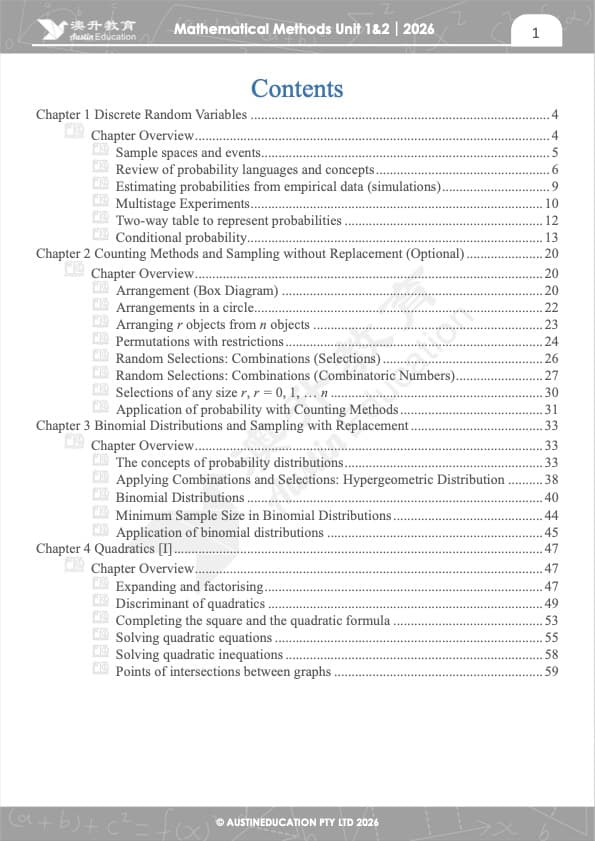
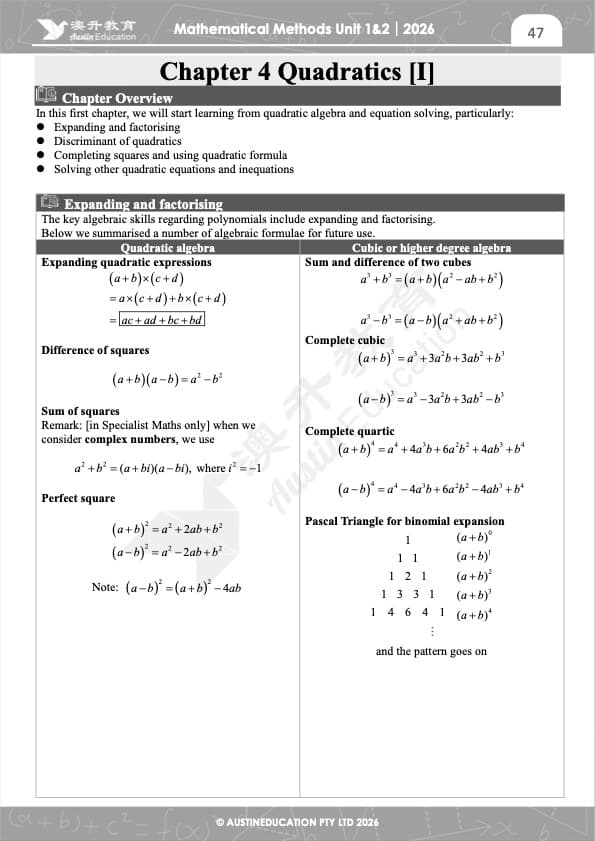
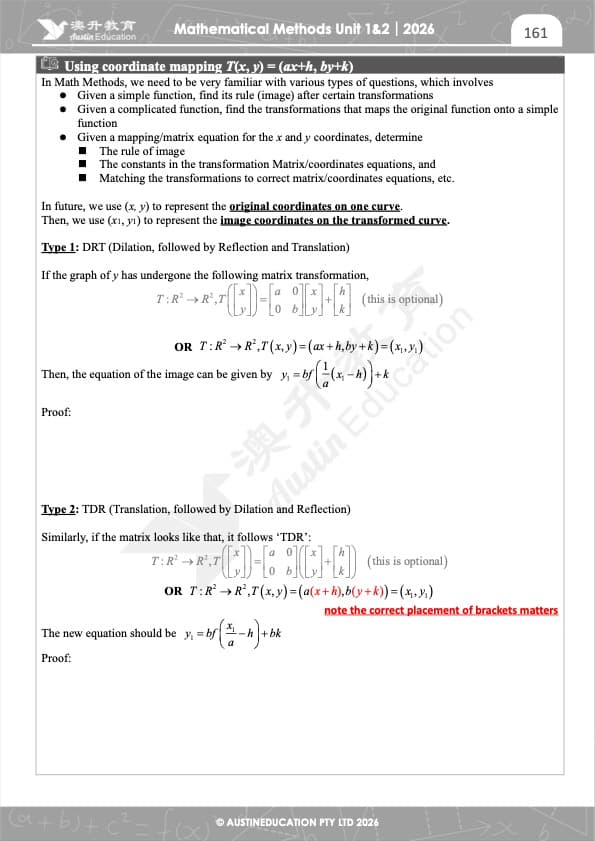
Austin's Exclusive Methods Textbook Series
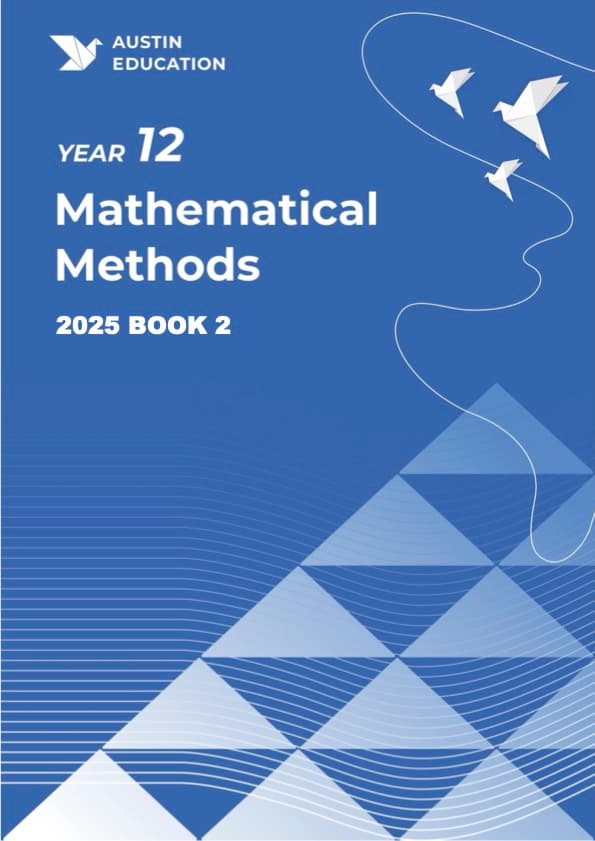
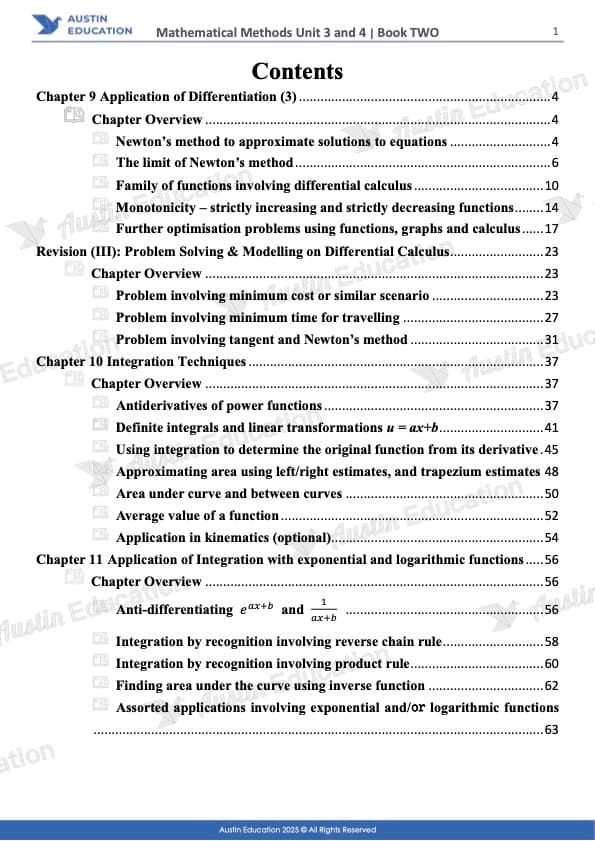
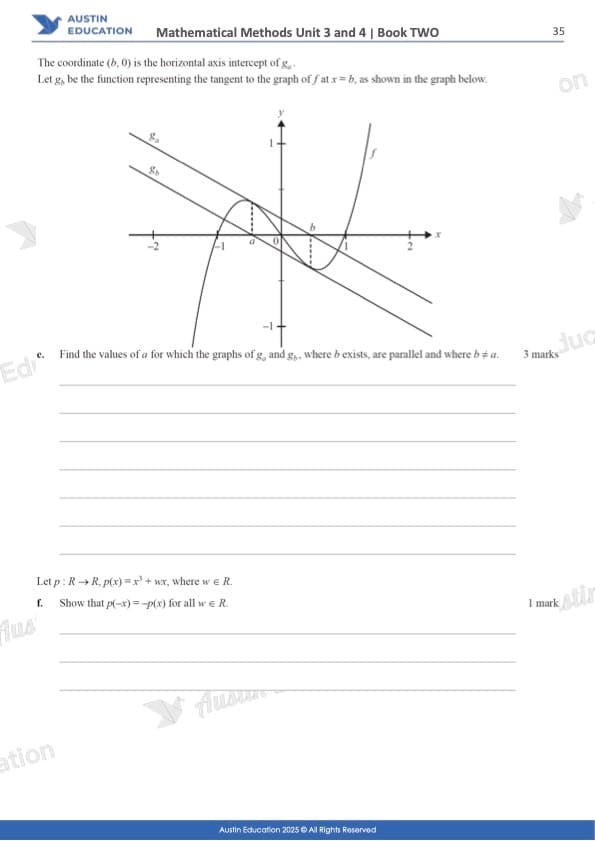
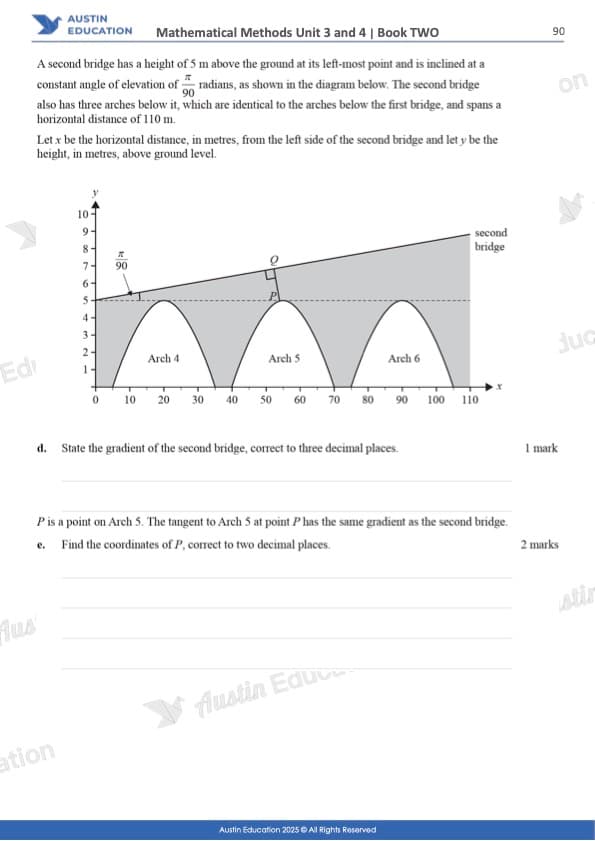
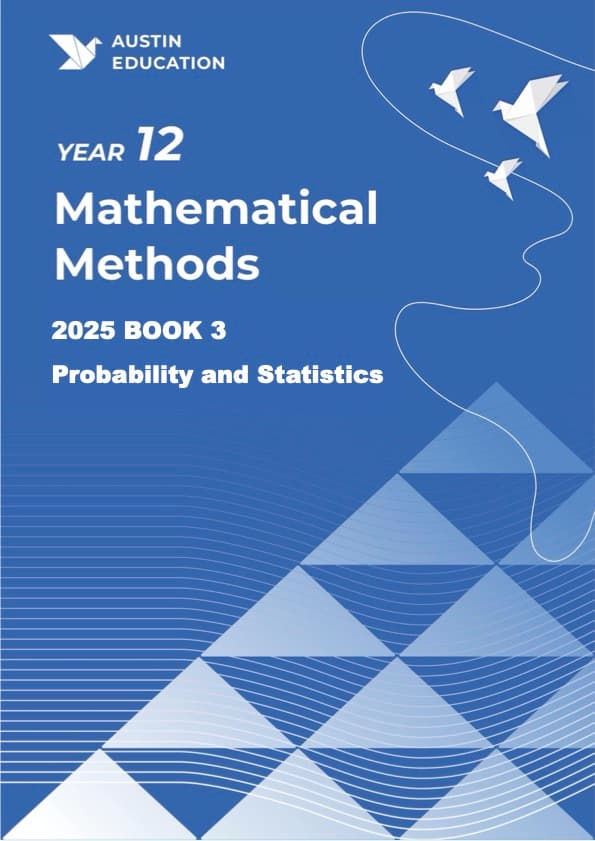
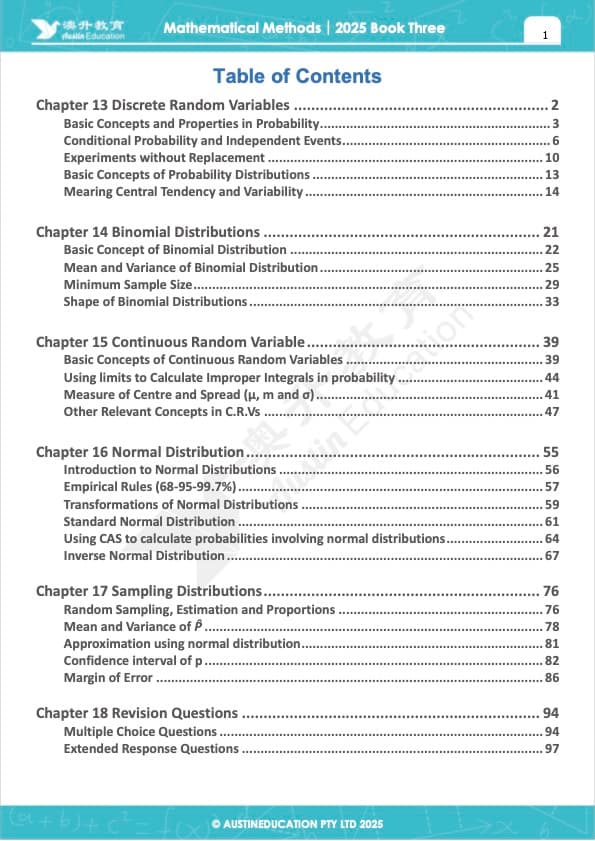
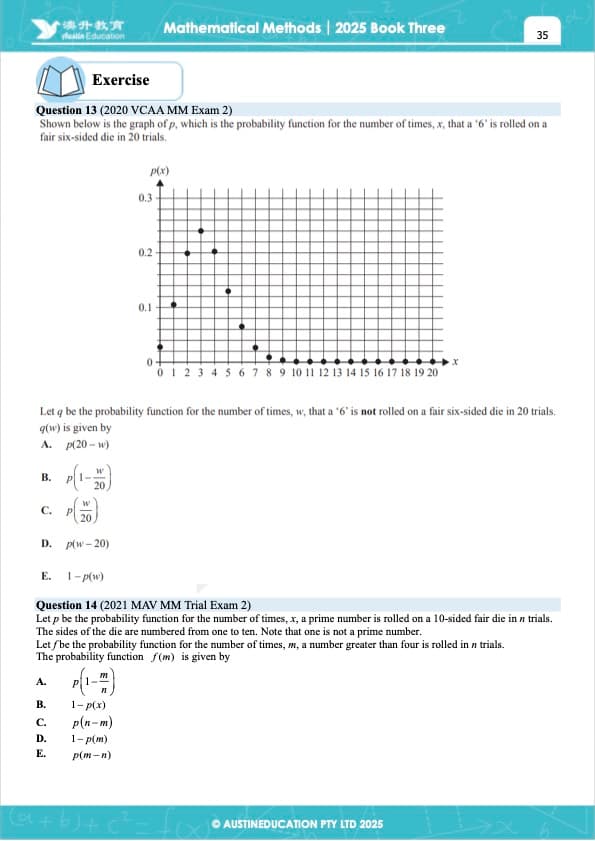
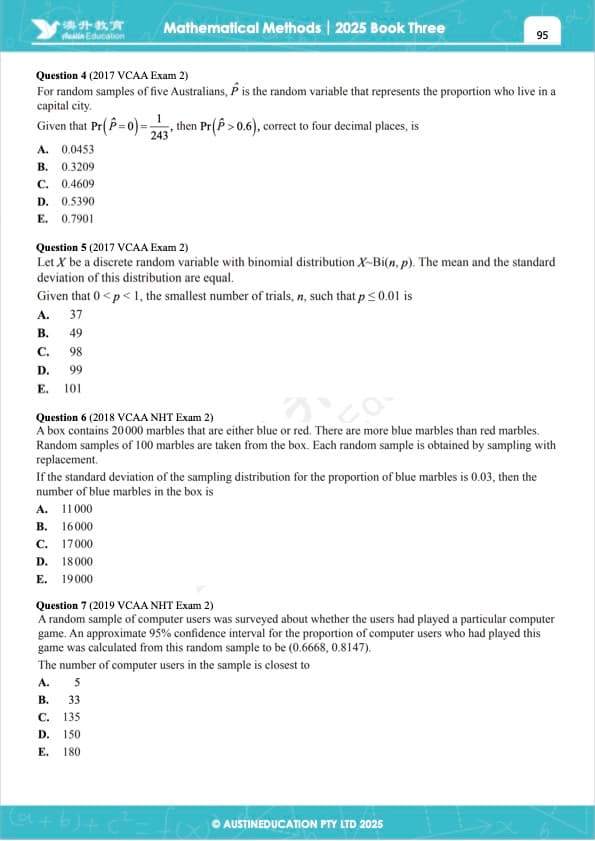
The Austin Education Score Journey
Practical Advice
Practical Strategies to Improve Your SAC and Exam Scores
If you want to know how to improve in Maths Methods, the answer lies in strategic, targeted practice — not just more hours of study. Here are five strategies that consistently separate improving students from those who plateau.
Track Your Errors Systematically
Do not just mark a question wrong and move on. Categorise each error — reading error, sign error, conceptual gap, or CAS misuse — and review them weekly. This single habit separates students who plateau from those who improve consistently.
Master the CAS as a Tool, Not a Calculator
Spend dedicated time learning the advanced algebraic functions of your CAS. If you are spending more than 60 seconds manually solving an equation in Exam 2, your CAS technique needs work. The UDF Logbook provides a curated formula library that dramatically speeds up CAS problem-solving.
Train Exam 1 Skills in Isolation
Set aside regular sessions to practise hand calculations without any calculator. Focus on speed and precision with exact values, circular functions, and algebraic manipulation. Exam 1 training is a separate discipline — it does not happen automatically through Exam 2 preparation.
Expose Yourself to Application Questions
Actively seek out complex, multi-step worded problems. Practise translating English sentences into mathematical equations before attempting to solve them. This "translation" skill is the single biggest separator between a mid-range score and a 40+ study score.
Start SAC Preparation Early and School-Specifically
Begin practising with SAC-style questions from your school's past papers at least 3–4 weeks before the assessment. Generic practice is not sufficient — school-specific preparation is the key. Students who use school-matched SAC bundles frequently encounter near-identical questions in their actual assessments.
✗ Reactive Approach
- Waits for SAC results before seeking help
- Relies solely on school feedback
- Avoids probability questions due to anxiety
- Does not track error patterns systematically
- Starts mock exams only in the final weeks
✓ Proactive Approach (Austin)
- Builds SAC-specific skills from Term 1
- Uses automated error tracking to target weak spots
- Systematically trains all probability question types
- Trains Exam 1 and Exam 2 skills separately
- Tracks progress via Exam Tracker all year
"99% of VCE exam question types are covered in our targeted practice, and every core question type is trained at least 10 times." — Austin Education Core Promise
Related Reading
Pair This Strategy With
- VCE ATAR & scaling explained — how a Methods raw 40 scales into your final ATAR.
- When should you start VCE tutoring? — Year 10, 11 or 12, explained.
- Tutor all subjects or focus on weak areas? — how to allocate your tutoring hours.
"VCE Maths Methods is challenging because it requires more than rote computation: students must combine analytical reading for worded probability problems, flawless hand-calculation precision under Exam 1, and high-speed CAS mastery in Exam 2 — each trained as a separate discipline."
"The fastest path to improvement in VCE Maths Methods is systematic error tracking — categorising each mistake by type (reading error, sign error, conceptual gap, CAS misuse) and reviewing the patterns weekly, rather than completing more practice papers without diagnosis."
"Austin Education's VCE Maths Methods programme combines a 40-set SAC bundle covering all Victorian school styles, a Year 12 UDF logbook for CAS efficiency, and an automated error log — supported by a Heffernan exam-series question setter and a VCAA Specialist Mathematics examiner on faculty."
Frequently Asked Questions
FAQ: VCE Maths Methods Help
Is VCE Maths Methods really that hard?
It is challenging, but it is manageable with the right strategy. The difficulty lies in the shift from basic computation to complex problem-solving and application. Success requires consistent practice and deliberate exposure to exam-style questions — particularly the "separator questions" that distinguish average scores from elite ones.
Why do strong maths students still struggle in VCE Methods?
Strong maths students often struggle because they rely on their natural computational ability. VCE Methods requires analytical reading for worded problems and flawless execution under time pressure — skills that must be explicitly trained. A student who can solve equations quickly may still fail to interpret a probability scenario correctly.
How can I improve my VCE Maths Methods study score?
Improvement requires systematic error tracking, mastering the CAS calculator, practising hand calculations for Exam 1, and exposing yourself to complex application questions rather than just textbook exercises. The fastest path to improvement is identifying exactly which question types you get wrong — and why — then targeting those gaps with deliberate practice.
What is the best way to prepare for a Maths Methods SAC?
The best preparation is practising with past SAC papers from your specific school and schools with similar assessment styles. Generic practice is rarely sufficient because SAC questions are highly school-dependent. Austin Education's SAC Bundle covers 40 different school styles across Victoria, providing highly targeted preparation.
Do I need a tutor for VCE Maths Methods?
While not strictly mandatory, a VCE Mathematical Methods tutor in Melbourne can provide structured practice, automated error tracking, and exposure to high-level separator questions that are difficult to source independently. If you are falling behind or targeting a 40+ study score, a targeted tutoring program provides a significant and measurable advantage.
How much time should I spend studying Methods each week?
Aim for at least 4–5 hours of dedicated study per week outside of class time. This should include completing homework, reviewing your error log, and practising exam-style questions. Quality of practice matters more than volume — 3 focused hours with error tracking will outperform 6 hours of passive re-reading.
What is the difference between VCE Methods Exam 1 and Exam 2?
Exam 1 is a technology-free exam that tests hand-calculation precision and algebraic skills. It requires speed and accuracy with exact values, circular functions, and calculus without any calculator support. Exam 2 allows a CAS calculator and bound reference, focusing heavily on complex application and worded problems. These two exams demand fundamentally different skill sets and must be trained separately.
When should I start VCE Maths Methods tutoring?
The earlier, the better. Starting at the beginning of Year 11 allows students to build a strong conceptual foundation before the Unit 3 & 4 content intensifies in Year 12. Students who start tutoring at the beginning of Year 12 can still make significant improvements, but they face a steeper learning curve. If you are currently in Year 10, beginning preparation now gives you the strongest possible foundation.
Stop Guessing. Start Scoring.
The difference between a 35 and a 45 is not intelligence — it is preparation strategy. Book a free consultation and discover how Austin Education's targeted system can transform your VCE Maths Methods results.
Book a Free Consultation →- ✓VCE Specialists
- ✓Heffernan Question Setter on Faculty
- ✓Melbourne-Based
- ✓40-Set SAC Bundle
By Austin Education VCE Maths Methods Team
Published