

Building a Lifelong Chinese Foundation: The Years 1–6 Complete Guide
How Austin Education's 4 core advantages, the Listening–Speaking–Reading–Writing framework, and game-based learning transform Chinese from a chore into a lifelong strength.
- 8 min read
- Melbourne & Adelaide
- For Years 1–6 students & parents
Quick Summary
How do you help a primary school child build strong Chinese skills in Australia?
For Chinese-Australian families in Melbourne, helping a primary school child (Years 1–6) build a strong Chinese foundation comes down to a systematic curriculum paired with practical daily habits. Austin Education's answer is built on four core advantages: a proprietary curriculum designed for Australian students, the complete Listening–Speaking–Reading–Writing framework, three dynamic teaching methods (Game-Based Learning, Interactive Learning, and Kinesthetic Learning), and deep immersion in traditional Chinese culture. Every lesson is designed to be vibrant and engaging — so children fall in love with Chinese rather than treating it as a chore.
Key Takeaways
- 14 Core Advantages, Not Just Textbooks: Austin's programme is built on proprietary curriculum, Listening–Speaking–Reading–Writing four-skill development, three dynamic teaching methods, and traditional culture immersion — all working together.
- 2Every Class Is Vibrant and Active: Game-Based Learning, Interactive Learning, and Kinesthetic Learning ensure children are never passive — they move, play, create, and absorb Chinese naturally.
- 3Traditional Culture Is the Secret Ingredient: Austin weaves Chinese festivals, calligraphy, poetry, and heritage stories into every stage — making Chinese feel meaningful, not mechanical.
- 4Four Skills Must Be Developed Together: Listening and speaking build fluency; reading builds comprehension; writing builds precision. Neglecting any one skill creates a gap that compounds over time.
- 5Primary Years Are the VCE Foundation: Students who build all four skills from Years 1–6 enter VCE with a decisive vocabulary, comprehension, and writing advantage — and significantly less catch-up pressure.
The Challenge
Why Chinese Learning Stalls for Kids Growing Up in Australia
For children growing up in Australia — whether they are ABC (Australian-Born Chinese), heritage language learners, or recent arrivals — maintaining and building Chinese proficiency presents a unique set of challenges. The school environment is entirely English, social circles increasingly favour English, and traditional weekend Chinese schools often struggle to keep students engaged.
The most common issues Austin Education teachers observe in primary-aged students include: writing incorrect characters due to limited practice; a superficial understanding of Chinese culture that makes texts feel foreign; reluctance to speak Chinese in daily life; fear of writing Chinese essays; and a lack of interest in reading Chinese texts beyond simple social media content.
The primary years are not just about learning Chinese — they are about building the identity and habit of being a Chinese speaker. Once that window closes, it becomes significantly harder to reopen.
Austin's 4 Core Advantages
What Makes Austin Education Different for Years 1–6
Austin Education's Year 1–6 Chinese Enrichment programme is built on four pillars that work together to create a learning experience unlike any traditional weekend Chinese school. These advantages are not marketing claims — they are the structural reasons why Austin students consistently outperform their peers when they reach secondary school and VCE.
Proprietary Curriculum Designed for Australia
Unlike imported textbooks from China designed for native speakers, Austin's six-stage proprietary series is built around the lives, experiences, and learning environment of students growing up in Australia. Every topic, every text, every exercise is contextually relevant — making Chinese feel connected to real life, not a foreign subject.
Complete Four-Skill Framework
Many programmes focus only on reading and writing, leaving listening and speaking underdeveloped. Austin's curriculum systematically trains all four skills in every stage — ensuring students develop balanced, functional Chinese proficiency that serves them in real conversations, exams, and VCE assessments alike.
Three Dynamic Teaching Methods
Austin classes are never passive. Through Game-Based Learning, Interactive Learning, and Kinesthetic Learning, every lesson is designed to keep students actively engaged. Children learn Chinese through movement, play, collaboration, and hands-on creation — making every class something they look forward to, not dread.
Traditional Chinese Culture Immersion
Language without culture is hollow. Austin weaves Chinese festivals (Spring Festival, Mid-Autumn, Dragon Boat), calligraphy, classical poetry, folk stories, and heritage traditions into every stage of the curriculum. Students don't just learn to speak Chinese — they develop a genuine connection to Chinese culture and identity, which is the deepest motivation for lifelong learning.
Three Teaching Methods
Every Austin Class Is Alive: Game-Based, Interactive & Kinesthetic
Research consistently shows that children learn best when they are actively engaged — not sitting passively listening to a teacher. Austin Education's Year 1–6 programme is built around three evidence-based teaching methods that transform every Chinese class into an energetic, memorable experience.
Game-Based Learning: Learning Through Play
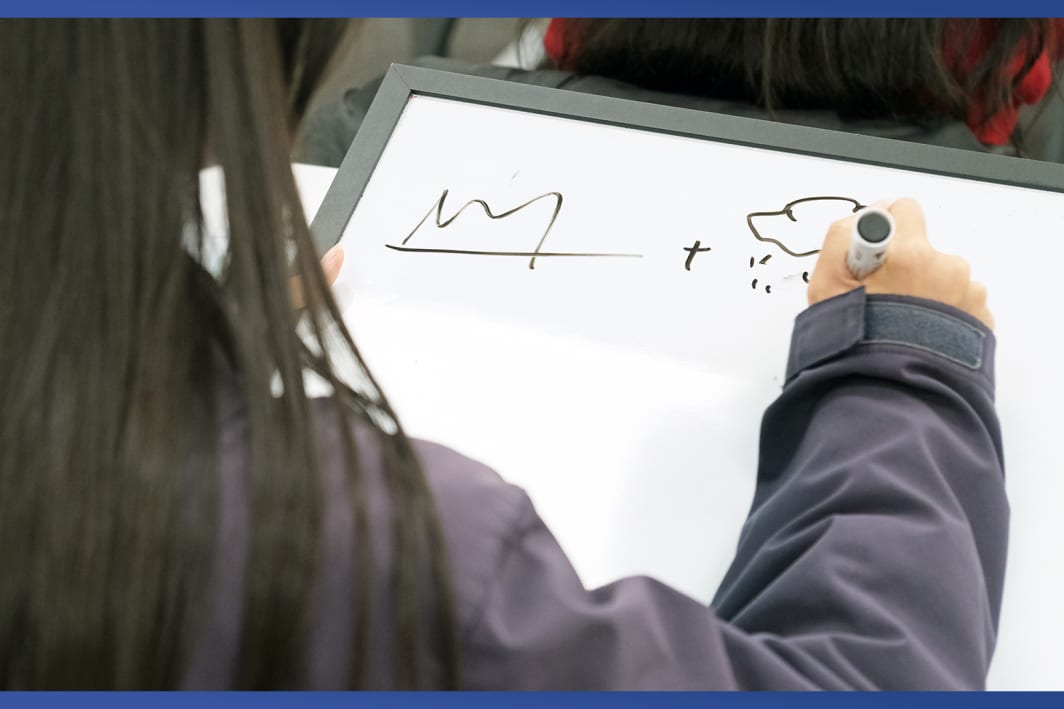
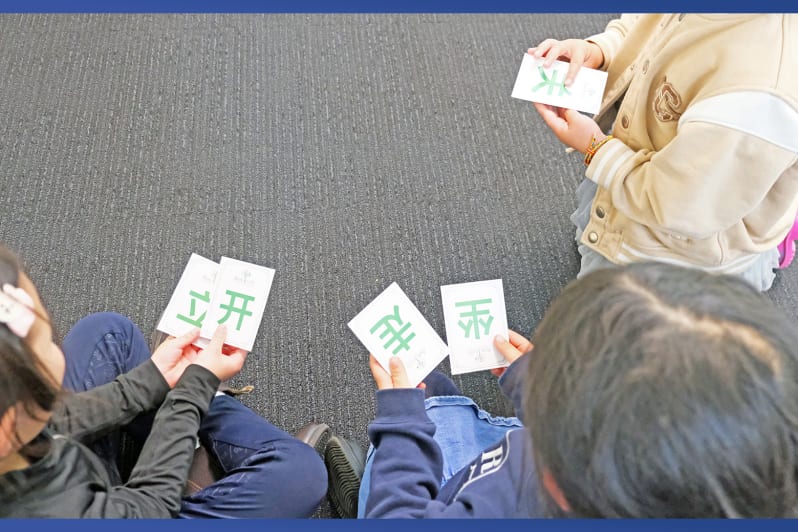
Vocabulary card games, character matching, storytelling challenges, and competitive quizzes make Chinese feel like play. When children are having fun, they absorb language effortlessly — and retain it far longer than through rote memorisation.
Interactive Learning: Dialogue, Debate & Collaboration
Role-play conversations, group discussions, peer feedback, and collaborative projects build real communicative confidence. Students practise Chinese in authentic contexts — not just answering textbook questions, but actually using the language to communicate ideas.
Kinesthetic Learning: Move, Create & Experience
Calligraphy practice, cultural craft activities, physical movement games, and hands-on projects engage the body as well as the mind. Kinesthetic learners — who make up a large proportion of primary-aged children — thrive in this environment where Chinese is experienced, not just heard.
"The goal is not just to teach Chinese — it is to make children fall in love with Chinese. When a child genuinely enjoys their Chinese class, the learning takes care of itself." — Austin Education Teaching Philosophy
The Four Skills
The Complete Four-Skill Framework: Why All Four Skills Matter
Many Chinese programmes focus heavily on reading and writing while neglecting listening and speaking — or vice versa. Austin Education's curriculum is designed to develop all four skills simultaneously, because true Chinese proficiency requires all four to work together. A student who can read but cannot speak confidently, or who can listen but cannot write accurately, will always be limited in both daily life and VCE assessments.
Listening
Oral comprehension, tones, natural speech patterns, cultural context. Built through stories, songs, media, and classroom dialogue.
Speaking
Pronunciation, fluency, confidence, expression. Built through role-play, presentations, group discussions, and daily conversation practice.
Reading
Character recognition, comprehension, vocabulary, cultural literacy. Built through graded readers, Austin textbooks, and authentic Chinese texts.
Writing
Character strokes, sentence structure, paragraph writing, essay frameworks. Built through calligraphy, journals, structured writing tasks, and creative projects.
The Solution
Reinforcing Learning at Home: Three Core Habits
Austin Education's approach to primary Chinese is built on three foundational pillars. These are not abstract concepts — they are practical, daily habits that can be incorporated into any family's routine, regardless of the parents' own Chinese proficiency.
The Listening Habit
Chinese radio broadcasts, TV dramas and cartoons, CCTV news broadcasts, story apps on mobile, and — most importantly — daily Chinese conversations.
The Reading Habit
Physical Chinese books, educational game cards, Austin textbooks, narrative literature, and graded Chinese readers.
The Writing Habit
Simple daily sentences, Chinese diary entries, short story writing, character stroke practice, and copying favourite passages.
Recommended Resources
Leveraging World-Class Chinese Media
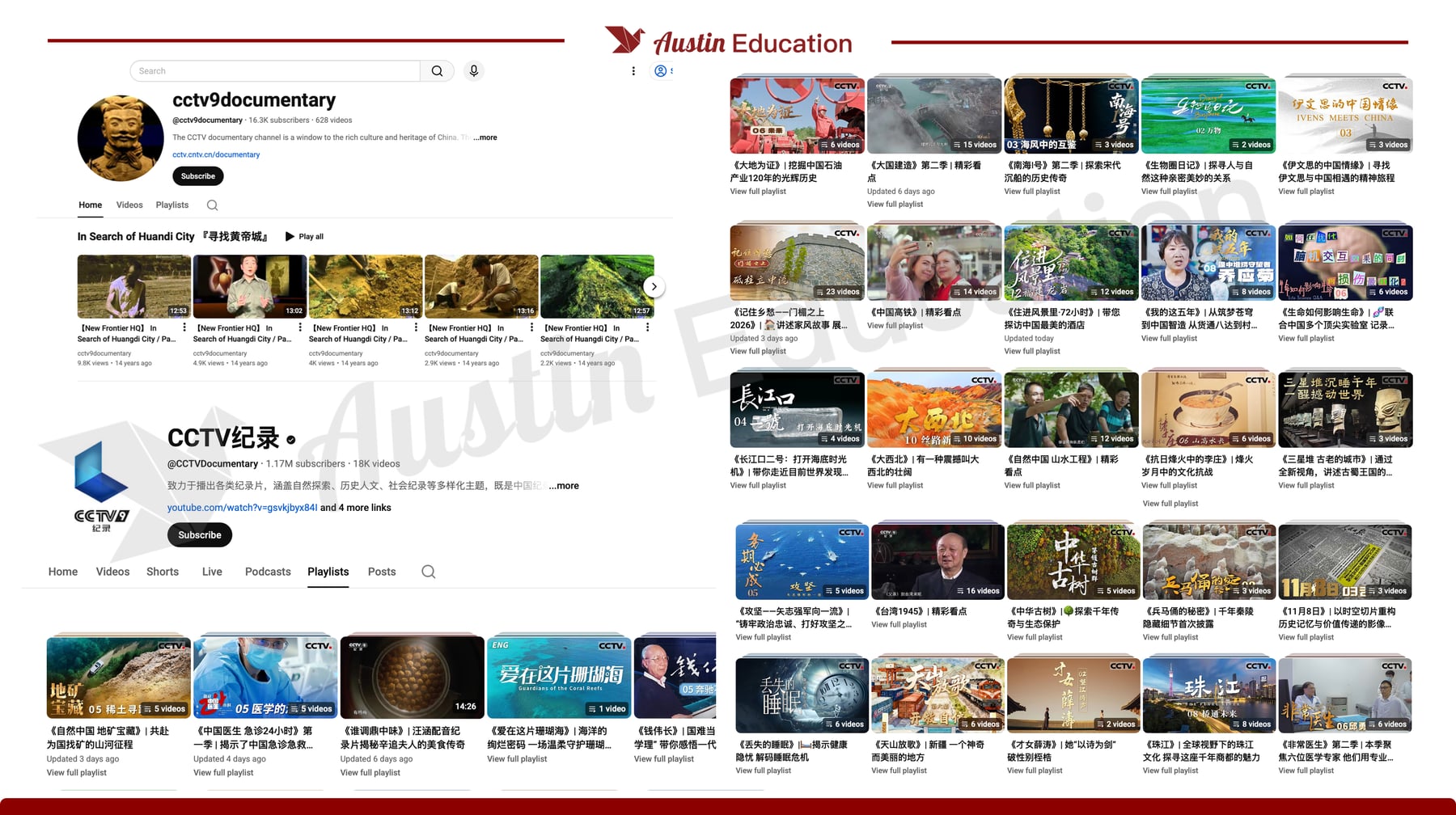
One of the most effective strategies for primary-aged students is integrating high-quality Chinese media into their weekly routine. Austin Education specifically recommends CCTV documentary series available on YouTube, which combine beautiful visuals with rich, natural Chinese narration — making them engaging for children while building sophisticated vocabulary and cultural knowledge.
A Bite of China (舌尖上的中国)
Explore Chinese cuisine and culture through stunning visuals. Perfect for building food-related vocabulary and cultural appreciation.
Masters in the Forbidden City (我在故宫修文物)
Follow craftspeople restoring ancient artefacts. Builds historical vocabulary and a deep appreciation for Chinese heritage.
The Rise of the Great Powers (大国崛起)
A compelling look at world history through a Chinese lens. Excellent for older primary students (Years 5–6) to build analytical vocabulary.
Solo Journey (万里走单骑)
Travel across China's UNESCO heritage sites. Great for geography vocabulary and sparking curiosity about Chinese culture.
 Click to view full size
Austin's Curriculum
Austin Education's Year 1–6 Systematic Curriculum & What Every Class Includes
Austin Education has invested years of research and teaching expertise into developing a proprietary textbook series for Years 1 through 6. Unlike imported textbooks from China, which are designed for native speakers in a Chinese-language environment, Austin's materials are specifically crafted for students growing up in Australia. Each stage builds on the previous one, ensuring no learning gaps and a smooth transition into the Year 7–10 Chinese programme.
- Y1 – Y2Foundation Stage: Pinyin, Vocabulary & Simple Sentences —
Lessons focus on building a solid pinyin foundation, core vocabulary for daily life, and simple sentence structures. Interactive, game-based activities make learning enjoyable and build positive associations with Chinese.
- Y3 – Y4Development Stage: Reading Comprehension & Paragraph Writing —
Students progress to short reading comprehension passages and begin structured paragraph writing. Cultural themes are introduced to broaden understanding beyond language mechanics.
- Y5 – Y6Transition Stage: Complex Texts, Essay Frameworks & Cultural Depth —
Content complexity increases significantly. Students engage with longer texts, begin learning basic essay structures, and develop the cultural literacy needed for secondary Chinese. This stage directly prepares students for Austin's Year 7–10 programme.
What Every Austin Primary Chinese Class Includes
- 1.5 hours of weekly class sessions with experienced, bilingual educators
- 4 exclusive Austin Education proprietary textbooks per year
- 12 stage/topic assessments and 4 semester exams to track progress
- Recorded lessons for review and catch-up
- Unlimited Q&A and academic support between classes
- Regular parent–teacher meetings and progress reports
With vs Without Austin
The Difference Austin Education Makes
Self-Study or a Generic Weekend Class
- Imported textbooks designed for native speakers in China — culturally disconnected for Australian students
- No structured progression — students plateau without a clear pathway to secondary Chinese
- Limited feedback on writing — errors go uncorrected and become ingrained habits
- No VCE alignment — primary learning does not connect to future exam requirements
Learning at Austin Education
- Proprietary textbooks designed for Australian students — contextually relevant and culturally engaging
- Six-stage structured progression from Year 1 to Year 6, feeding directly into the Year 7–10 programme
- Regular assessments and detailed feedback to identify and correct weaknesses early
- Full alignment with the VCAA curriculum — the primary curriculum is designed as the foundation for future VCE Chinese success
Frequently Asked Questions
Parents Ask, We Answer
How much time should my child spend on Chinese daily?
For Years 1–4, 20–30 minutes of daily Chinese exposure is ideal — this can include listening to a Chinese story app, watching a short CCTV clip, or reading a few pages of a picture book. For Years 5–6, aim for 30–45 minutes, incorporating some structured writing practice. Consistency is far more important than duration.
My child refuses to speak Chinese at home. What should I do?
This is extremely common for children growing up in Australia. The key is to make Chinese feel natural and rewarding rather than a chore. Try watching entertaining Chinese content together (cartoons, cooking shows), playing Chinese board games, or connecting with Chinese-speaking relatives via video call. Austin Education's engaging classroom environment also helps children associate Chinese with fun and achievement.
Are Austin's textbooks different from regular weekend Chinese schools?
Yes, significantly. Austin Education's proprietary textbook series is specifically designed for students growing up in Australia — it bridges the gap between local schooling and Chinese proficiency goals. Unlike imported textbooks from China, our materials are contextually relevant, culturally engaging, and structured to progress seamlessly from Year 1 all the way to VCE.
Does learning Chinese in primary school really help with VCE later?
Absolutely. Students who maintain consistent Chinese learning from Years 1–6 enter the VCE years with a significant advantage. They have a larger vocabulary, stronger reading comprehension, and greater writing confidence. This means less catch-up work in Years 11–12 and more time to focus on exam technique and high-scoring strategies — see our VCE Chinese CFL/CSLA/CSL strategy guide.
Can parents who don't speak fluent Chinese help their kids?
Absolutely. You don't need to be fluent in Chinese to support your child's learning. Create a supportive environment by watching Chinese media together, encouraging the use of Chinese story apps, and maintaining regular attendance at Austin Education classes. Our teachers and learning consultants are also available to provide guidance to parents at every stage.
What is the difference between ABC, SLA, and CFL students?
ABC (Australian-Born Chinese) students typically speak some Chinese at home but have limited formal literacy. SLA (Second Language Advanced) students have a stronger heritage language background. CFL (Chinese First Language) students are typically recent immigrants with strong spoken Chinese but may struggle with Australian exam formats. Austin Education tailors its primary curriculum to support all three groups.
Give Your Child the Chinese Foundation They Deserve
Austin Education's Year 1–6 Chinese programme combines expert teaching, proprietary materials, and a structured pathway to VCE. Book a free consultation today and let our Chinese faculty map out the right learning plan for your child.
Book a Free Consultation →- ✓6 proprietary textbook stages
- ✓Four-skill development
- ✓Melbourne & Adelaide
- ✓Dedicated Years 1–6 programme
By Austin Education Chinese Faculty
Published