

Chinese Learning for Years 7–10: The Bridge to VCE
Years 7–10 are the most decisive period in a student's Chinese learning journey. The habits, vocabulary, and writing skills built during these four years directly determine VCE pathway options and final scores.
- 8 min read
- Melbourne & Adelaide
- For Years 7–10 students & parents
Quick Summary
Why are Years 7–10 the most critical period for Chinese learning in Australia?
Years 7–10 are the most critical period in a student's Chinese learning journey in Australia. Year 7–8 marks the transition from conversational to academic Chinese — many students experience a confidence dip here that, without intervention, becomes a permanent gap. Year 9–10 is when VCE pathway decisions must be made and VCE-style skills must be built. Austin Education's two-stage curriculum — Consolidation (Years 7–8) and Pre-VCE Preparation (Years 9–10) — is specifically designed to close gaps, rebuild confidence, and ensure students arrive at Year 11 with the vocabulary, writing skills, and strategic knowledge needed to succeed in their chosen VCE Chinese pathway.
Key Takeaways
- 1Year 7–8 Is the Most Common Drop-Off Point: The jump from primary to secondary Chinese is the single biggest risk factor for disengagement. Students who don't receive targeted support here often abandon Chinese entirely before VCE.
- 2Academic Chinese Is a Different Skill: Writing an essay in Chinese requires a distinct set of vocabulary, sentence structures, and rhetorical conventions that are not taught in primary school. Year 7–8 is when this academic foundation must be built.
- 3VCE Pathway Must Be Decided by Year 10: The choice between CFL, CSLA, and CSL is governed by VCAA eligibility rules and has major implications for scaling and exam preparation. Families should begin this conversation no later than Year 9.
- 4Media Consumption Must Upgrade: Students in Years 7–10 should be watching CCTV documentaries and Chinese drama — not children's cartoons. The vocabulary and listening speed built through sophisticated media is essential for VCE-level tasks.
- 5Year 9–10 Preparation Is the Most Efficient VCE Investment: Students who build strong Chinese foundations in Years 9–10 require significantly less catch-up work in Year 11, allowing them to focus on exam strategy rather than basic skills.
Why These Years Matter
The Year 7–10 Chinese Crisis — and How to Avoid It
In Austin Education's experience working with thousands of Melbourne families, the pattern is consistent: students who thrived in primary school Chinese suddenly struggle in Year 7 or 8. The content shifts from conversational and descriptive Chinese to analytical, argumentative, and academic writing — a transition that many students and their families are unprepared for. Students arriving from a strong Years 1–6 primary Chinese foundation navigate this jump far more smoothly than those who reach Year 7 with unaddressed gaps.
The Vocabulary Gap
Academic Chinese requires 3,500–5,000 words by Year 10. Students who relied on conversational Chinese in primary school typically have 1,500–2,000 words — a gap that compounds rapidly.
The Writing Structure Gap
Chinese essay writing requires specific rhetorical structures (起承转合), formal connective phrases, and argument development skills that are entirely new in Year 7–8.
The Confidence Crisis
When students who were "good at Chinese" in primary school suddenly struggle in Year 7, many conclude they are "not a Chinese person" and disengage entirely — often permanently.
The VCE Pathway Confusion
Many families in Year 9–10 are unaware of the differences between CFL, CSLA, and CSL, or the VCAA eligibility rules that govern pathway selection — leading to last-minute, poorly-informed decisions.
Curriculum Framework
Austin Education's Two-Stage Years 7–10 Curriculum
Austin Education's Years 7–10 curriculum is structured in two distinct stages, each with a specific focus and set of outcomes. Unlike generic tutoring programmes that simply follow the school curriculum, Austin's approach is diagnostic and strategic — identifying each student's exact gaps and building the skills that matter most for VCE success.
- Y7 – Y8 · ConsolidationConsolidation Stage: Closing Gaps, Building Academic Chinese —
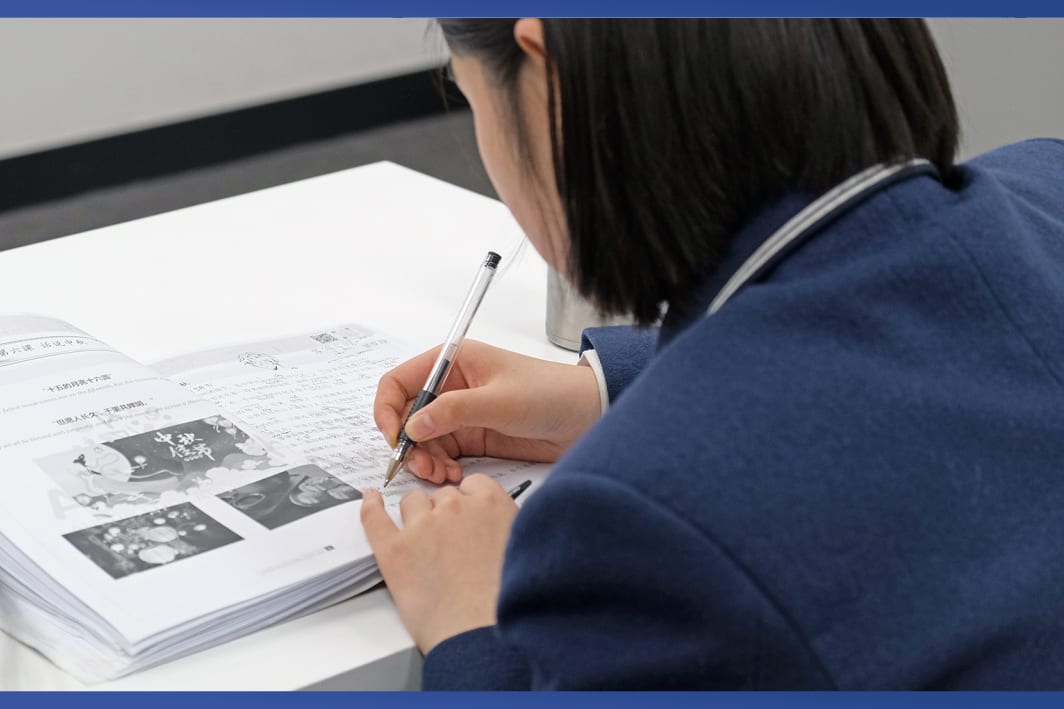
The Consolidation Stage begins with a diagnostic assessment to identify each student's exact vocabulary, reading, and writing gaps. The curriculum then focuses on closing those gaps while simultaneously introducing academic Chinese — essay structures, formal vocabulary, analytical writing, and the rhetorical conventions (起承转合) required for secondary-level Chinese. Vocabulary target: 3,500+ words.
- Y9 – Y10 · Pre-VCEPre-VCE Stage: Pathway Selection, VCE-Style Skills & Exam Readiness —
The Pre-VCE Stage shifts focus to VCE pathway selection and preparation. Students practise VCE-style reading comprehension, essay writing, and listening tasks specific to their chosen pathway (CFL, CSLA, or CSL). Austin's expert consultants guide families through the VCAA eligibility assessment and pathway decision. Vocabulary builds to 5,000+ words, and students begin developing the exam strategies — including Austin's 70% topic prediction system — that will give them a significant advantage in Year 11 and 12.
New to Austin in Year 7 or later? Every student begins with a diagnostic assessment. If gaps from primary school are identified, Austin's Consolidation Programme provides a structured catch-up plan — most students close primary-school gaps within one to two years of consistent study.
 Click to view full size
Daily Habits for Years 7–10
Three Habits That Determine Your VCE Starting Point
The most consistent finding from Austin Education's teaching experience is that students who maintain three daily Chinese habits during Years 7–10 arrive at Year 11 with a dramatically stronger foundation than those who rely solely on weekly classes. These habits require minimal time — 15 to 30 minutes per day — but their compounding effect over four years is transformative.
Listening (15 min/day)
Years 7–8: CCTV documentaries (大国崛起, 万里走单骑) and Chinese drama with Chinese subtitles. Years 9–10: progress to CCTV News broadcasts (新闻联播), Chinese podcasts, and contemporary Chinese films — the input that builds VCE-level listening speed.
Reading (15 min/day)
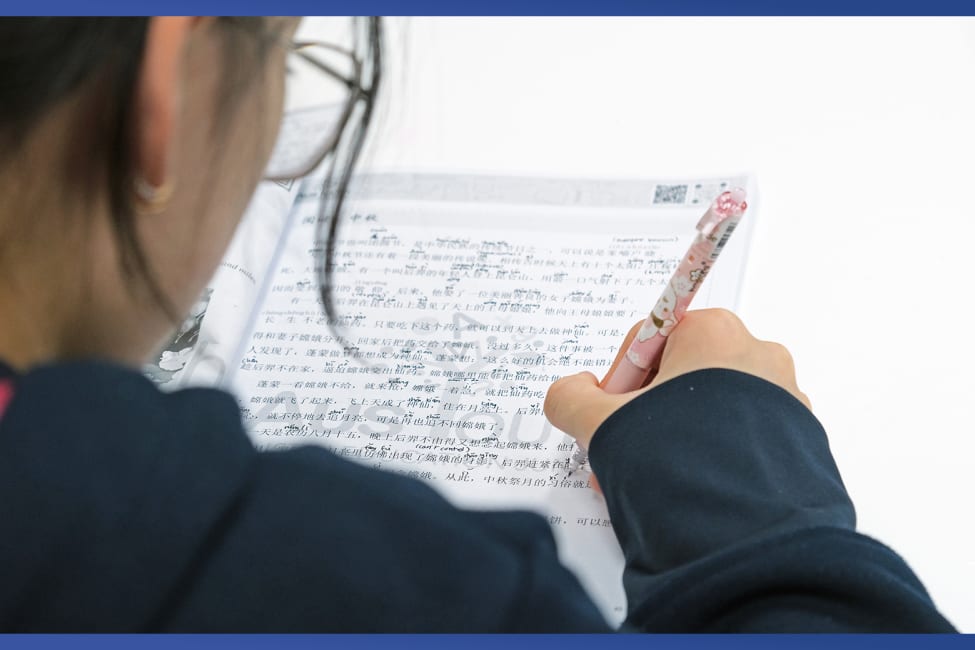
Years 7–8: narrative literature, essays, Austin textbooks, and simplified Chinese news websites. Years 9–10: introductory classical texts (文言文) and VCE-style reading comprehension passages that mirror the exam format.
Writing (15 min/day)
Years 7–8: structured paragraph writing, diary entries, and essay outlines using 起承转合. Years 9–10: full essay drafts with teacher feedback and timed VCE-style writing practice.
Media Guide: Years 7–10
The Right Chinese Media for Secondary Students
Secondary-level Chinese learners need to move beyond children's content. The vocabulary and listening comprehension built through sophisticated Chinese media — documentaries, drama, and news — is directly transferable to VCE reading comprehension and listening tasks. The key is matching the media to the student's current level and gradually increasing complexity.
Y7–8 · Documentaries
The Rise of the Great Powers (大国崛起), Solo Journey (万里走单骑), and A Bite of China (舌尖上的中国) build analytical and descriptive vocabulary and introduce the formal sentence structures used in secondary writing tasks.
Y7–8 · Drama
Chinese drama series with Chinese subtitles (e.g. 山海情, 觉醒年代) develop natural listening speed and colloquial vocabulary, while the Chinese subtitles simultaneously reinforce character recognition.
Y9–10 · News
CCTV News (新闻联播) and Chinese news apps (人民日报, 新华社) build the formal vocabulary, listening speed, and current-affairs knowledge directly tested in VCE Chinese listening and reading tasks.
Y9–10 · Film & Podcasts
Contemporary Chinese films with Chinese subtitles and Chinese podcasts (e.g. 故事FM) develop the range of registers — formal, informal, narrative — needed for VCE writing tasks and listening comprehension.
 Click to view full size
VCE Pathway Decision
Choosing Your VCE Chinese Pathway: What Year 9–10 Students Must Know
One of the most important decisions a Year 9–10 student and their family will make is which VCE Chinese pathway to pursue. This decision is governed by VCAA eligibility rules and study designs and has significant implications for scaling, exam preparation, and university entry. Austin Education's learning consultants guide families through this decision as part of the Pre-VCE programme. For a full breakdown of the three pathways at exam level, see our VCE Chinese CFL/CSLA/CSL strategy guide.
CSL — Chinese Second Language
For students with limited prior Chinese education. Cannot have 12+ months of Chinese schooling, and cannot have lived 36+ months in a Chinese-speaking country. Scales up: raw 40 → approximately 45.
CSLA — Chinese Second Language Advanced
For students with heritage language backgrounds. No more than 7 years of Chinese school education, and highest year level not above Victorian Year 7. Scales slightly: raw 40 → approximately 42.
CFL — Chinese First Language
For students who received formal Chinese education in China and exceed CSLA eligibility limits. No VCAA eligibility application required. Scales down slightly: raw 40 → approximately 39.
VCAA Eligibility Application
Required for the CSL and CSLA pathways. Application window: August–September of Year 10. Requires student, parent, and principal signatures — Austin consultants guide the full application process.
Austin's Advantage
What Makes Austin Education Different for Years 7–10
Austin Education's approach to Years 7–10 Chinese is built on four pillars that distinguish it from both weekend Chinese schools and generic tutoring centres. These pillars reflect over a decade of experience working with Melbourne's secondary Chinese learners.
Diagnostic Assessment
Every new student receives a comprehensive diagnostic assessment to identify their exact vocabulary, reading, and writing gaps. This ensures the programme is personalised from day one — no time wasted on content already mastered.
70% VCE Topic Hit Rate
Austin's curriculum is closely aligned with VCAA requirements. Our topic prediction accuracy of 70% gives students a significant advantage in both SAC and exam preparation — a benefit that begins in the Pre-VCE stage.
Proprietary Textbooks
Austin's textbook series is designed specifically for Australian students — contextually relevant, culturally engaging, and structured to progress seamlessly from Year 7 through to VCE.
VCE Pathway Guidance
Austin's learning consultants provide expert guidance on VCE pathway selection, VCAA eligibility assessment, and application support — ensuring families make informed, strategic decisions before Year 11.
What Every Austin Chinese Class Includes (Years 7–10)
- 1.5 hours of weekly class sessions with experienced, bilingual educators
- 4 exclusive Austin Education proprietary textbooks per year
- 12 stage/topic assessments and 4 semester exams to track progress
- Recorded lessons for review and catch-up
- Unlimited Q&A and academic support between classes
- VCE pathway consultation and VCAA eligibility guidance (Years 9–10)
With vs Without Austin
The Difference a Structured Years 7–10 Programme Makes
Without a Structured Programme
- Year 7–8 confidence dip becomes permanent disengagement from Chinese
- Academic Chinese writing skills never properly developed — essays remain at primary school level
- VCE pathway selected without understanding VCAA eligibility rules or scaling implications
- Year 11 begins with significant catch-up work rather than exam strategy development
With Austin Education
- Consolidation Stage closes Year 7–8 gaps systematically and rebuilds confidence
- Academic Chinese writing — essay structure, 起承转合, formal vocabulary — built from Year 7
- VCE pathway selected with expert guidance, VCAA eligibility confirmed, application supported
- Year 11 begins with 5,000+ vocabulary, VCE-style skills, and Austin's 70% topic prediction advantage
Frequently Asked Questions
Parents Ask, We Answer
Why do so many students fall behind in Chinese during Years 7–8?
Years 7–8 mark a significant jump in content complexity — from conversational Chinese to academic, analytical writing. Many students who coped well in primary school suddenly find themselves struggling with longer texts, essay structures, and abstract vocabulary. Without targeted support during this transition, gaps compound quickly and become much harder to close by Year 9 or 10.
What is the difference between Austin Education's Year 7–8 and Year 9–10 programmes?
The Year 7–8 Consolidation Programme focuses on closing primary-school gaps, building academic Chinese writing skills, and rebuilding confidence. The Year 9–10 Pre-VCE Programme shifts focus to VCE pathway selection (CFL, CSLA, or CSL), VCE-style reading and writing tasks, and vocabulary expansion to 5,000+ words. Both programmes use Austin's proprietary textbooks and diagnostic assessment to personalise learning.
My child is in Year 9 and has significant Chinese gaps. Is it too late?
It is not too late, but the urgency is real. Austin Education's diagnostic assessment identifies exactly where the gaps are, and a targeted catch-up programme can close most gaps within one to two years. The key is to start immediately — students who begin structured catch-up in Year 9 typically arrive at Year 11 with a workable foundation, while those who wait until Year 10 or 11 face a much steeper climb.
What Chinese media should Years 7–10 students be consuming?
For Years 7–8, we recommend CCTV documentaries such as The Rise of the Great Powers (大国崛起) and Solo Journey (万里走单骑), plus Chinese drama series with Chinese subtitles. For Years 9–10, students should progress to CCTV News broadcasts, Chinese podcasts, and contemporary Chinese films with Chinese subtitles. The goal is to build the vocabulary range and listening speed required for VCE-level comprehension tasks.
When should my child decide between CFL, CSLA, and CSL for VCE?
Ideally, VCE pathway selection should be made by the end of Year 9 or early Year 10, allowing sufficient time to prepare for the chosen pathway's specific requirements. Austin Education provides diagnostic assessments and expert guidance to help families make this decision. The choice depends on the student's background, years of Chinese schooling, and time spent in a Chinese-speaking country — all of which are governed by VCAA eligibility rules.
How does Austin Education's Year 9–10 programme prepare students for VCE Chinese?
Austin's Pre-VCE programme introduces VCE-style reading comprehension, essay writing, and listening tasks from Year 9. Students practise the specific text types and response formats required in their chosen VCE pathway, build vocabulary to 5,000+ words, and receive expert guidance on SAC preparation strategies. Austin's 70% topic prediction accuracy gives students a significant head start in both SAC and final exam preparation.
Don't Let Years 7–10 Become a Lost Opportunity
Whether your child is in Year 7 and needs gap-closing support, or in Year 10 and preparing for VCE pathway selection, Austin Education's structured curriculum and expert teachers can help. Book a free consultation to find the right programme.
Book a Free Consultation →- ✓Two-stage Years 7–10 curriculum
- ✓VCE pathway guidance
- ✓Melbourne & Adelaide
- ✓5,000+ vocabulary by Year 10
By Austin Education Chinese Faculty
Published