

VCE Chinese Years 11–12: CFL, CSLA & CSL Strategy Guide
Understand VCAA's official eligibility rules, master the exam structure, and apply Austin Education's proven strategies to maximise your VCE Chinese study score.
- 9 min read
- Melbourne & Adelaide
- For Years 11–12 students & parents
Quick Summary
How do you succeed in VCE Chinese?
The absolute first step is confirming which pathway — CFL, CSLA, or CSL — you are eligible for under VCAA's strict rules. Your eligibility is determined by how many years you studied in a Chinese-medium school and how long you have lived in China, Taiwan, Hong Kong, or Macau. Students applying for CSL, CSLA, or CLCS must obtain VCAA approval before enrolling in Units 3 & 4. The second step is understanding that SAC results contribute 50% of your total score. The third step is building a systematic vocabulary and writing strategy aligned with VCAA requirements. Austin Education's VCE Chinese programme combines 70% topic prediction accuracy, school-specific SAC preparation, and a five-step essay refinement process to give students the most targeted preparation available in Melbourne.
Key Takeaways
- 1VCAA Eligibility Is Non-Negotiable: Your pathway (CFL, CSLA, or CSL) is determined by VCAA's strict rules — specifically how many years you studied in a Chinese-medium school and whether you have lived 3+ years in China, Taiwan, Hong Kong, or Macau. You must apply to VCAA for eligibility approval before enrolling in Units 3 & 4.
- 2SAC Results Are Half Your Score: With SACs contributing 50% of the total study score, strong SAC performance from Term 1 of Year 11 is essential — not optional.
- 3Scaling Differences Are Real: Based on 2025 VTAC data, CSL scales the highest (raw 40 → scaled 45), CSLA scales well (raw 40 → scaled 42), and CFL scales moderately (raw 40 → scaled 39). However, universities assess prerequisites using raw scores — so choosing the right pathway for your background matters more than chasing scaling alone.
- 4Writing Quality Determines Rankings: In VCE Chinese, the difference between a study score of 35 and 45 often comes down to writing quality — the precision of vocabulary, the sophistication of sentence structures, and the coherence of argument.
- 5Topic Prediction Matters: Austin Education's 70% topic prediction accuracy gives students a significant strategic advantage in both SAC and final exam preparation. Combined with school-specific SAC resources and a five-step essay refinement process, Austin students consistently outperform the state average.
Pathway Selection
CFL, CSLA, or CSL: Choosing the Right VCE Chinese Pathway
One of the most consequential decisions a student makes before Year 11 is which VCE Chinese pathway to pursue. Critically, this is not a free choice — VCAA has strict eligibility criteria based on your educational background and residency history. Students applying for CSL, CSLA, or CLCS must apply to VCAA for eligibility approval before enrolling in Units 3 & 4 (typically August–September of the year prior). Without VCAA approval, students cannot enrol. The application process requires the student, parent, and school principal to sign a form, which is then submitted to VCAA for review. You can confirm the current rules against the official VCE study designs before locking in a pathway.
CSL — Chinese Second Language
NOT eligible if either: (1) 12+ months of education in a Chinese-medium school, OR (2) 3+ years (36 months) residence in China, Taiwan, Hong Kong, or Macau. Typically suits ABC students with limited formal Chinese education. Scaling (2025 VTAC): raw 30 → 35 · raw 40 → 45 · raw 50 → 52 — the highest scaling among Chinese subjects.
CSLA — Second Language Advanced
Eligible if BOTH: (1) no more than 7 years of Chinese-medium schooling, AND (2) the highest level reached in a Chinese-medium school does not exceed the Victorian Year 7 equivalent. Typically suits heritage students who speak Chinese at home and were educated mainly in Australia. Scaling (2025 VTAC): raw 30 → 31 · raw 40 → 42 · raw 50 → 50 — scales well, with a competitive but manageable cohort.
CFL — Chinese First Language
Students who exceed the CSLA limits: more than 7 years of Chinese-medium schooling OR a highest level beyond the Victorian Year 7 equivalent. No VCAA approval is required for CFL. Typically suits students who completed primary or secondary school in China or Taiwan. Scaling (2025 VTAC): raw 30 → 25 · raw 40 → 39 · raw 50 → 49 — moderate scaling against a highly competitive native-speaker cohort.
Important: Students applying for CSL, CSLA, or CLCS must apply to VCAA for eligibility approval before enrolling in Units 3 & 4. The application window typically opens in August–September of the year prior, and the process requires the student, parent, and school principal to sign a form submitted to VCAA. CFL does NOT require VCAA eligibility approval. Austin Education strongly recommends completing a diagnostic assessment before Year 11 to confirm eligibility and pathway fit.
Heritage students arriving from our Year 7–10 Chinese programme already have a clear read on which pathway suits them, because their proficiency has been tracked against VCE requirements for years — one of the biggest advantages of a Pre-VCE foundation.
Exam Structure
Understanding the VCE Chinese Assessment Structure
VCE Chinese is assessed across two components: School-Assessed Coursework (SAC) and the end-of-year examination. Understanding how each component is weighted — and what specific skills are assessed — is the foundation of any effective preparation strategy.
SAC Coursework — 50%
School-Assessed Coursework completed throughout Years 11–12. Includes reading, writing, and oral tasks, marked by your school against VCAA criteria. Crucially, SAC results cannot be recovered at the end of the year — strong performance must start from Term 1.
Written Exam — 33%
The end-of-year written examination covers reading comprehension and writing tasks. It tests vocabulary range, grammar accuracy, and essay structure, and is conducted in November.
Listening Exam — 17%
The end-of-year listening examination is based on authentic Chinese audio. It tests listening speed, vocabulary recognition, and comprehension accuracy.
Proven Strategies
Five Strategies to Maximise Your VCE Chinese Score
A strong VCE Chinese result is not luck — it is the product of disciplined, exam-aligned preparation across vocabulary, writing, eligibility, prediction, and feedback. These are the five strategies Austin Education builds every VCE Chinese programme around.
Build a Topic-Specific Vocabulary Bank
VCE Chinese exams test a predictable range of topics — society, environment, technology, culture, and personal identity. Build a dedicated vocabulary bank for each topic area, including high-frequency phrases, idiomatic expressions, and sophisticated connectives. Austin Education's topic-specific vocabulary lists are curated from VCAA examiner reports and past-exam analysis.
Master Essay Frameworks Before Exam Season
High-scoring VCE Chinese essays share a consistent structure: a clear introduction with a stated position, body paragraphs with topic sentences and supporting evidence, and a conclusion that synthesises the argument. Practise these frameworks until they are automatic — so that in the exam, your mental energy is focused on content quality rather than structure.
Confirm Your VCAA Eligibility Early
Do not wait until Year 12 to check your VCAA eligibility. The application window for CSL, CSLA, and CLCS typically opens in August–September of the year before Units 3 & 4. A miscalculation — such as underestimating years of Chinese-medium schooling — can force you into a harder pathway at the last minute. Austin Education offers diagnostic assessments to help families confirm the correct pathway well in advance.
Leverage Austin's 70% Topic Prediction
Austin Education's VCE Chinese teachers analyse VCAA exam trends, examiner reports, and curriculum documents each year to predict the most likely SAC and exam topics. With a 70% hit rate, students who prepare Austin's predicted topics are significantly better positioned than those who attempt to cover everything equally — particularly for SAC preparation, where targeted topic work can be the difference between a B+ and an A+.
Use Austin's Five-Step Essay Refinement Process
Austin Education's five-step essay refinement process reviews each student's essay word by word — checking vocabulary precision, grammar accuracy, sentence variety, and argument coherence. This level of detailed feedback is rarely available at day schools and is one of the primary reasons Austin students consistently achieve study scores above the state average. The same scaling logic rewards top language results across subjects — see how a raw 47 was achieved in our VCE EAL high-score strategy guide.
Austin's VCE Chinese Programme
What Austin Education Offers VCE Chinese Students
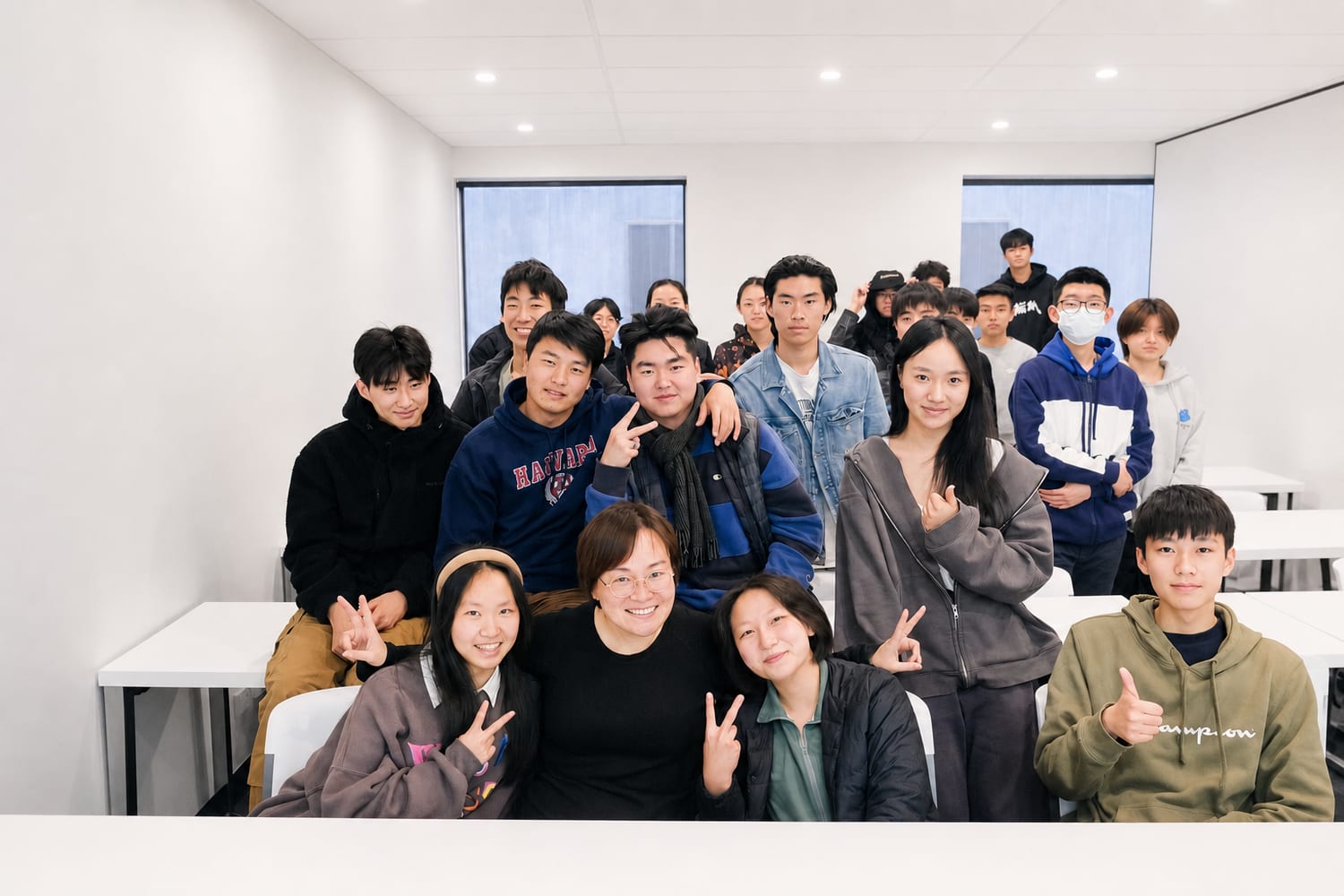
Austin Education's VCE Chinese programme is built on years of teaching experience, deep VCAA curriculum knowledge, and a genuine understanding of the challenges faced by Chinese heritage students in Australia. Our programme is not a generic tutoring service — it is a targeted, data-driven preparation system designed to maximise every student's study score. We also provide expert pathway guidance to help students and families navigate VCAA's eligibility requirements before Year 11.
What Every Austin VCE Chinese Class Includes
- School-specific SAC preparation — tailored to your school's set texts and marking criteria
- 70% topic prediction accuracy — focus your preparation on the most likely exam topics
- Five-step essay refinement process — word-by-word feedback on every piece of writing
- Curated high-scoring sample essay bank — learn from the best to write like the best
- Listening comprehension practice with authentic VCAA-style audio materials
- Pathway selection & VCAA eligibility guidance — diagnostic assessment to confirm the right CFL/CSLA/CSL pathway and navigate the VCAA approval process
 Click to view full size
2025 Results
Austin Education VCE Chinese Results
Austin Education's VCE Chinese students consistently achieve study scores above the state average. Our results reflect the effectiveness of our targeted preparation approach, school-specific SAC strategies, and the quality of our teaching team.
2025 VCE Chinese Outcomes
Universities assess subject prerequisites using raw study scores, not scaled scores — so achieving a high raw score in the correct pathway is always the priority.
With vs Without Austin
The Austin Education Difference
Without Austin Education
- No school-specific SAC preparation — generic study materials that don't match your school's criteria
- No topic prediction — equal effort spent on high and low probability exam topics
- Limited essay feedback — surface-level corrections without addressing underlying vocabulary and structure issues
- No pathway guidance — students choose CFL/CSLA/CSL without expert assessment of their actual proficiency
With Austin Education
- School-specific SAC preparation tailored to your school's set texts and marking criteria
- 70% topic prediction accuracy — strategic focus on the most likely exam topics
- Five-step essay refinement — word-by-word feedback that addresses vocabulary, grammar, and structure simultaneously
- Expert pathway guidance — diagnostic assessment ensures every student is in the right CFL/CSLA/CSL pathway
A strong VCE Chinese result starts long before Year 11. Students who build their four skills from Years 1–6 primary Chinese enter VCE with a decisive vocabulary and writing advantage — and far less catch-up pressure when scaling and SACs are on the line.
Frequently Asked Questions
Students & Parents Ask, We Answer
What is the difference between VCE Chinese CFL, CSLA, and CSL?
The three VCE Chinese pathways are determined by VCAA's strict eligibility criteria. CSL: NOT eligible if you have had 12+ months in a Chinese-medium school OR 3+ years residence in China, Taiwan, Hong Kong, or Macau. CSLA: Eligible if you have had no more than 7 years of Chinese-medium schooling AND your highest level in a Chinese-medium school does not exceed the Victorian Year 7 equivalent. CFL: For students who exceed the CSLA thresholds. Importantly, students applying for CSL, CSLA, or CLCS must obtain VCAA eligibility approval before enrolling in Units 3 & 4 — CFL does not require this approval.
Does VCE Chinese scale well?
Yes, but the scaling advantage varies significantly by pathway. Based on 2025 VTAC data: CSL scales the highest (raw 25→29, raw 30→35, raw 40→45, raw 50→52). CSLA scales well (raw 25→24, raw 30→31, raw 40→42, raw 50→50). CFL scales moderately (raw 25→18, raw 30→25, raw 40→39, raw 50→49) due to its highly competitive native-speaker cohort. Note: universities assess subject prerequisites using raw study scores, not scaled scores — so achieving a high raw score in the correct pathway is always the priority. You can review current scaling reports on the official VTAC website.
How important are SAC results for VCE Chinese?
SAC results contribute 50% of the total VCE Chinese study score, making them critically important. Strong SAC performance provides a significant buffer for the final exam and can substantially boost the overall study score. Austin Education provides targeted SAC preparation based on each student's school's specific set texts and marking criteria.
What is Austin Education's VCE Chinese topic prediction accuracy?
Austin Education's VCE Chinese topic prediction accuracy has consistently reached 70% or above in recent years. This is achieved through deep analysis of VCAA exam trends, examiner reports, and our teachers' extensive experience as VCAA examiners and curriculum developers. Students who prepare using Austin's predicted topics gain a significant strategic advantage.
How can I improve my VCE Chinese writing score?
The most effective strategies are: (1) building a bank of high-quality vocabulary and phrases specific to each topic area; (2) practising structured essay frameworks until they become automatic; (3) reading high-scoring sample essays to understand what examiners reward; and (4) receiving detailed, word-by-word feedback on your writing. Austin Education's five-step essay refinement process addresses all four of these areas systematically.
Is it possible to achieve a study score of 40+ in VCE Chinese as an ABC student?
Yes, absolutely. Many of Austin Education's ABC students achieve study scores of 40 and above in VCE Chinese CSLA and CSL. The key factors are: choosing the right pathway, building a strong vocabulary base through consistent reading and media exposure, and developing exam-specific writing and listening skills through targeted practice. Austin Education has a proven track record of helping ABC students achieve top scores.
Ready to Maximise Your VCE Chinese Score?
Austin Education's VCE Chinese programme combines expert teaching, 70% topic prediction accuracy, school-specific SAC preparation, and a five-step essay refinement process. Book a free consultation to find the right pathway and programme for your goals.
Book a Free Consultation →- ✓CFL / CSLA / CSL pathways
- ✓School-specific SAC prep
- ✓Melbourne & Adelaide
- ✓70% topic prediction
By Austin Education VCE Chinese Team
Published