

VCE Biology Study Guide:
How to Get 40+ and Ace Your Exams
A complete guide to VCE Biology Units 1–4 — covering content, SAC preparation, exam technique, early entry strategy, and how Austin Education helps Melbourne students achieve their best.
- 14 min read
- Melbourne, VIC
- Austin Education Biology Team
Quick Summary
What does it take to do well in VCE Biology?
VCE Biology (accreditation period 2022–2027) is a content-rich subject that rewards consistent study and strong written communication skills. Units 1 and 2 cover cell biology, homeostasis, genetics, and inheritance. Units 3 and 4 — the basis of the end-of-year exam — cover molecular biology (DNA, gene expression, CRISPR), biochemical pathways, the immune system, and evolution. Students who master the study design dot points and practise structured responses regularly can achieve a raw 40+.
Key Takeaways
- 1VCE Biology is content-heavy, not mathematically difficult: the challenge is volume and application, not calculation. Students who are organised and consistent with weekly review perform significantly better than those who cram.
- 2Unit 3 molecular biology is the hardest section: DNA structure, gene expression, transcription, translation, and biochemical pathways (photosynthesis and cellular respiration) are the most commonly cited challenging topics. Start early and seek help quickly if you fall behind.
- 3SACs contribute 50% of your final study score: Unit 3 SACs contribute 20% and Unit 4 SACs contribute 30%. A strong SAC performance provides a significant buffer heading into the end-of-year exam.
- 4Early entry is ideal for medicine-aspiring students: completing Biology in Year 11 frees up Year 12 for Chemistry, UCAT preparation, and other demanding subjects. Its study methods mirror university health science courses.
- 5The study design is your most important resource: every exam question maps to a specific dot point. Students who work through each dot point systematically have a significant advantage over those who rely on textbooks alone.
Working through this guide on your own? Austin's VCE Biology tutoring in Melbourne adds weekly group classes, mock SACs marked against VCAA criteria, and teachers with medical and biomedical research backgrounds.
VCE Biology tutoringStudy Design 2022–2027
VCE Biology Units 1–4: What You'll Study
The current VCE Biology study design was accredited in 2022 and runs through 2027. It is structured around four big inquiry questions, each forming a unit. Units 1 and 2 are typically completed in Year 11; Units 3 and 4 in Year 12 — or in Year 11 for early entry students.
Unit 1 — How do organisms regulate their functions?
- Prokaryotic and eukaryotic cell structure
- Cell cycle, mitosis, apoptosis, stem cells
- Homeostasis: temperature, blood glucose, water
- Plant and animal cell specialisation
- Scientific investigation (AOS 3)
Unit 2 — How does inheritance impact on diversity?
- Meiosis, chromosomes, karyotypes
- Genotypes, phenotypes, pedigree charts
- Codominance, incomplete dominance, sex-linked traits
- Asexual vs sexual reproduction, cloning
- Bioethical issues: genomics, conservation
Unit 3 — How do cells maintain life? (exam basis)
- DNA structure, mRNA/rRNA/tRNA; transcription, RNA processing, translation
- Gene structure: exons, introns, promoter and operator regions; the prokaryotic trp operon
- Proteins and the proteome; the protein secretory pathway (ER, Golgi apparatus)
- DNA manipulation: PCR, gel electrophoresis, CRISPR-Cas9, recombinant plasmids (insulin), transgenic organisms
- Photosynthesis (C3/C4/CAM plants, Rubisco, light-dependent and light-independent stages); cellular respiration (glycolysis, Krebs cycle, electron transport chain, anaerobic fermentation)
Unit 4 — How does life change and respond to challenges? (exam basis)
- Physical, chemical and microbiota barriers; innate immune response (macrophages, neutrophils, dendritic cells, NK cells, complement proteins, interferons)
- Adaptive immune response: B lymphocytes and antibodies, helper T and cytotoxic T cells; natural vs artificial immunity; active vs passive immunity
- Vaccination and herd immunity; monoclonal antibodies for autoimmune diseases and cancer; pathogen identification and control
- Changing allele frequencies: environmental selection pressures, genetic drift, gene flow, mutations; biological consequences including speciation
- Evidence for evolution: palaeontology, structural morphology, molecular homology, comparative genomics; the hominin fossil record and the migration of modern humans
The current VCE Biology study design is accredited from 2022. All content listed above is verified against the official VCAA study design document, published at vcaa.vic.edu.au. Always check the accreditation period printed on the front of the document against your own year level.
Assessment Structure
VCE Biology Assessment: SACs, Exam Format and How Scores Are Calculated
| Assessment Component | Contribution | Details |
|---|---|---|
| Unit 3 SACs | 20% | Typically 2 SACs: a data analysis task and a structured questions task |
| Unit 4 SACs | 30% | Includes a student-designed scientific investigation presented as a scientific poster (AOS 3), plus structured questions tasks |
| End-of-Year Exam | 50% | 2 hours 30 minutes, covering all key knowledge in Units 3 & 4 |
"In VCE Biology, the exam rewards students who can apply biological concepts to unfamiliar scenarios — not just recall facts. Practising past exam questions under timed conditions is the single most effective exam preparation strategy." — Austin Education Biology Team
How Austin Education helps with VCE Biology assessment
- SAC preparation workshops covering data analysis, structured responses, and scientific investigation design
- Exam technique coaching: how to interpret questions, use biological terminology, and structure extended responses for maximum marks
- Past exam question banks organised by study design dot point, with worked solutions and marking criteria
Study Strategy
How to Get 40+ in VCE Biology: 6 Evidence-Based Strategies
Master the study design dot points
Every exam question maps to a specific dot point in the VCAA study design. Use the study design as a checklist — tick off each dot point only when you can explain it clearly and apply it to an exam question.
Practise structured written responses
VCE Biology exams heavily reward students who use precise biological terminology and structure their answers according to the marks allocated. Practise writing responses that directly address the question stem and include all required biological concepts.
Complete past exams under timed conditions
The end-of-year exam is 2 hours 30 minutes, so time management is critical. Complete full past exams under strict timed conditions from at least six weeks before the exam, and review every wrong answer against the marking criteria.
Prioritise Unit 3 molecular biology early
Unit 3 AOS 1 (DNA and gene expression) and AOS 2 (photosynthesis and cellular respiration) are the most conceptually demanding sections. Start building understanding from the beginning of Year 12 — do not leave these topics until exam revision.
Take SACs seriously from day one
SACs contribute 50% of your final study score (Unit 3: 20%, Unit 4: 30%). A strong SAC performance creates a significant buffer for the exam. Treat every SAC as a mini-exam and prepare with the same rigour you would for the end-of-year exam.
Seek expert help for difficult topics early
Given the volume of content in VCE Biology, falling behind on even one topic can create a cascade of confusion. Identify knowledge gaps early and address them with targeted tutoring before they compound.
Austin's Biology classes are grouped by school and SAC timeline, so mock SACs land before your school's — not after. Teachers come from medicine, pathology and biomedical research backgrounds.
See the Unit 1–4 courseEarly Entry Strategy
VCE Biology Early Entry in Year 10: Is It Worth It?
VCE Biology is the most popular subject for early entry in Victoria. Completing Units 1–2 in Year 10 and Units 3–4 in Year 11 provides several strategic advantages, particularly for students targeting medicine or health science pathways.
| Advantage | Why It Matters |
|---|---|
| Frees up Year 12 | Year 12 can focus on Chemistry, Maths, and UCAT preparation without Biology competing for attention |
| Mirrors medical school study | Biology's memorisation and application methods directly prepare students for university health science content |
| Reduces Year 12 pressure | One fewer Unit 3–4 subject in Year 12 significantly reduces workload during the most critical year |
| Builds academic confidence | Successfully completing a VCE subject early builds confidence and study skills before the high-stakes Year 12 |
How Austin Education supports early entry Biology
- Pre-VCE Biology program in Years 9–10, bridging day school science to VCE Unit 1–2 standard
- Early entry readiness assessment to determine whether a student is academically prepared to accelerate
- Structured Unit 1–2 and Unit 3–4 Biology programs with experienced teachers who understand the VCAA study design
Course Materials
Austin Education's In-House VCE Biology Materials
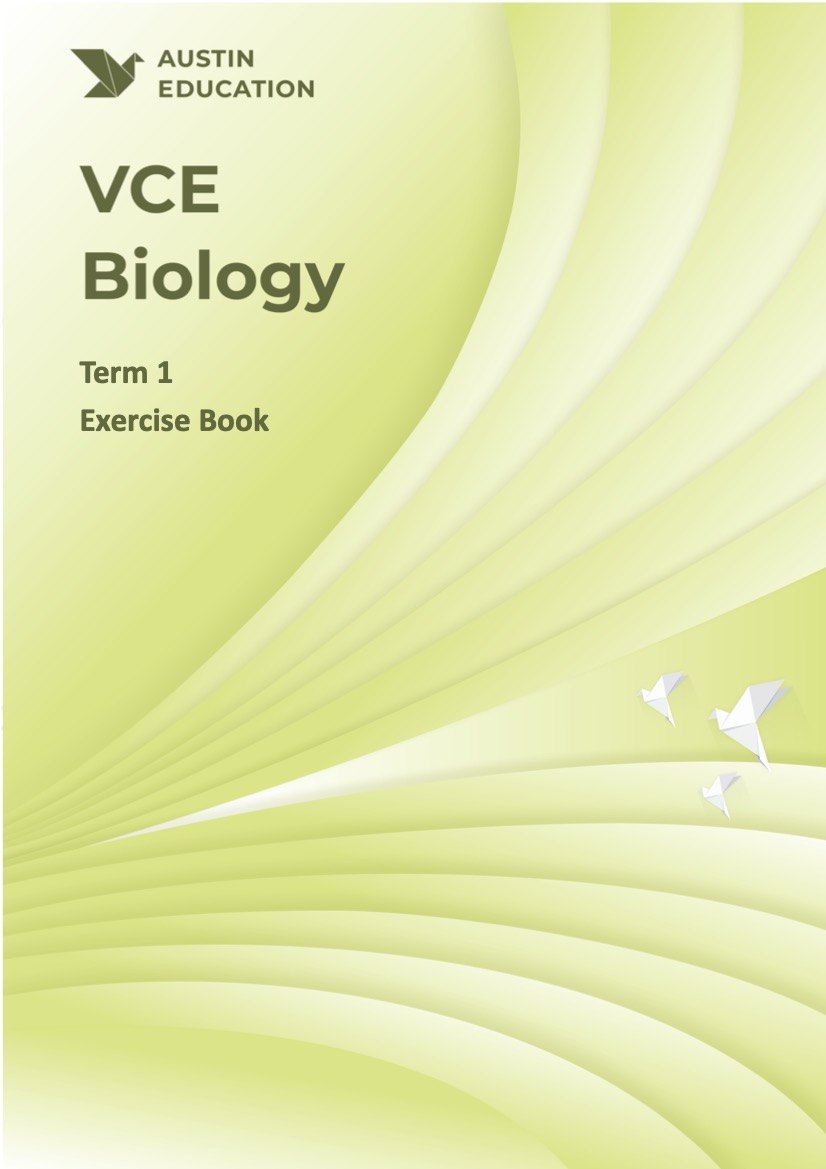
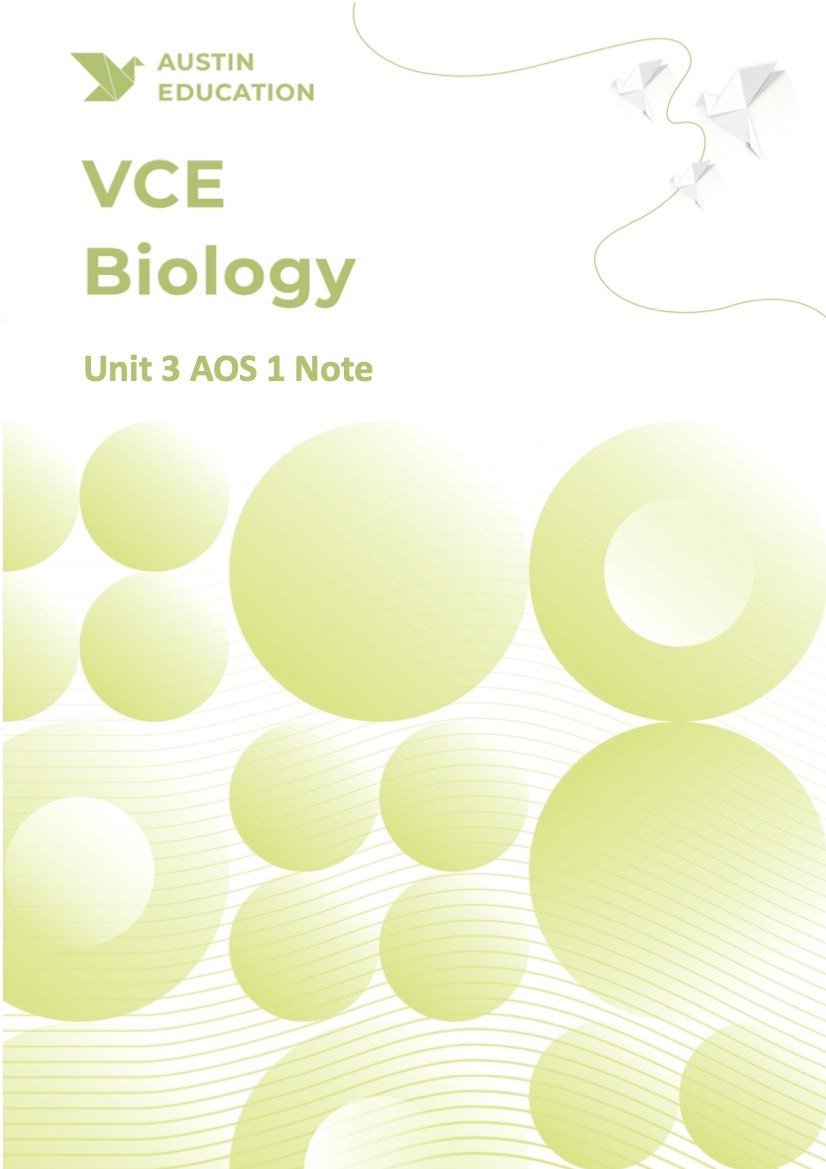
Every Austin Biology student works from our own exercise books and unit notes rather than a generic textbook. Content is mapped dot point by dot point to the study design, with VCAA-style questions and worked solutions built into each chapter.
 Click to view full size
 Click to view full size
Frequently Asked Questions
VCE Biology Frequently Asked Questions
Is VCE Biology hard?
VCE Biology is content-heavy rather than mathematically difficult. The challenge lies in the volume of content to memorise and understand, and the ability to apply biological concepts to unfamiliar exam scenarios. Students who are organised, consistent with weekly study, and practise exam-style questions regularly tend to perform well. It is not considered as mathematically demanding as Chemistry or Physics, but it requires disciplined study habits.
What are the VCE Biology Units 1–4 topics?
VCE Biology has four units. Unit 1 (How do organisms regulate their functions?) covers cell structure, homeostasis, and the cell cycle. Unit 2 (How does inheritance impact on diversity?) covers genetics, meiosis, pedigree charts, and adaptations. Unit 3 (How do cells maintain life?) covers DNA, gene expression, CRISPR-Cas9, photosynthesis, and cellular respiration. Unit 4 (How does life change and respond to challenges?) covers the immune system, vaccination, evolution, and the human fossil record. The study design is accredited from 2022.
How do I get a raw 40+ in VCE Biology?
To achieve a raw 40+ in VCE Biology: (1) master the study design dot points — every exam question maps to a specific dot point; (2) practise writing structured responses using biological terminology; (3) complete past exam papers under timed conditions; (4) focus on Unit 3 and 4 content as it forms the basis of the end-of-year exam; (5) do not neglect SACs — they contribute 50% of your final study score (Unit 3: 20%, Unit 4: 30%); and (6) seek expert tutoring to identify and address knowledge gaps early.
What is VCE Biology early entry and is it worth it?
VCE Biology early entry means completing Units 1–2 in Year 10 and Units 3–4 in Year 11. It is worth considering for students aiming for medicine or health science pathways because it frees up Year 12 for other demanding subjects, mirrors university health science study methods, and allows more time for UCAT preparation. It requires school approval and a strong academic foundation.
How much study time does VCE Biology require per week?
VCE Biology typically requires 3–4 hours of study per week outside of class, increasing to 6–8 hours during SAC preparation periods. The key is consistency — regular review of content prevents the need for last-minute cramming. Students who fall behind on content find it very difficult to catch up given the volume of material in Units 3 and 4.
Do I need VCE Biology for medicine?
VCE Biology is not a strict prerequisite for most Australian medicine pathways, but it is strongly recommended. For Monash undergraduate medicine, Chemistry (raw 30+) is the required science subject, not Biology. However, Biology provides an excellent foundation for medical school content. For Melbourne University postgraduate medicine (MD), neither Biology nor Chemistry is required — that pathway uses GAMSAT and GPA.
What is the VCE Biology exam format?
The VCE Biology end-of-year exam is 2 hours and 30 minutes long and covers Units 3 and 4 content. The exam includes multiple-choice questions and extended response questions. SACs contribute 50% of the final study score (Unit 3 SACs: 20%, Unit 4 SACs: 30%), while the external exam contributes the other 50%.
What is the hardest part of VCE Biology?
Most students find Unit 3 the most challenging part of VCE Biology, particularly the molecular biology content — DNA structure, gene expression, transcription, translation, and the regulation of biochemical pathways (photosynthesis and cellular respiration). Unit 4 immunology is also commonly cited as difficult due to the complexity of the adaptive immune response.
Ready to Excel in VCE Biology?
Austin Education's VCE Biology program combines expert teaching, structured study design coverage, and targeted SAC and exam preparation. Book a trial lesson to see how the classes run.
Book a Trial Lesson- ✓Teachers from medicine and biomedical research
- ✓Mock SACs before every school SAC
- ✓Exclusive in-house materials
- ✓Aligned to the 2022–2027 study design
Explore the VCE Biology Unit 1–4 course to see the full curriculum, materials and teaching team, or speak with our team about which program suits your year level.
Continue Reading
Related Articles
- VCE Science Subject Selection Guide: Chemistry, Biology or Physics? — compare all three sciences and find the right combination for your university pathway.
- VCE Physics Study Guide: Units 1–4, Exam Tips & Engineering Pathways — the 2024 study design, field theory, and special relativity.
- VCE Chemistry Strategy Guide: How to Achieve a Study Score of 40+ — Unit 3 & 4 strategies, SAC preparation, and exam technique.
Austin Education is a Melbourne-based VCE tutoring centre offering expert VCE Biology tutoring, with campuses in Box Hill, Mount Waverley, Melbourne CBD, Ormond and Point Cook, plus live online classes across Australia. VCE Biology study design accreditation period: 2022–2027. Content verified against the official VCAA study design.